
Explore the dynamics of monsoons, seasonal wind systems that influence climate, agriculture, and weather in various regions globally.
Understanding Monsoons: Atmospheric Patterns and Their Impact
Monsoons are large-scale seasonal wind systems that dramatically impact the climate and weather in the regions they affect. Predominantly observed in Southeast Asia, Australia, and parts of Africa, these wind systems are crucial for agriculture but also pose challenges like flooding and cyclones. To truly appreciate the importance and complexity of monsoons, it’s essential to delve into the atmospheric patterns that drive them and the impacts they have on the environment and human societies.
The Science Behind Monsoons
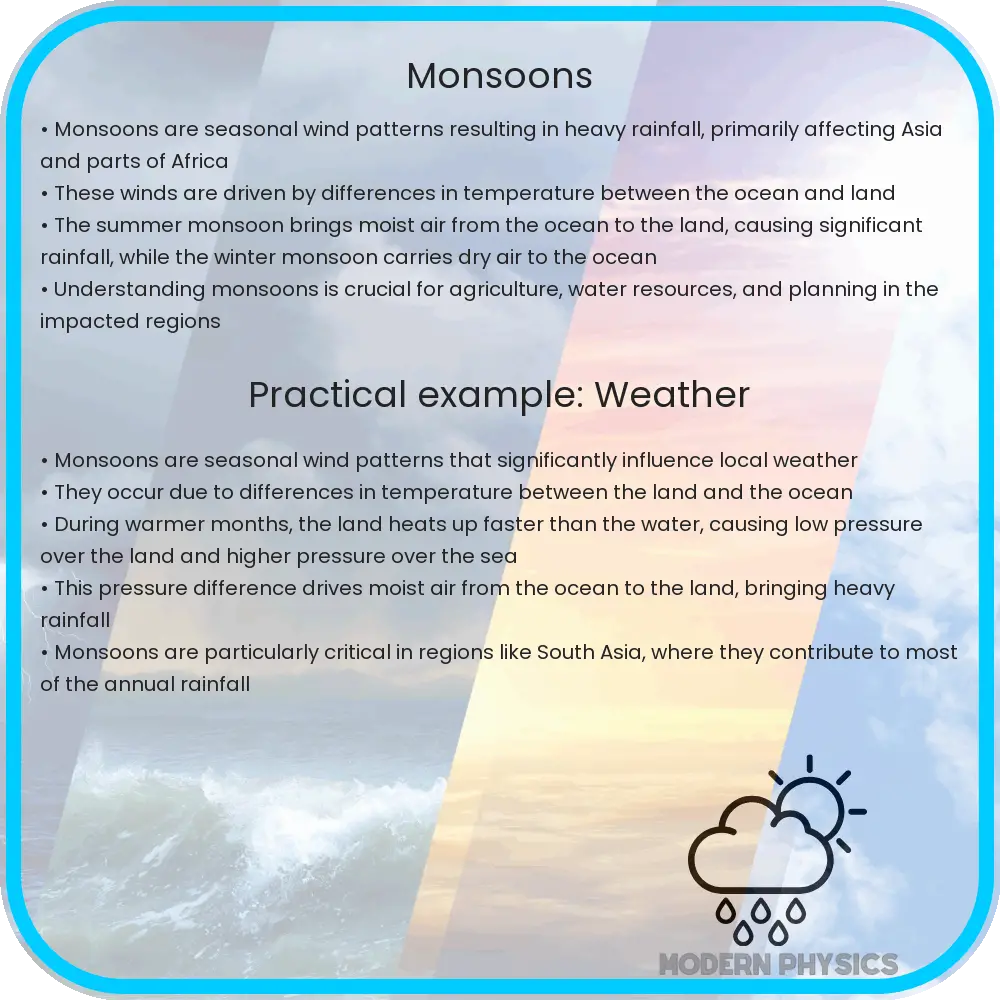
At the most basic level, monsoons are driven by differences in temperature between the land and the ocean. During summer months, the land heats up much quicker than the surrounding seas, creating a low pressure area over the continent. This low pressure zone attracts moist air from the high pressure areas over the oceans, bringing heavy rains to the region. Conversely, in winter, the land cools down faster than the ocean, setting up high pressure over the land and low pressure over the sea, causing dry, cold winds to flow out from the continent.
The intensity and timing of monsoon rains are influenced by other factors, including the El Niño Southern Oscillation, the Madden-Julian Oscillation, and topographical features like mountains and plains. For example, the presence of the Himalayas to the north of India plays a significant role in blocking the northward movement of monsoon clouds, ensuring that they release a significant amount of rain over the Indian subcontinent.
Impact of Monsoons
Monsoons have a dual character: they are both lifelines and potential devastators. On one hand, the agricultural sectors in countries like India and Bangladesh rely heavily on the timely arrival of monsoon rains for the irrigation of crops. On the other, excessive monsoon rains can lead to severe flooding, causing widespread destruction of property and loss of life. Urban areas often suffer the most due to inadequate drainage and poor flood management infrastructure.
Beyond agriculture and flooding, monsoons also influence water supply, energy generation, and the overall economic health of the regions they impact. In hydroelectric power reliant countries, for example, a strong monsoon can lead to increased power production, whereas a weak monsoon can cause power shortages and drought conditions.
Predicting Monsoons
Accurate prediction of monsoon patterns is vital for proper resource management, disaster preparedness, and economic planning. Predictive models primarily use historical weather data and modern satellite technology to forecast monsoon onset, strength, and duration. Scientists employ advanced algorithms and atmospheric models, taking into account various atmospheric variables such as temperature, pressure, humidity, and wind patterns.
Despite advancements in technology, predicting monsoons accurately remains a challenging task due to their complex nature and the influence of multiple global factors. Continued research and improvement in computational methods are essential for enhancing the reliability of these predictive models.
Adaptations and Responses to Monsoons
Given the significant influence of monsoons on the lives of millions, countries affected by these patterns have developed various adaptation and response strategies. From building robust infrastructure to implementing early warning systems, these measures aim to mitigate the adverse effects and harness the benefits of monsoons.
- Infrastructure Development: Governments invest in flood-resistant construction, improve drainage systems, and erect embankments to control floodwaters.
- Agricultural Practices: Farmers adjust planting schedules based on monsoon forecasts to maximize crop yield and reduce the risk of crop failure.
- Water Resource Management: The construction of dams and reservoirs helps in managing water supply during periods of scarcity and excess.
- Public Awareness and Education: Awareness campaigns and educational programs inform the public about how to prepare for and respond to monsoon-related disasters.
These proactive steps not only enhance the resilience of communities but also support sustainable development in monsoon-prone regions.
Conclusion
Monsoons, with their complex mechanisms and profound impacts, are pivotal to the ecological and economic landscapes of vast regions of the world. Understanding the science behind monsoons and accurately predicting their patterns are critical for preparing and responding to the challenges they present. While technology and scientific knowledge have significantly advanced, there is a perennial need for further research to understand the evolving nature of monsoons in the context of global climate change.
Furthermore, the success in managing monsoon effects largely depends on the integration of traditional knowledge with modern scientific insights, effective governmental policies, and active community participation. As we continue to learn and adapt, the goal remains clear: to turn the challenges posed by monsoons into sustainable opportunities for the future. Monsoons should not only be seen as seasonal phenomena but also as catalysts for fostering innovation and resilience in addressing climatic variabilities.