
Ultrasonic thickness gauges are essential tools for measuring material thickness precisely without needing access to both sides, useful across various industries.
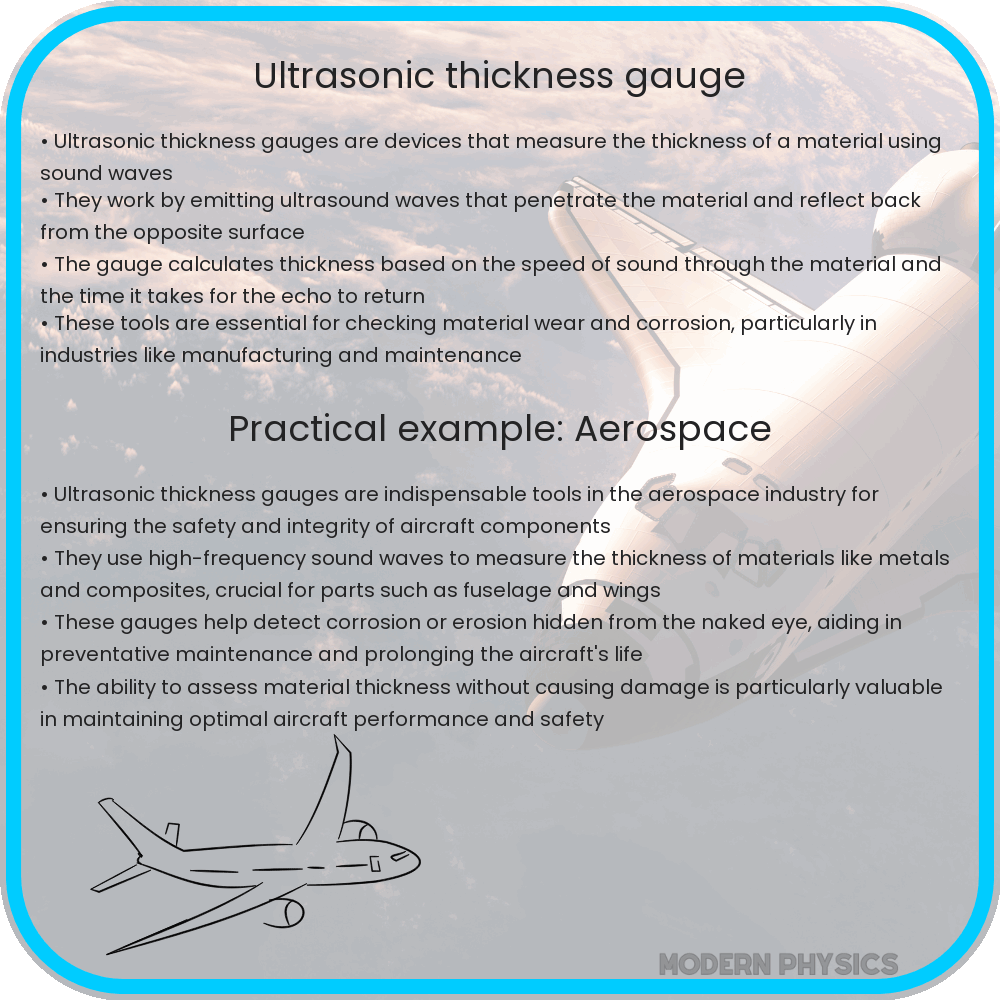
Introduction to Ultrasonic Thickness Gauges
Ultrasonic thickness gauges are a pivotal tool in the toolkit of engineers and inspectors across various industries, including manufacturing, aerospace, and marine. They excel in measuring the thickness of a material with precision and without requiring access to both sides of the material. This capability is particularly useful for the inspection of structures where only one side is accessible, such as pipes and ship hulls, or for equipment that is in operation and cannot be dismantled easily.
How Ultrasonic Thickness Gauges Work
These gauges operate on the principle of ultrasonic testing where short pulses of high frequency ultrasound waves are transmitted into a material from one side. When these ultrasonic waves encounter a material boundary such as the opposite side of the material, they reflect back to the source. The time it takes for the echoes to return is measured, and using the known speed of sound in the material, the thickness of the material can be calculated.
The basic formula used to calculate thickness is:
t = v * T / 2
Here:
- t is the thickness of the material,
- v is the speed of sound in the material (which depends on the material’s density and elastic properties), and
- T is the time taken for the ultrasound wave to travel to the material boundary and back.
Versatility and Adaptability
Ultrasonic thickness gauges are highly versatile and can be adapted for a wide range of materials, including metals, plastics, ceramics, glass, and various composites. The key to their versatility lies in the ability to adjust the ultrasonic frequency based on the material type and the intended measurement resolution and depth. Lower frequencies are typically used for thicker and more absorbent materials, while higher frequencies can provide greater resolution for thinner materials.
Acoustic Considerations
The accuracy of an ultrasonic thickness gauge heavily depends on the acoustic properties of the material being measured. Factors such as the material’s homogeneity, texture, and temperature can affect the speed at which sound waves travel through the material. For precise measurements, it is crucial to calibrate the gauge specifically for each material type and under controlled conditions to account for these variables.
Real-World Applications
Ultrasonic thickness gauges are indispensable in many critical inspection tasks. In the aerospace industry, they are used to measure the wear and tear of aircraft components that are critical for safety. In the petrochemical industry, they help monitor pipe thinning due to corrosion or erosion, which can prevent leaks and explosions. Maritime applications include checking the hull thickness of ships to ensure they are safe and comply with regulations.
Advancements in Technology
Recent technological advancements have further enhanced the capabilities of ultrasonic thickness gauges. Innovations such as digital signal processing, enhanced data logging, and connectivity features allow for more accurate, reproducible, and easier to interpret measurements. Additionally, the integration of these devices with mobile apps and wireless technology has enabled real-time monitoring and analysis on-the-go, increasing the efficiency and applicability of inspections across various fields.
Limitations and Challenges
Despite their numerous advantages, ultrasonic thickness gauges do face some limitations. The primary challenge is the need for a uniform contact surface between the sensor and the material. Rough, uneven, or dirty surfaces can lead to inaccurate readings due to poor transmission of ultrasound waves. Preparation of the surface, therefore, becomes a critical step before measurements can be taken accurately. Additionally, highly attenuative materials can absorb sound waves, making it difficult to obtain reliable data.
Maintenance and Calibration
To ensure optimum performance and accuracy, regular maintenance and calibration of ultrasonic thickness gauges are essential. Calibration involves checking and adjusting the device based on standard reference materials with known thicknesses. This routine is crucial because the speed of sound in a material can change with temperature and other environmental conditions. Regular maintenance, including battery checks and software updates, also helps maintain the gauges’ functionality and longevity.
Safety and Training
While ultrasonic thickness gauges are generally safe to use, proper training is required to handle them correctly. Misinterpretations of ultrasonic data can lead to dangerous situations, especially in industries like petrochemical and aerospace where equipment failure could have catastrophic effects. Ensuring that technicians are well-trained in the use and interpretation of these devices is as important as the technological capabilities of the gauges themselves.
Conclusion
Ultrasonic thickness gauges are vital tools in maintaining the safety and integrity of various industrial components and structures. Through the application of high-frequency sound waves, these devices allow engineers and inspectors to measure material thickness effectively, even in challenging conditions. While they come with certain limitations and require careful handling and regular maintenance, the benefits they offer in terms of safety, efficiency, and cost-effectiveness are invaluable. As technology continues to evolve, the potential for these tools to further transform inspection practices remains significant, promising even greater advancements in industrial safety and operational reliability.