
Explore the world of Thin-Film Transistors (TFTs), their impact on display clarity, energy efficiency, and response times, and the future of TFT technology.
Understanding Thin-Film Transistors (TFTs)
Thin-Film Transistors (TFTs) are a type of transistor commonly used in liquid crystal displays (LCDs), organic light-emitting diode (OLED) panels, and in the burgeoning field of flexible electronics. These semiconducting devices are known for their thin film of active material, usually silicon, deposited on a glass or plastic substrate, which marks a distinction from the traditional, bulkier transistors made from solid silicon ingots.
Clarity and Visual Performance
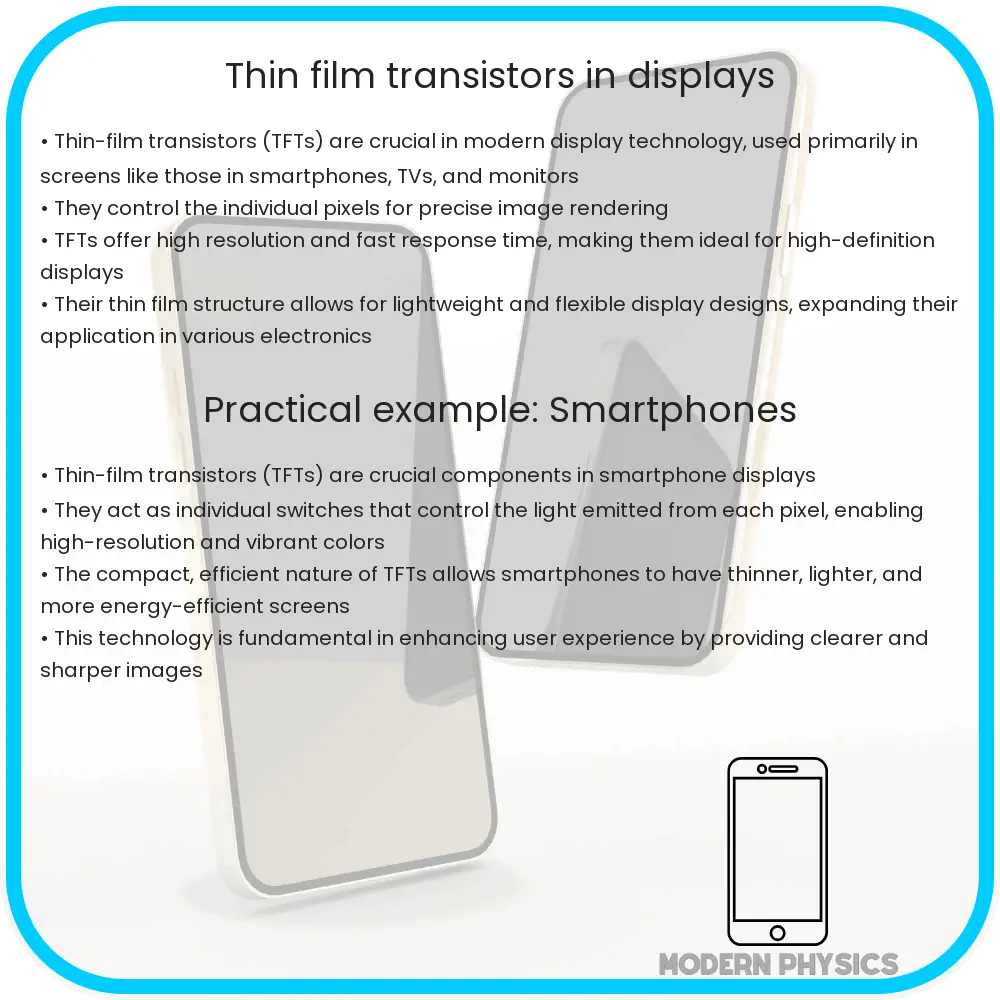
The clarity of a display integrating TFT technology is significantly influenced by the transistor’s ability to control each pixel effectively. In an LCD, for instance, TFTs are used to individually switch pixels on or off, thereby controlling the light passing through the liquid crystal layer. This precise control enhances the display’s resolution and color accuracy, providing clearer, more vibrant images.
Efficiency and Energy Consumption
TFTs are crucial for energy efficiency in electronic devices. The thin-film layer allows for lower power consumption compared to traditional transistors, which is particularly important for battery-powered devices like smartphones and laptops. This efficiency stems from the TFT’s ability to operate at lower voltages while maintaining fast switching speeds, reducing the overall energy required for operation.
Response Time and Performance
The response time of TFT-based displays is a critical aspect of their performance, especially for video playback and gaming. Response time refers to the speed at which a pixel can change from one color to another. TFT technology enables faster response times by improving the speed of the electric signals that control each pixel. This results in smoother transitions and reduces motion blur, enhancing the viewer’s experience.
In summary, Thin-Film Transistors are integral to modern display technology, offering improvements in clarity, efficiency, and response time. Their development continues to advance, with researchers exploring new materials and designs to further enhance these properties.
Advancements and Future Directions in TFT Technology
The evolution of TFT technology is marked by significant research and development aimed at improving performance and expanding applications. Innovations such as organic thin-film transistors (OTFTs) and metal oxide TFTs have emerged, offering higher mobility, better transparency, and flexibility. These advancements are paving the way for next-generation displays that are not only more energy-efficient but also capable of being applied to curved or foldable surfaces, thus revolutionizing the design of smartphones, tablets, and wearable devices.
Environmental Impact and Sustainability
With the growing emphasis on sustainability, the environmental impact of TFT production and disposal is a critical consideration. Efforts are underway to develop more eco-friendly manufacturing processes and materials that reduce toxic waste and energy consumption. Recycling and reusing TFT components are also areas of focus, aiming to mitigate the environmental footprint associated with electronic waste.
Challenges and Solutions
Despite their advantages, TFTs face challenges such as degradation over time and susceptibility to environmental factors like temperature and humidity. Research is focused on overcoming these limitations by improving the stability and durability of TFT materials. Furthermore, the quest for cost-effective production techniques continues, as lowering manufacturing costs is essential for the widespread adoption of advanced TFT-based technologies.
Conclusion
Thin-Film Transistors have revolutionized the field of display technology, offering unparalleled clarity, efficiency, and response times. Their evolution continues to drive innovations in electronics, with a keen eye on enhancing performance, reducing environmental impact, and overcoming existing limitations. As TFT technology advances, we can anticipate even more sophisticated and sustainable electronic devices, further transforming our visual and interactive experiences. The journey of TFTs from fundamental components to the backbone of modern electronics exemplifies the dynamic nature of technological progress and its profound impact on society.