
Explore the efficiency, flexibility, and superior color quality of OLED technology, and how it’s shaping the future of display and lighting solutions.
Understanding OLED Technology
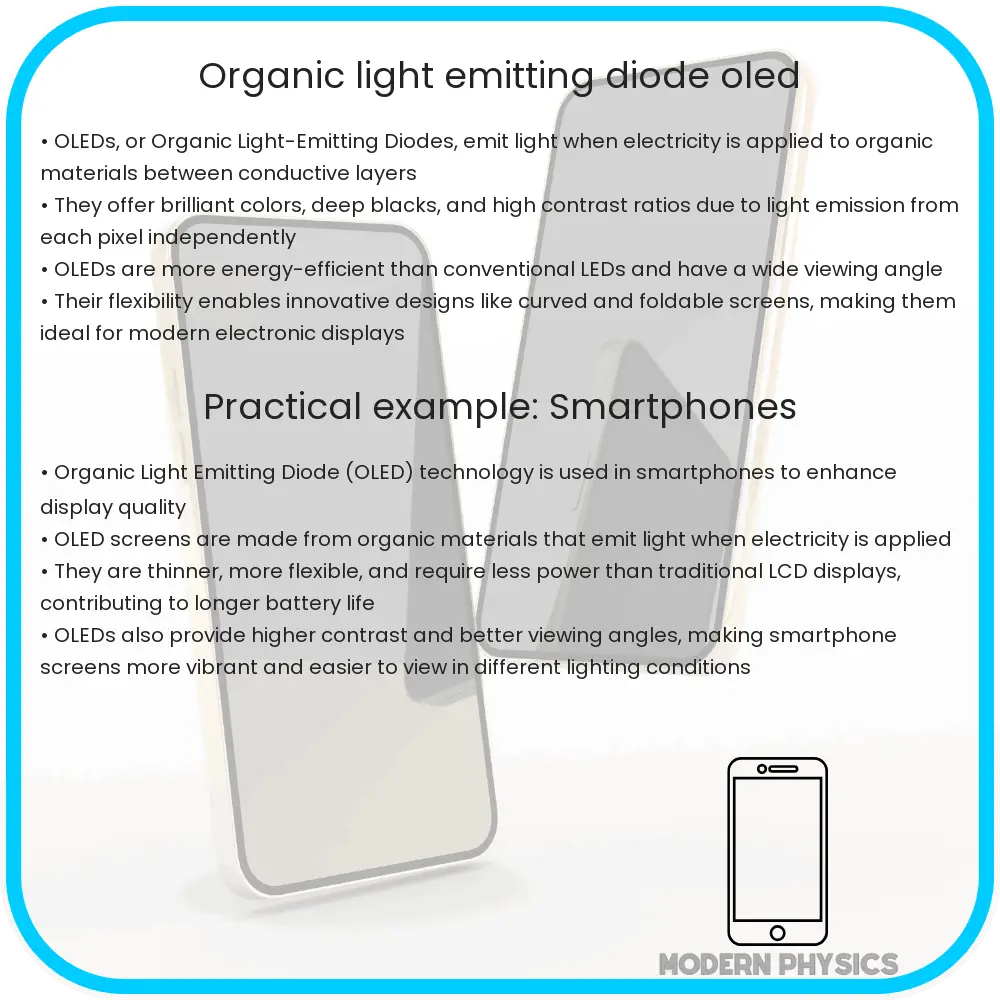
Organic Light-Emitting Diode (OLED) technology represents a significant advancement in display and lighting systems. Unlike traditional LED and LCD technology, which require backlighting, OLEDs emit visible light when an electric current is applied to an organic material. This fundamental difference enables OLEDs to produce deeper blacks, more vibrant colors, and higher contrast ratios.
Efficiency of OLEDs
OLED displays are highly efficient for several reasons. Firstly, they consume less power than their LCD counterparts, as each pixel generates its own light, eliminating the need for a power-intensive backlight. This efficiency is particularly noticeable in devices where the screen is predominantly black, as black pixels in an OLED display are simply turned off. Additionally, OLED materials have a high luminescent efficiency, meaning they can emit more light per unit of electrical energy compared to traditional LEDs.
Flexibility and Form Factor
One of the most striking advantages of OLED technology is its flexibility. OLEDs can be made from plastic substrates rather than the glass used in LCDs, allowing them to be flexible, bendable, and even rollable. This opens up new possibilities for innovative designs in smartphones, TVs, wearable devices, and even foldable screens. The thinness of OLED panels also contributes to lighter and slimmer devices, providing both aesthetic and practical benefits.
Color Quality and Viewing Experience
OLED displays are renowned for their exceptional color quality and wide color gamut. Since OLED pixels emit their own light, they can achieve true blacks by simply turning off, providing an infinite contrast ratio. This capability enhances the depth and realism of images, making colors appear more vibrant and dynamic. Furthermore, OLED displays offer wide viewing angles with minimal color shift, ensuring the picture remains consistent from almost any perspective.
The combination of efficiency, flexibility, and superior color quality makes OLED technology a compelling choice for a wide range of applications, from consumer electronics to professional displays and beyond. Its ongoing development promises even greater enhancements in the future, paving the way for more innovative and energy-efficient display solutions.
Future Trends and Developments in OLED Technology
As OLED technology continues to evolve, several key trends are shaping its future. Innovations in material science are leading to more durable and longer-lasting OLED panels, addressing one of the primary concerns regarding OLED’s lifespan and susceptibility to burn-in. Additionally, researchers are focusing on improving the efficiency of OLED materials to further reduce power consumption and extend battery life in portable devices.
Environmental Impact and Sustainability
Another critical area of development is the environmental impact of OLED production and disposal. Efforts are underway to create more sustainable OLED materials that are less dependent on rare or toxic substances, making them more eco-friendly. Recycling processes specific to OLED components are also being developed to minimize waste and promote sustainability in electronics manufacturing.
Expanding Applications
OLED technology is not just limited to displays; it is also making significant inroads into lighting solutions. OLED panels offer diffused, glare-free lighting that closely mimics natural light, making them ideal for a wide range of applications, from architectural and automotive lighting to innovative design in consumer products. The flexibility and thinness of OLEDs open up new possibilities for integrated lighting solutions that were previously unimaginable.
Conclusion
OLED technology stands at the forefront of the next generation of display and lighting solutions, offering unparalleled efficiency, flexibility, and color quality. Its continuous improvements in longevity, energy efficiency, and sustainability are addressing initial limitations and broadening its applications. As OLED technology matures, it promises to revolutionize not only how we view content but also how we interact with our environment, blending design and functionality in ways that were once the realm of science fiction. The future of OLED is bright, with its potential only beginning to be tapped into across various industries and applications. As we move forward, the continued innovation and development of OLED technology will undoubtedly bring new opportunities for consumers and professionals alike, making it a key player in the evolution of display and lighting technology.