
Explore thermochemical conversion systems: efficiency, processes, design innovations, and their role in sustainable energy solutions.
Understanding Thermochemical Conversion Systems
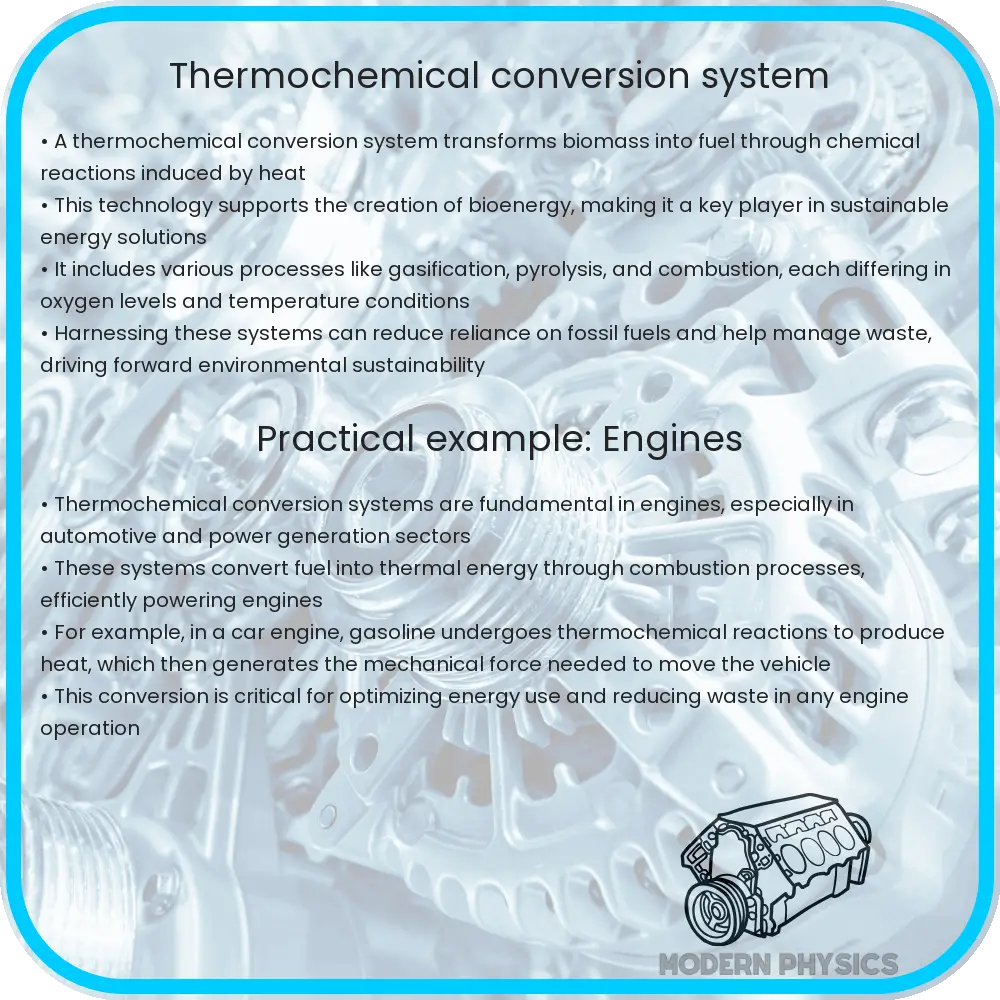
Thermochemical conversion is a pivotal technology in modern energy systems, offering a pathway to convert biomass into valuable fuels and chemicals. This process involves the use of heat and chemical reactions to break down biomass into smaller molecules. The efficiency, process, and design of thermochemical conversion systems are crucial factors in determining their viability and effectiveness in practical applications.
Key Processes in Thermochemical Conversion
The primary processes in thermochemical conversion include gasification, pyrolysis, and hydrothermal liquefaction. Gasification involves heating the biomass in an oxygen-limited environment, resulting in the production of a synthesis gas (syngas), primarily composed of carbon monoxide (CO) and hydrogen (H2). Pyrolysis, on the other hand, decomposes organic material at high temperatures in the absence of oxygen, producing bio-oil, syngas, and biochar. Hydrothermal liquefaction occurs in a high-pressure water environment, converting wet biomass into bio-crude oil.
Efficiency Considerations
The efficiency of thermochemical conversion systems is measured by the energy content of the produced fuels relative to the energy content of the input biomass. Factors influencing efficiency include the type of biomass, operating conditions, and technology used. For instance, the moisture content of biomass significantly impacts the efficiency of pyrolysis and gasification. High moisture requires additional energy for drying, thus reducing the overall energy output.
Design and Technological Innovations
Designing efficient thermochemical conversion systems involves optimizing various parameters such as temperature, pressure, and reactor design. Advanced technologies like catalytic conversion can enhance the quality of the end products. For example, catalysts in gasification can improve syngas quality, making it more suitable for subsequent chemical synthesis.
Another aspect of design is integrating these systems with existing industrial processes. For instance, integrating a biomass gasification unit with a power plant can lead to more efficient combined heat and power (CHP) systems.
Environmental impact is also a critical consideration in the design of thermochemical conversion systems. The goal is to create systems that not only are efficient and economically viable but also minimize emissions and are sustainable in the long term.
Challenges and Future Directions
Despite their potential, thermochemical conversion systems face challenges such as high initial costs, complex feedstock logistics, and technological hurdles in scaling up. Research is ongoing to address these challenges, with a focus on developing more efficient catalysts, optimizing reactor designs, and enhancing the quality of biofuels. The future of thermochemical conversion lies in its integration into a broader renewable energy strategy, contributing to sustainable and clean energy solutions.
Advancements in Thermochemical Conversion Technologies
In recent years, significant advancements have been made in thermochemical conversion technologies. One of the most promising areas is the development of more efficient and robust catalysts, which can enhance the quality of the products and reduce unwanted by-products. Additionally, the optimization of reactor designs has led to increased process efficiency and scalability. Modular systems, for instance, offer flexibility and ease of integration with existing industrial infrastructures.
Integration with Renewable Energy Systems
A key aspect of modern thermochemical conversion is its potential integration with other renewable energy systems. For example, coupling biomass gasification with solar or wind energy can create hybrid systems that are more sustainable and reliable. These integrations can lead to a more balanced and diverse energy portfolio, reducing dependency on fossil fuels.
Economic and Environmental Impacts
The economic viability of thermochemical conversion systems is increasingly becoming favorable, thanks to technological advancements and growing interest in renewable energy sources. However, the economic success of these systems also depends on policy support, such as subsidies or carbon taxes, which can make renewable energy sources more competitive against traditional fossil fuels.
Environmentally, thermochemical conversion offers the potential for significant reductions in greenhouse gas emissions, especially when coupled with carbon capture and storage technologies. Moreover, these systems can contribute to waste management solutions by converting agricultural and municipal waste into energy and valuable products.
Future Prospects and Research Directions
Future research and development in thermochemical conversion will likely focus on further improving the efficiency and reducing the costs of these systems. There is also a growing interest in developing processes that can handle a wider range of biomass types, including waste materials. Another promising area is the integration of artificial intelligence and machine learning for process optimization and predictive maintenance, which could significantly enhance the operational efficiency and reliability of these systems.
Conclusion
Thermochemical conversion systems represent a crucial component in the transition towards a more sustainable and diversified energy future. With advancements in technology, design, and integration with other renewable sources, these systems offer a promising path to convert biomass into valuable fuels and chemicals while mitigating environmental impacts. The continued evolution of thermochemical conversion technologies, supported by innovative research and favorable policies, will play a pivotal role in shaping a sustainable and resilient energy landscape.