
Learn about soundscaping and acoustic design, the science of shaping sound environments for optimal auditory experiences in various spaces.
Introduction to Soundscaping and Acoustic Design
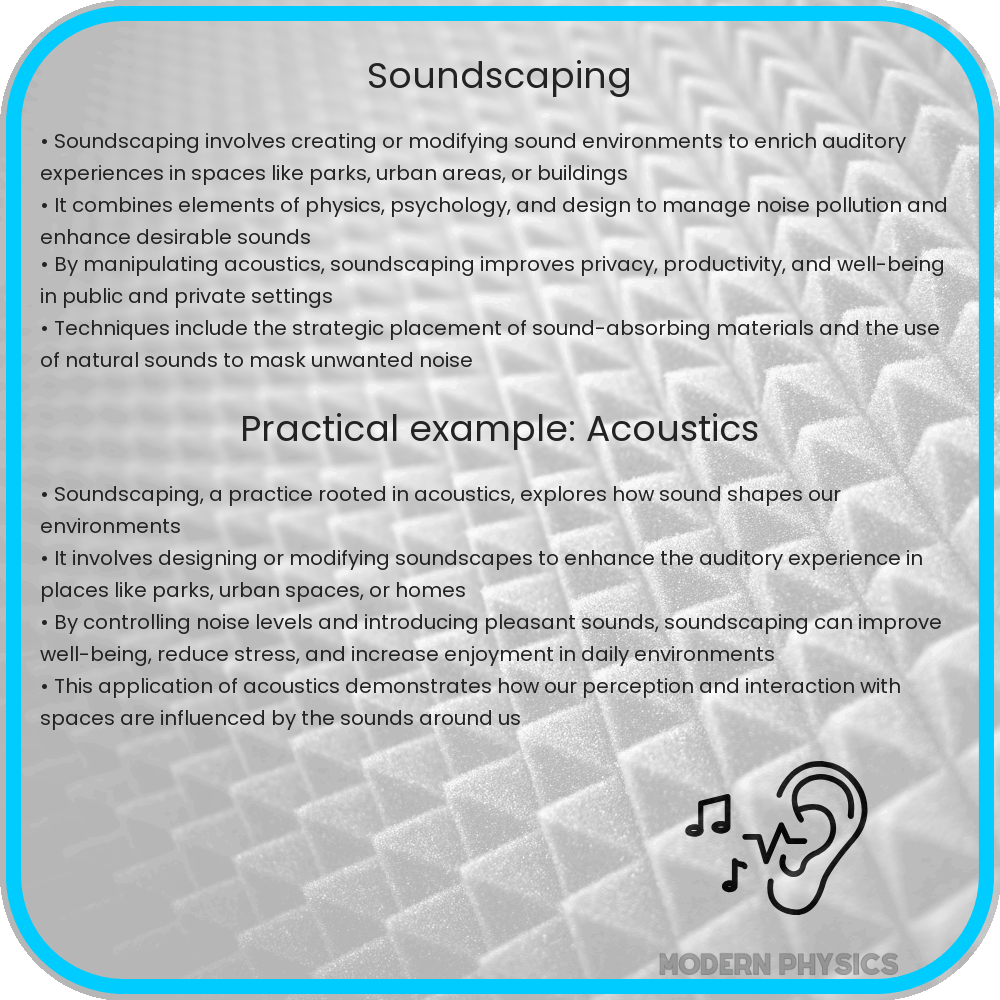
Soundscaping, an essential element of acoustic design, involves the art and science of shaping the sound environment to enhance the auditory experience in a space. This field of study focuses on optimizing sound quality, which can profoundly affect the ambiance of indoor environments such as theaters, concert halls, and residential areas, as well as outdoor spaces like parks and urban landscapes.
Understanding Sound in Spaces
At its core, soundscaping is about managing how sound travels and is perceived in a particular environment. The journey of sound begins when a source emits it and ends when it is heard by the listener’s ear. This involves not only the direct path of sound but also its interactions with various surfaces which may absorb, reflect, or diffuse it.
Components of Acoustic Design
To grasp the foundations of good acoustic design, consider three main factors:
- Absorption: Materials used in the environment can absorb sound energy, reducing reverberation and controlling echoes. For example, soft materials like foam or carpet absorb sound, thus dampening noise levels.
- Diffusion: Diffusing elements scatter sound waves, creating a more balanced acoustic environment. This can prevent the formation of echo and improve the clarity of sound.
- Reflection: Hard surfaces like concrete or glass can reflect sound, which can either enhance or disrupt the sound quality depending on the design and placement of these reflective surfaces.
Effective acoustic design employs a combination of these elements to achieve the desired sound quality in an environment. This often involves testing and adjustments to find the right balance that fits the intended use of the space.
Sound Quality and Harmony
Sound quality in acoustic design is not solely about technical measurements but also concerns the subjective perception of sound. Harmony refers to the pleasing arrangement and balance of sounds in the environment. Achieving harmonious soundscapes requires consideration of various sound characteristics such as volume, pitch, and timbre. Techniques like the strategic placement of sound sources and choice of materials are crucial in crafting an environment that sounds as good as it looks.
Moreover, modern technology allows designers to use sophisticated tools and software to model and simulate the acoustic properties of a space before it is built. This simulation helps in predicting how changes to design elements will impact the overall sound quality.
The Role of Soundscaping in Urban Design
In urban settings, soundscaping takes on added dimensions. It includes not only the management of noise from traffic and industrial activities but also the enhancement of desirable sounds. For instance, the installation of water features or specific vegetation can mask unpleasant noises and contribute positively to the acoustic environment.
Urban planners and designers work to create a balance that promotes both functionality and aesthetic appeal, enhancing the quality of life for residents and visitors. Soundscaping in urban design focuses on creating a soundscape that supports desired social interactions and activities while minimizing disruption from noise pollution.
Significance of Acoustic Comfort
Acoustic comfort is increasingly recognized as an important aspect of environmental design. It impacts human behavior, well-being, and productivity. In environments like offices or educational institutions, poor acoustic design can lead to decreased performance and increased stress. Thus, achieving a harmonious balance of sounds can significantly improve the functionality and comfort of any communal space.
Acoustic design merges technical aspects with artistic sensibility, requiring a deep understanding of both the physics of sound and human psychology. This interdisciplinary approach helps in crafting spaces that not only function well but also enhance the sensory experience of the users.
As we proceed to explore further about specific techniques and tools in soundscaping, it becomes evident how extensive and impactful this field is in shaping our daily environments and experiences.
Techniques and Tools in Soundscaping
When it comes to practical implementation, several important techniques and tools play a role in effective soundscaping. These include:
- 3D Audio Simulation: Software applications simulate sound propagation in a virtual environment, allowing designers to visualize and adjust the acoustic effects before actual construction or renovation begins.
- Sound Masking: This technique involves adding a background noise, perceived as pleasant or neutral, to mask unwanted sounds. It is commonly used in open-office environments or in places where privacy is important.
- Acoustic Panels and Barriers: These are used to isolate sounds or control their diffusion. Panels and barriers are strategically placed to absorb or block sound waves, thus reducing overall noise levels.
Future Trends in Acoustic Design
Looking forward, the trends in acoustic design are shifting towards more sustainable and innovative solutions. Eco-friendly materials that are both acoustically effective and sustainable are increasingly popular. Innovations such as ‘smart’ acoustic materials which adapt to the changing sound environments are also on the rise. As the understanding deepens of how sound impacts our health and wellbeing, the role of soundscaping becomes ever more vital in engineering and architectural design.
Conclusion
In conclusion, soundscaping and acoustic design play pivotal roles in shaping the auditory experience of a space, impacting everything from personal well-being to community dynamics. Through the strategic use of materials like absorbers, diffusers, and reflectors, and the application of cutting-edge soundscaping techniques, designers can craft spaces that not only meet specific acoustic requirements but also enhance overall environmental quality. As this field evolves, it will continue to integrate new technologies and innovative practices to meet the complex challenges of modern environments. Embracing these advancements is essential in developing spaces that are not only functionally sound but also conducive to health and productivity.
By understanding and applying the principles of soundscaping and acoustic design, professionals and laypersons alike can improve the sound environments of both their personal and public spaces, contributing to a more harmonious and enjoyable world.