
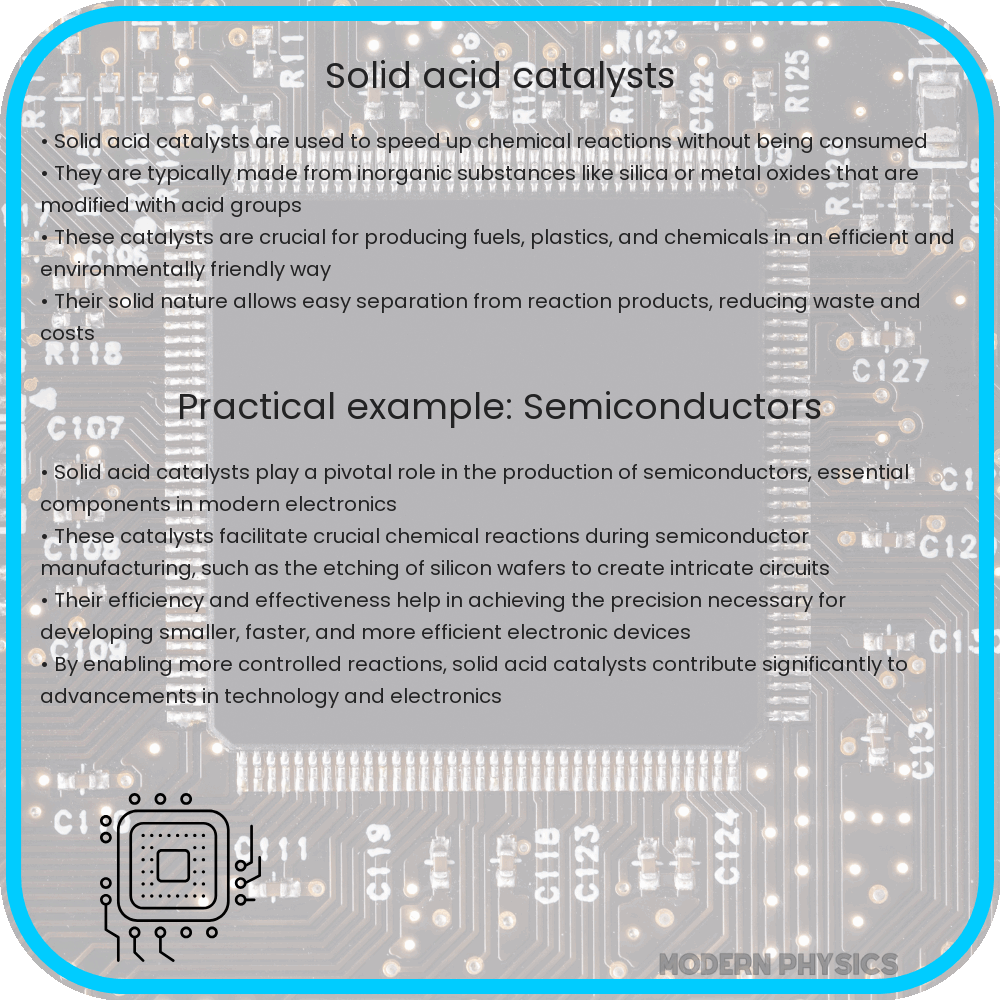
Solid acid catalysts are pivotal in enhancing chemical reactions across petrochemical, pharmaceutical, and sustainable energy industries.
Introduction to Solid Acid Catalysts
Solid acid catalysts are a critical component in various chemical processes due to their ability to facilitate chemical reactions without the need for corrosive liquid acids. These catalysts contribute significantly to the fields of petrochemicals, pharmaceuticals, and sustainable energy solutions. Understanding their efficiency, selectivity, and stability not only enhances their applications but also supports the development of more environmentally-friendly processes.
Efficiency of Solid Acid Catalysts
The efficiency of solid acid catalysts is fundamentally measured by their ability to enhance the rate of a chemical reaction while maintaining high levels of activity under process conditions. Efficient solid acid catalysts reduce the energy requirements and improve the overall yield of the target products. Key factors influencing their efficiency include surface area, pore structure, and the strength of acidic sites.
Selectivity of Solid Acid Catalysts
Selectivity is another crucial property of solid acid catalysts. It determines the ability of the catalyst to favor the formation of a specific product over other possible products. The structural features, such as the arrangement and accessibility of acid sites, heavily influence selectivity. By controlling the microscopic and macroscopic properties of these catalysts, researchers can tailor catalytic outcomes to produce desired chemicals with higher purity and fewer byproducts.
Stability of Solid Acid Catalysts
Stability in solid acid catalysts pertains to maintaining their structural integrity and catalytic activity over time and across various environmental conditions. Catalyst degradation, often due to high temperatures, chemical poisoning, or mechanical stress, can lead to a decline in performance. Enhancing stability involves the development of materials that resist such degradative forces, ensuring sustained performance through multiple usage cycles.
- High Temperature Resistance: Materials used in solid acid catalysts must withstand the harsh conditions of industrial processes that often operate at high temperatures.
- Chemical Inertness: To avoid deterioration from chemical reactions with feedstock impurities or reaction intermediates, catalysts are designed to be chemically inert, except at their active sites.
- Mechanical Strength: Mechanical stability is essential to prevent physical disintegration during operation, which can lead to loss of activity and selectivity.
Overall, the performance of a solid acid catalyst is a delicate balance between its efficiency, selectivity, and stability. The next sections will further explore real-world applications and the impact of advanced research in optimizing these catalysts for industrial use.
Real-World Applications of Solid Acid Catalysts
Solid acid catalysts are integral to many industrial processes. For instance, in the petrochemical industry, they are used to improve the production of high-octane gasoline and important organic compounds like terephthalic acid, which is a precursor for making polyester. Additionally, they play a pivotal role in the production of biodiesel and renewable fuels, aligning with global sustainability goals.
In pharmaceutical manufacturing, these catalysts help synthesize complex molecules, including active pharmaceutical ingredients, with greater precision and reduced waste. This not only streamlines production but also supports the development of more effective and safer medications.
Advancements in Solid Acid Catalyst Research
Research in the field of solid acid catalysts is continuously evolving. Recent advancements focus on nanoengineering techniques to fine-tune catalyst properties at the molecular level. This includes creating materials with specific pore sizes and shapes to increase surface area and accessibility. Such innovations lead to catalysts that are more selective and efficient, while also being more robust against degradation.
Another significant area of research is the development of environmentally benign catalysts. Scientists are working to design catalysts that require less energy and generate fewer byproducts. This research not only benefits the chemical industry but also contributes to reducing the overall environmental footprint of manufacturing processes.
Conclusion
The exploration of solid acid catalysts reveals a fascinating blend of chemistry and engineering that has substantial implications across various industries. From enhancing fuel production to facilitating the manufacture of pharmaceuticals and reducing environmental impact, the benefits of these catalysts are vast. They exemplify how advancements in science and technology can lead to more efficient, selective, and stable processes that align with both economic and environmental goals.
Moreover, ongoing research and innovation promise to further refine and expand the application of solid acid catalysts. By continuing to improve the fundamental properties and understandings of these materials, scientists and engineers will undeniably unlock new potentials in industrial chemistry and beyond. Thus, the study of solid acid catalysts not only enhances existing processes but also paves the way for future developments in green chemistry and sustainable technology.