
Silicon carbide (SiC) is a robust compound of silicon and carbon known for its exceptional durability, high thermal conductivity, and wide band gap, making it ideal for high-power applications.
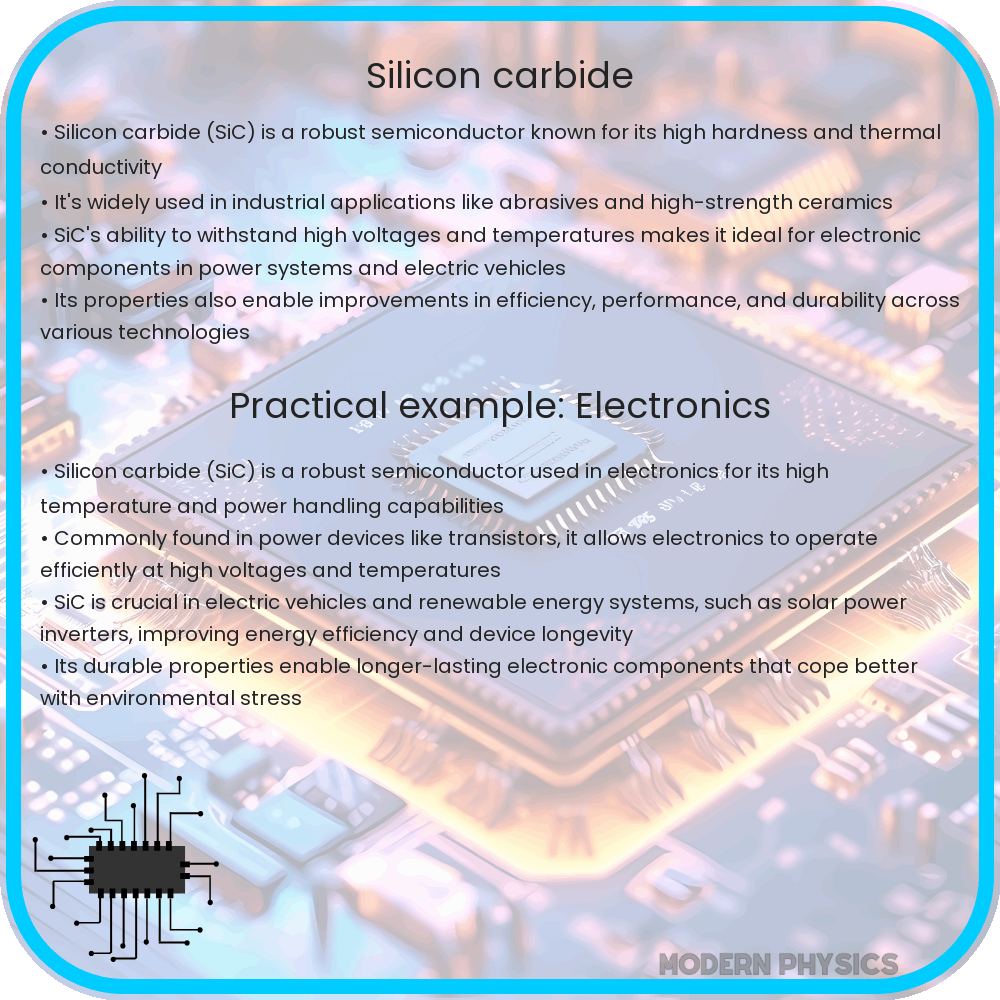
An Introduction to Silicon Carbide
Silicon carbide (SiC) is a compound of silicon and carbon, known for its remarkable properties that make it an ideal material for various advanced applications. It is a semiconductor, which falls between insulating and purely conductive materials, offering a unique combination of durability, thermal conductivity, and electronic characteristics vital for high-power applications. The unique characteristics of silicon carbide make it especially suitable in industries where high temperatures, voltages, or frequencies are common.
Durability of Silicon Carbide
Silicon carbide is famed for its exceptional hardness, rivalling that of diamonds. This hardness gives it outstanding wear resistance, making it ideal for use in harsh environments where components are subjected to high levels of mechanical stress. The material is also highly resistant to thermal shock. This means it can withstand sudden changes in temperature that would cause most other materials to fail. Additionally, SiC has a very high melting point of about 2,700°C, which is beneficial when high-temperature strength is paramount.
Efficiency and Performance
The efficiency of silicon carbide comes from its excellent thermal conductivity, which is significantly superior to that of silicon, a common material in semiconductor devices. This property allows SiC-based devices to operate at higher power levels and temperatures without compromising their performance. Silicon carbide is also advantageous in electronic applications because it has a wide band gap — the energy needed to move electrons from its valence band to the conduction band. This wide band gap enables devices to operate at higher voltages and temperatures, reducing energy loss and improving overall efficiency.
Applications of Silicon Carbide
- Power Electronic Devices: SiC is widely used in high-voltage applications such as power supply systems, inverters, and converters used in electric vehicles (EVs), renewable energy photovoltaics, and more. Its ability to handle high energies with less loss of electricity is crucial for these applications.
- RF Power Devices: Due to its high thermal conductivity and resistance to thermal shock, silicon carbide is used in radio frequency (RF) applications where it helps manage heat effectively, thereby allowing for smaller, more efficient devices.
- Automotive Applications: In the automotive sector, SiC is utilized in components that must withstand extreme conditions, such as in the formation of ceramic brake discs and as protective coatings in other high-wear parts.
- Aerospace and Defense: The high thermal conductivity and low thermal expansion coefficient make SiC an ideal material for various aerospace applications, including mirrors and structural pieces of space telescopes or as protective coatings on spacecraft.
Moreover, the use of SiC in LED technology shows promising applications in high-efficiency lighting and displays. Silicon carbide semiconductors can operate at higher voltages and currents often required in high power lighting systems. This makes it an invaluable material in the design and manufacture of energy-efficient, high-performance light-emitting diodes (LEDs).
Environmental Impact and Sustainability of Silicon Carbide
One of the significant advantages of using silicon carbide in various applications is its environmental impact. SiC-based devices tend to have a longer operational life and higher efficiency, reducing waste and energy consumption. As the world moves towards more sustainable technologies, the durability and efficiency of SiC contribute substantially to minimizing the carbon footprint of many industries. Furthermore, the ability of SiC to withstand extreme environments reduces the need for frequent replacements, thereby lowering the environmental impact associated with manufacturing and disposal processes.
Future Prospects
The future of silicon carbide looks promising as research continues to expand its applications. Innovations in manufacturing processes are likely to reduce the costs of SiC production, making it more accessible for widespread use. Emerging technologies, like electric aircraft and hyper-speed trains, could particularly benefit from SiC’s high-temperature and high-voltage tolerance. Moreover, ongoing advancements in semiconductor technology suggest potential growth in the use of SiC in sectors like telecommunications and robust computing platforms.
Key Takeaways
- High Durability: SiC’s extreme hardness and high melting point ensure exceptional durability under stress.
- Efficient Performance: Superior thermal conductivity and a wide band gap allow SiC to perform efficiently under high power conditions.
- Diverse Applications: From power electronics to aerospace, SiC supports a broad range of high-demand applications.
- Sustainable Material: Longer life and higher efficiency contribute to the sustainability of SiC compared to other materials.
In conclusion, silicon carbide stands as a cornerstone in the advancement of high-power and high-performance applications across various industries. Its unique properties not only enhance efficiency but are also pivotal in pushing the boundaries of modern technology towards more sustainable solutions. As we continue to innovate and seek materials that can stand the rigorous demands of future technologies, SiC remains a prime candidate likely to shape the next generation of advanced industrial applications.