
Learn about self-cleaning coatings, their principles, types, and diverse applications in various industries.
Understanding Self-Cleaning Coatings: Principles and Applications
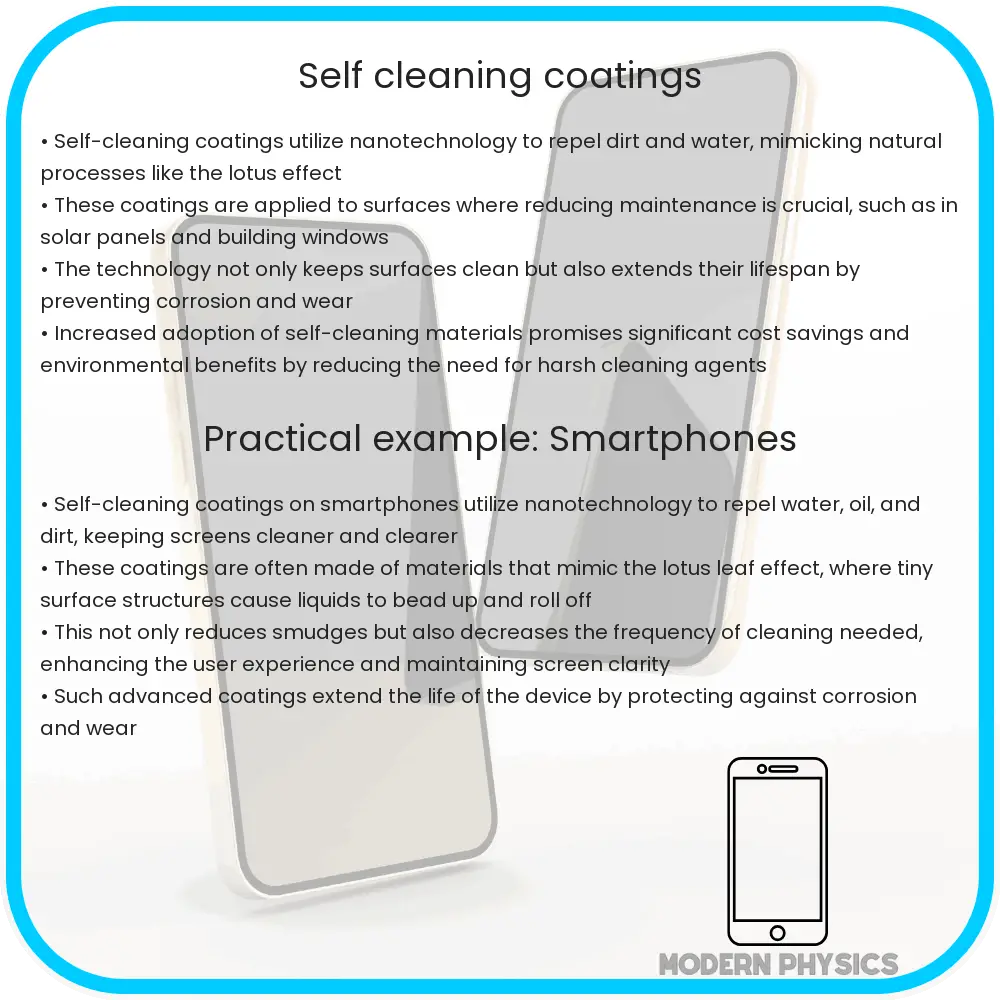
Self-cleaning coatings are a remarkable advancement in materials science that offer both practical and economic benefits across various industries. These innovative coatings provide surfaces with the ability to repel water, dirt, and other contaminants, minimizing the need for frequent cleaning and maintenance. In this article, we delve into the science behind these coatings, explore their different types, and discuss their diverse applications.
The Science behind Self-Cleaning Coatings
Self-cleaning surfaces work based on two primary principles: hydrophobicity and photocatalysis. Hydrophobic surfaces are designed to repel water, whereas photocatalytic surfaces use light to break down organic materials that come into contact with them.
- Hydrophobic Coatings: These coatings utilize the lotus effect, named after the lotus flower, which is known for its ability to remain clean and dry because mud and water droplets do not stick to its leaves. The surface of a hydrophobic coating is structured in a way that reduces the adhesion of water molecules. When water comes into contact with these surfaces, it beads up and rolls off, carrying away dirt and debris.
- Photocatalytic Coatings: These coatings employ nanoparticles of materials like titanium dioxide (TiO2). Under the influence of ultraviolet (UV) light, TiO2 can catalyze a reaction that breaks down organic pollutants into harmless substances such as water and carbon dioxide. This reaction not only cleans the surface but also disinfects it, making it ideal for medical and food preparation environments.
Categories of Self-Cleaning Coatings
Self-cleaning coatings can be broadly divided into two categories based on their intended use and the specific properties they offer:
- Exterior Coatings: These are primarily used for outdoor applications and are designed to withstand environmental factors such as rain and sunlight. Examples include coatings for windows, solar panels, and exterior walls of buildings. These coatings help in reducing maintenance costs and improving the longevity of the underlying materials.
- Interior Coatings: Used indoors, these coatings are often designed to be stain-resistant and easy to clean. They are commonly applied on surfaces in kitchens, bathrooms, hospitals, and other areas where hygiene is a priority. Interior coatings may also incorporate antimicrobial properties to further enhance cleanliness and safety.
Each type of self-cleaning coating can be tailored to meet specific requirements of the surface or environment in which it will be used. The choice of materials and the precise formulation of the coatings are critical to their performance and durability.
Real-World Applications of Self-Cleaning Coatings
The versatility of self-cleaning coatings allows them to be applied in a multitude of settings. Here are some of the most impactful applications:
- Automotive Industry: Applied on car windshields and bodies, these coatings help to keep vehicles clean and reduce the frequency of car washes required, thereby saving water and reducing chemical runoff.
- Construction and Architecture: Self-cleaning paints and coatings are used on buildings to keep exterior surfaces clean and free from algae and dirt buildup, extending the maintenance cycles and preserving the aesthetic and structural integrity of buildings.
- Solar Energy: Solar panels coated with self-cleaning materials maintain high efficiency by preventing dust and dirt accumulation that can block sunlight. This is particularly valuable in arid regions where water for cleaning may be scarce.
- Consumer Electronics: Screens and cases of smartphones, tablets, and other devices can benefit from fingerprint-resistant and anti-smudge coatings, keeping gadgets looking new for longer.
The integration of self-cleaning technologies into these applications not only enhances the functionality of products but also contributes to sustainability by reducing the use of water and cleaning agents.
Challenges and Future Prospects
Despite their numerous advantages, the development and application of self-cleaning coatings face several challenges. One major issue is the long-term durability and environmental impact of these coatings. For instance, while titanium dioxide is effective in photocatalytic reactions, its nanoparticles can pose environmental and health risks if not properly contained. Moreover, the effectiveness of self-cleaning coatings can diminish over time due to wear and exposure to harsh environmental conditions.
Research is ongoing to overcome these challenges. Scientists are exploring the development of new materials that are more environmentally friendly and durable, while still maintaining or improving self-cleaning properties. There is also a focus on creating coatings that can function under less intense sunlight or even artificial light, expanding their usability indoors.
Economic Impact
Self-cleaning coatings also have a significant economic impact. By reducing the need for frequent cleaning and maintenance, these coatings can lead to substantial cost savings over the lifespan of a product. In industrial settings, this can translate into millions of dollars in savings on maintenance. Additionally, the increased lifespan and efficiency of materials treated with self-cleaning coatings contribute to lower replacement costs and less waste, aligning with global sustainability goals.
Conclusion
Self-cleaning coatings represent a fascinating blend of nature-inspired innovation and advanced materials engineering. From keeping car windshields clean to ensuring solar panels operate at peak efficiency, these coatings have a profound impact on our daily lives and the environment. Despite facing challenges like durability and environmental concerns, ongoing research promises not only to refine these technologies but also to expand their applications. As we move forward, the role of self-cleaning technologies in driving sustainability and efficiency across multiple industries cannot be overstated. Their continued development will play a crucial role in shaping a cleaner, more efficient world.