
Explore the fusion of Quantum Machine Learning with Quantum Electrodynamics (QED), unlocking new possibilities in computing and scientific research.
Exploring Quantum Machine Learning and QED Enhancements
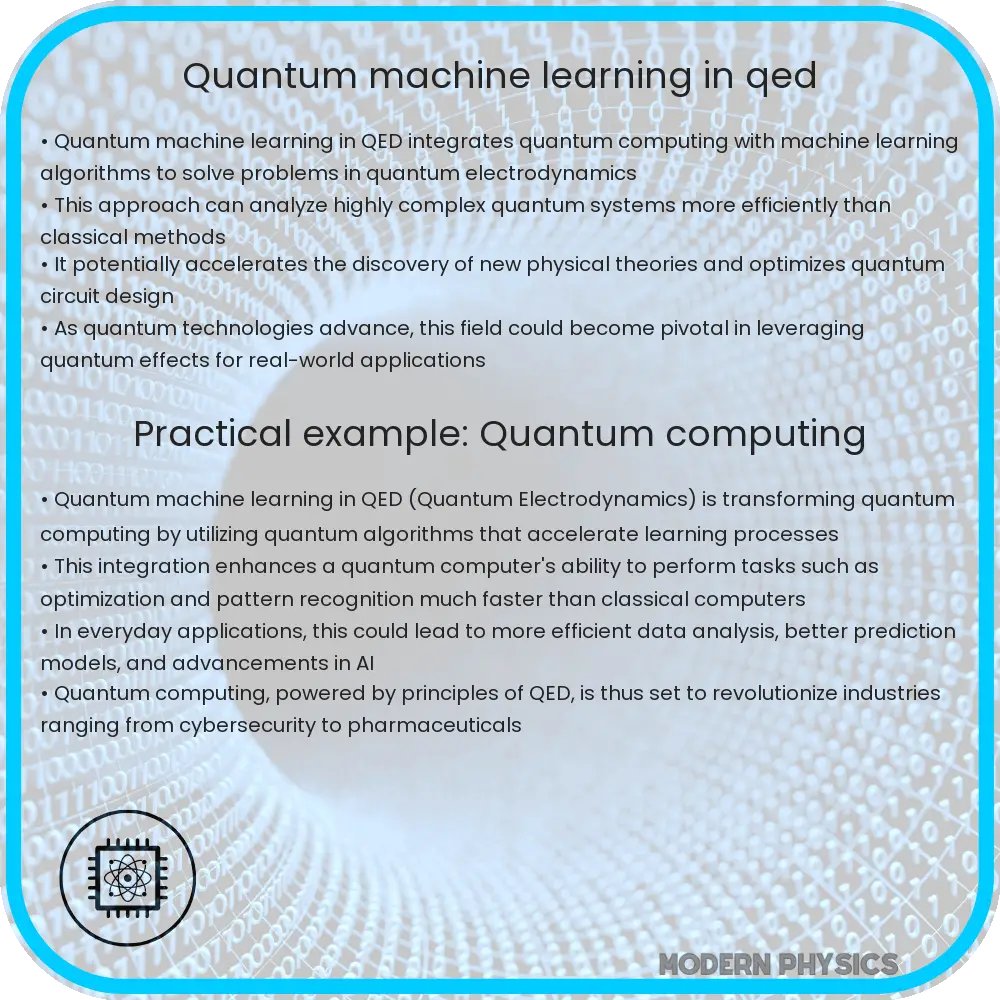
Quantum Machine Learning (QML) stands at the forefront of a technological revolution, intertwining the complexities of quantum mechanics with the vast potential of machine learning. Quantum Electrodynamics (QED), a cornerstone of quantum field theory, offers fertile ground for enhancements in QML. This synergy promises unprecedented computational abilities, paving the way for groundbreaking insights in various scientific fields.
Quantum Machine Learning: A Brief Overview
At its core, Quantum Machine Learning leverages the principles of quantum mechanics to enhance machine learning algorithms. Traditional computers process information in bits, with each bit representing either a 0 or a 1. Quantum computers, however, utilize quantum bits or qubits, which can exist in multiple states simultaneously due to the quantum phenomenon of superposition. This allows quantum computers to process a vast amount of information at an exponentially faster rate than classical computers.
The Role of Quantum Electrodynamics in Enhancing QML
Quantum Electrodynamics (QED) is the quantum theory of the interaction of light (photons) with matter, particularly electrons and positrons. Its principles are vital in understanding the behavior of particles at quantum scales. Integrating QED with QML can lead to significant improvements in the efficiency and accuracy of quantum algorithms. This integration is particularly beneficial in the realms of complex system simulations, cryptography, and optimization problems, where the nuances of quantum behavior play a critical role.
Advancements in Quantum Algorithms through QED
The incorporation of QED principles into quantum algorithms facilitates a deeper understanding of quantum systems. This includes enhanced modeling of particle interactions and more accurate simulations of quantum phenomena. Such advancements not only benefit the field of quantum physics but also extend to areas like materials science, where understanding quantum interactions at the molecular level is crucial.
Challenges and Future Directions
Despite the promise, integrating QED into QML is not without its challenges. The complexity of quantum systems and the need for robust error correction mechanisms pose significant hurdles. However, ongoing research and development in quantum computing technology and algorithms are gradually overcoming these challenges, opening new avenues for exploration and discovery.
As we delve deeper into the intricacies of Quantum Machine Learning enhanced by QED, we stand on the cusp of a new era of computational power and scientific understanding. The next section will explore specific applications and case studies, illustrating the transformative impact of these technologies.
Applications of Quantum Machine Learning with QED Enhancements
One of the most promising applications of QML enhanced by QED is in the field of drug discovery and materials science. By accurately simulating molecular and atomic interactions, researchers can predict the properties of new materials and compounds more efficiently. This accelerates the process of finding suitable drug candidates or novel materials with specific characteristics.
Quantum Computing in Cryptography
Another critical application lies in cryptography. Quantum computers, empowered by QED-enhanced algorithms, have the potential to break current encryption methods. Conversely, they also offer the foundation for developing new, unbreakable encryption techniques based on quantum principles, ensuring greater data security in the digital age.
Optimization Problems in Various Industries
Industries such as logistics, finance, and energy can significantly benefit from QML’s ability to solve complex optimization problems. QED’s precise modeling of quantum states allows for more efficient solutions to problems like route optimization, portfolio management, and energy distribution.
The Future of Quantum Machine Learning and QED
The future of QML and QED is intrinsically linked to the advancements in quantum computing hardware. As quantum computers become more powerful and accessible, the practical applications of QML enhanced by QED will expand. This growth is expected to lead to significant breakthroughs in various scientific and technological domains.
Conclusion
The intersection of Quantum Machine Learning and Quantum Electrodynamics represents a paradigm shift in computational and scientific capabilities. The enhancements that QED brings to QML algorithms are not just incremental; they are transformative, enabling a deeper understanding of the quantum realm and its applications. From revolutionizing drug discovery to redefining cryptography and optimizing complex industrial processes, the potential is vast and largely untapped. As quantum computing technology matures, we can expect a wave of innovations that will reshape our approach to problem-solving and expand our understanding of the universe. The journey into this quantum future is just beginning, and its promise is as vast as the quantum realm itself.