
Explore the multifaceted role of polymer coatings, crucial for protecting and enhancing surfaces across numerous industries with advanced functionalities.
Introduction to Polymer Coatings
Polymer coatings are fascinating materials that play a crucial role in protecting and enhancing surfaces in various industries. These coatings are essentially polymers – large molecules composed of repeating subunits – that form films over surfaces, providing protection against corrosion, wear, and environmental damage. They also add functional aesthetics such as color and gloss, accommodating a wide range of applications from automotive exteriors to electronic devices.
Durability of Polymer Coatings
The durability of polymer coatings is paramount in their performance across different environments and uses. The chemical structure of polymers, along with their formulation and application processes, dictates their resistance to factors like UV radiation, heat, chemicals, and physical abrasion. Advances in polymer science have led to the development of coatings that can withstand severe conditions for extended periods, thus extending the life and maintaining the appearance of coated materials.
For instance, epoxy coatings, noted for their exceptional chemical resistance, are widely used in marine environments and heavy-duty industrial settings. On the other hand, polyurethane coatings are renowned for their resistance to UV degradation and abrasion, making them ideal for exterior surfaces that are frequently exposed to sunlight and physical wear.
Innovations in Polymer Coatings
Recent innovations in polymer coatings are centered around enhancing their functionality and environmental compliance. Smart polymer coatings are a significant breakthrough, capable of responding to environmental stimuli such as temperature changes, pH levels, and mechanical forces. These smart coatings can self-heal minor scratches and adapt their properties in real-time, which increases the longevity and effectiveness of the coatings.
Moreover, the increasing focus on sustainability has driven the development of eco-friendly polymer coatings. These coatings use water-based formulas, reducing volatile organic compound (VOC) emissions, and incorporate bio-based materials, reflecting a shift towards more environmentally responsible manufacturing practices.
Application of Polymer Coatings
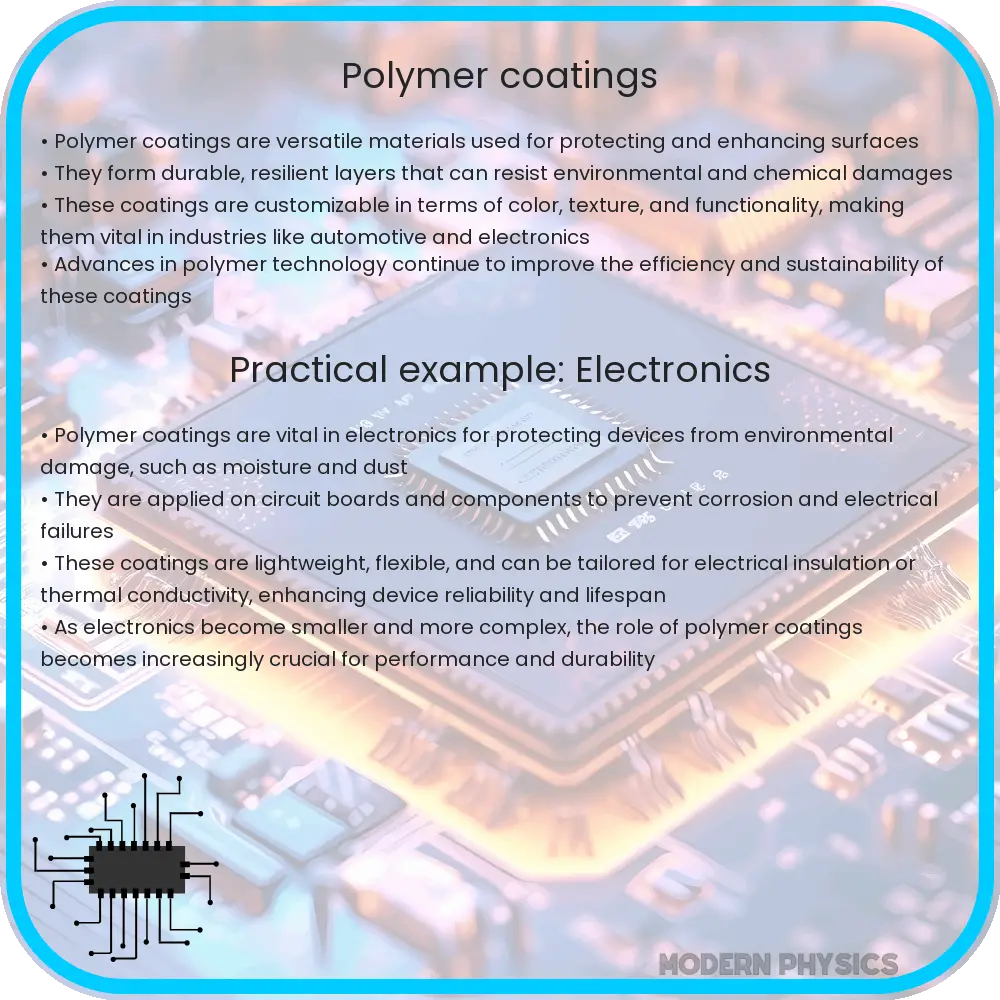
The applications of polymer coatings are extensive and diverse. In the automotive industry, they are used to coat everything from the bodywork for aesthetic and protective purposes to the engine and underbody systems for enhanced performance and longevity. In electronics, polymer coatings safeguard delicate components against moisture, dust, and mechanical damage.
Additionally, in the construction sector, these coatings are applied to structural elements to prevent rusting and degradation, thereby ensuring safety and durability of infrastructure. The versatility of polymer coatings makes them inherent to not only industrial applications but also everyday items like cookware, furniture, and clothing, providing non-stick surfaces, flame retardancy, and water resistance.
Challenges and Limitations
Despite their wide-ranging benefits, polymer coatings are not without challenges. Compatibility with the underlying material, application conditions, and long-term stability can pose issues that require careful consideration during the design phase. For example, certain polymer coatings might degrade if applied in environments they were not formulated for, leading to loss of protection and aesthetic qualities. Additionally, certain formulations may require special application techniques which can increase the complexity and cost of projects.
Moreover, while advancements continue in developing more sustainable polymer coatings, the complete elimination of harmful substances remains a significant challenge. Research and development efforts are intensively directed towards finding a balance between performance, cost-effectiveness, and environmental safety.
Future Prospects
The future of polymer coatings looks promising with ongoing research pushing the boundaries of what is possible. The integration of nanotechnology, for example, is set to revolutionize this field by enabling the creation of ultra-thin, yet incredibly durable coatings, offering superior protection and functionality without significant weight increase or alteration of the surface properties. Moreover, as digital fabrication techniques such as 3D printing continue to evolve, the application of polymer coatings in more complex and customized designs will become more feasible, opening up new possibilities in multiple industrial sectors.
Education and Awareness
Understanding the science and engineering behind polymer coatings is not only essential for professionals in the field but also beneficial for consumers and students. Awareness about the types of coatings, their specific uses, and the impact they have on sustainability can lead to more informed choices in both personal and professional capacities. Educational initiatives and resource sharing on platforms dedicated to science and engineering can help demystify this specialized field, making it accessible to a broader audience.
Conclusion
Polymer coatings are indispensable in modern technology and daily living, offering protection, aesthetics, and functionality to a diverse array of products and structures. From enhancing automobile bodies to safeguarding electronic devices, and from improving the longevity of infrastructure to contributing to sustainability, these materials serve myriad purposes across industries. As we move forward, the evolution of polymer technologies promises even greater advancements with an eye towards more robust, efficient, and environmentally friendly solutions. It’s an exciting time for industry professionals, researchers, and everyday consumers alike to engage with this dynamic field, whether through application, study, or simple curiosity.