
Explore how polarization filters enhance photo clarity, reduce glare, and boost colors in photography, with tips on choosing and using them effectively.
Understanding Polarization Filters: Clarity, Glare Reduction, and Color Enhancement
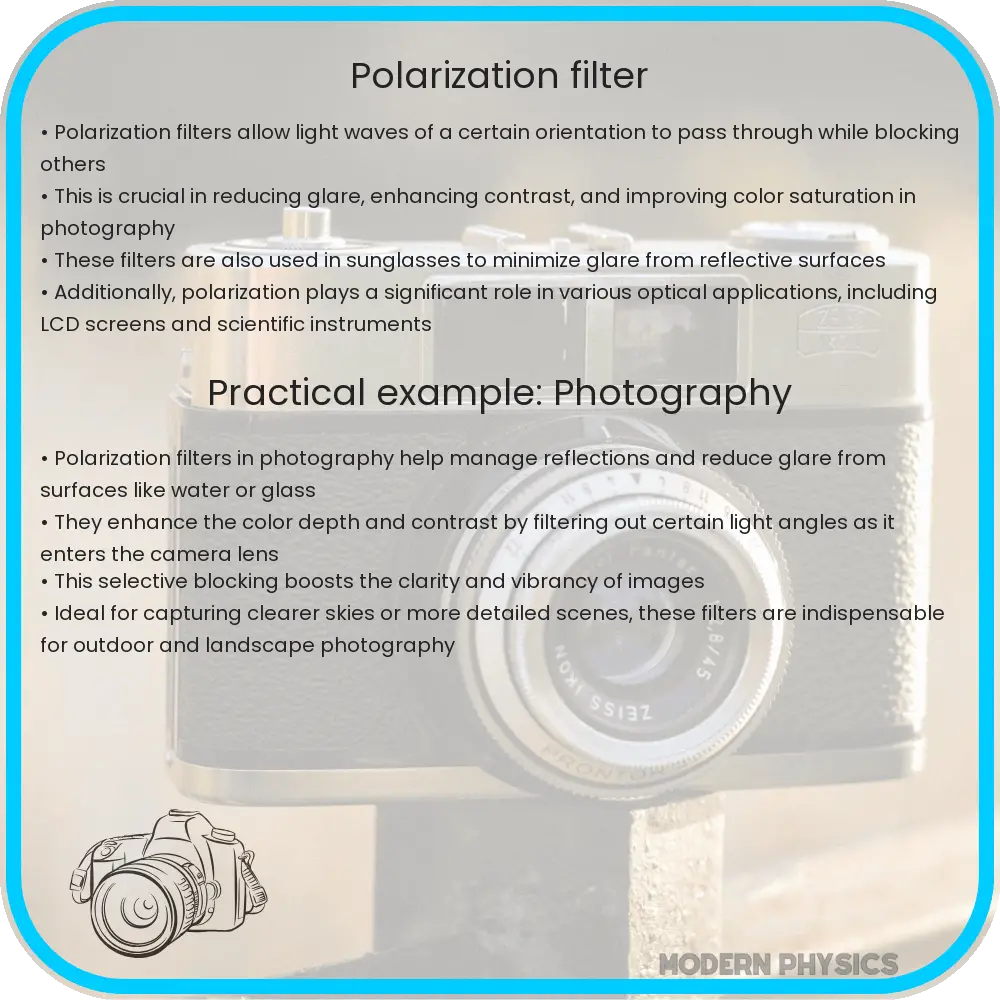
Polarization filters are an essential tool in the realm of photography and optics, known for their ability to enhance clarity, reduce glare, and boost colors. These filters operate on the principle of polarization, a property of light that can be harnessed to improve the quality of images and visibility in various conditions.
How Polarization Filters Work
Light waves vibrate in all directions. When light reflects off surfaces like water, glass, or even roads, it becomes polarized – meaning it vibrates more dominantly in one direction. This polarized light often results in glare, which can be distracting or even blinding in some situations. A polarization filter, typically made of a special material, allows only light vibrating in a certain direction to pass through. This selective process dramatically reduces glare and enhances the visibility of what lies beneath the surface, such as seeing into water or reducing the glare from a road.
Benefits in Photography and Optics
- Clarity Enhancement: By filtering out specific light waves, polarization filters can significantly improve the clarity of an image. They are particularly useful in reducing atmospheric haze, thereby enhancing the sharpness of distant objects and landscapes.
- Glare Reduction: One of the most notable benefits is the reduction of glare. This is especially useful in bright environments, where reflections from surfaces can obscure the true color and detail of the subject.
- Color Boost: Polarization filters can also enhance the vibrancy of colors. By removing glare, the true colors of the scene are revealed, making them appear more saturated and vivid.
Types of Polarization Filters
There are mainly two types of polarization filters:
- Linear Polarizers: These are the simplest form of polarizing filters. They are effective in reducing glare and enhancing colors but can interfere with some camera metering systems and autofocus.
- Circular Polarizers: These filters have an additional layer that converts the linearly polarized light into circularly polarized light. This feature makes them compatible with most modern cameras without affecting their metering and autofocus systems.
It’s important to choose the right type of filter based on your camera and the specific requirements of your photography or optical needs.
Choosing the Right Polarization Filter
Selecting the appropriate polarization filter depends on various factors including the type of camera, the environment, and the desired effect. For DSLR cameras, circular polarizers are generally recommended due to their compatibility with autofocus and metering systems. On the other hand, linear polarizers might be suitable for manual focus cameras. When purchasing a filter, consider the filter’s size to ensure it fits your camera lens and the quality of the material for durability and optimal performance.
Practical Applications in Photography
Photographers utilize polarization filters in various scenarios:
- Landscape Photography: Enhancing the contrast between the blue sky and clouds, and removing reflections from water bodies and foliage.
- Architectural Photography: Reducing reflections from glass buildings and increasing the definition of the structure against the sky.
- Wildlife and Aquatic Photography: Seeing through the surface of water to capture aquatic life more clearly.
Care and Maintenance
Proper care and maintenance are crucial for the longevity of polarization filters. Always handle them with clean hands, and store them in a protective case to prevent scratches and damage. Clean the filter regularly with a soft, lint-free cloth and avoid using harsh chemicals that might damage the coating.
Limitations and Considerations
While polarization filters offer significant benefits, they also have limitations. They can reduce the amount of light entering the lens, necessitating adjustments in exposure settings. Additionally, the effect of polarization varies with the angle of the sun, so optimal results require careful positioning. Overuse can also lead to unnaturally dark skies or uneven exposures in wide-angle shots.
Conclusion
Polarization filters are a powerful tool in the photographer’s kit, offering enhanced clarity, reduced glare, and more vibrant colors. Understanding their functionality, choosing the right type for your camera, and employing them judiciously can elevate the quality of your photographs significantly. Whether capturing the grandeur of landscapes, the intricacies of architecture, or the beauty of aquatic life, these filters can transform your images by controlling light in a way that aligns with your creative vision. Remember, while they are incredibly useful, they are not a one-size-fits-all solution and should be used in tandem with other photographic techniques to achieve the best results.