
Discover how Optokinetic Drums enhance visual tracking and therapy, bridging the gap between optics and neuroscience for improved eye health and function.
Understanding Optokinetic Drums: A Fusion of Visual Tracking, Optics, and Therapeutic Innovation
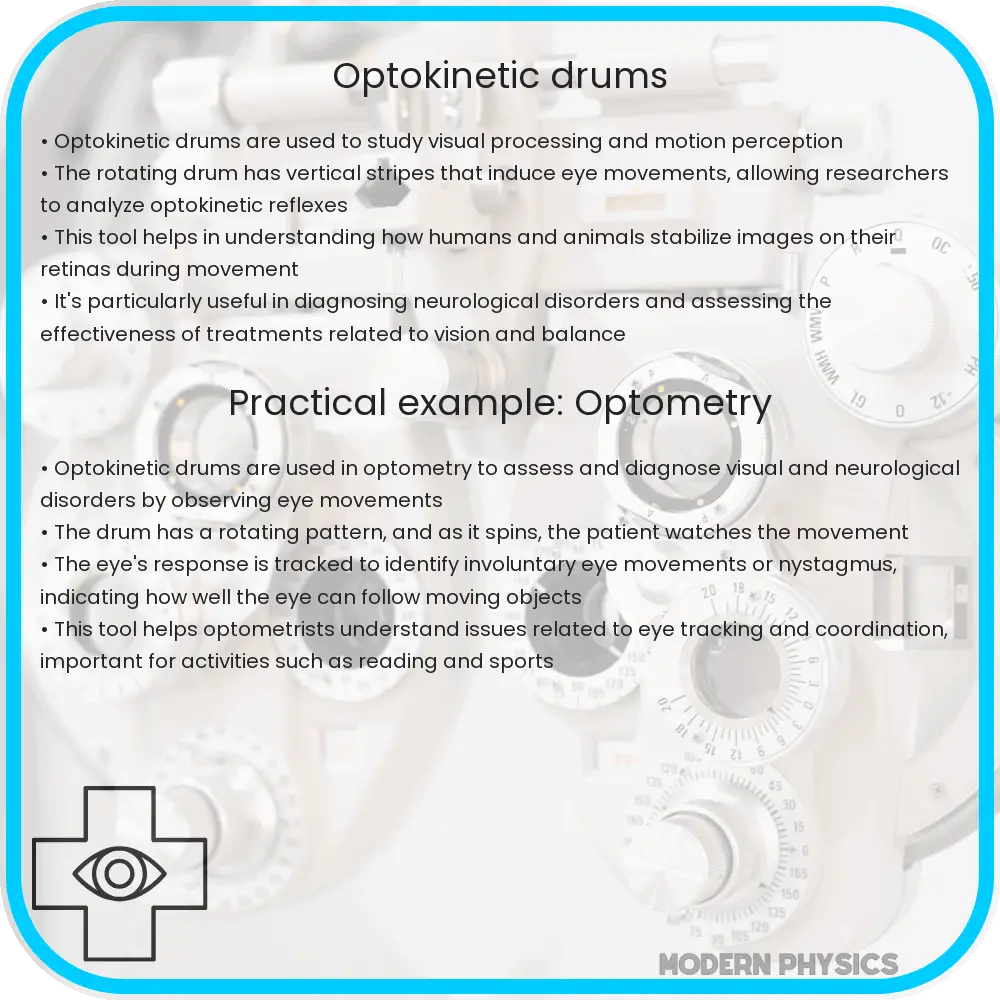
The optokinetic drum is a pivotal tool in the exploration of visual tracking systems, optics, and its applications in therapeutic practices. This cylindrical device, adorned with alternating black and white stripes, rotates around a central axis, creating a dynamic visual stimulus. Its primary function is to stimulate the optokinetic reflex (OKR), a fundamental mechanism in our visual and neurological system that enables the eyes to follow moving objects smoothly.
The Role of Optokinetic Drums in Visual Tracking
Visual tracking is crucial for interpreting and interacting with our environment. The optokinetic drum directly engages with this capability by producing a repetitive visual pattern that necessitates continuous eye movement. This process is instrumental in assessing and enhancing the efficiency of the eye’s ability to track moving objects, a skill fundamental in daily activities such as reading, driving, and sports.
Optokinetic Drums and Optics: A Detailed Insight
The design of optokinetic drums is a testament to the intricate relationship between visual stimuli and optical perception. As the drum rotates, the contrasting stripes move across the viewer’s field of vision, creating a compelling optical illusion. This movement triggers the optokinetic reflex, compelling the eyes to follow the stripes’ motion. This reflex is a critical component of our visual system, allowing for the smooth pursuit of moving objects, which is essential for maintaining visual stability and focus.
Therapeutic Applications of Optokinetic Drums
Optokinetic drums are not only tools for understanding visual processing but also serve as therapeutic instruments. They are employed in the rehabilitation of patients with visual tracking difficulties, vestibular disorders, and those recovering from neurological events like strokes. By customizing the speed and direction of the drum’s rotation, therapists can tailor treatments to improve patients’ visual tracking abilities, enhance coordination, and facilitate neuroplasticity, which is the brain’s ability to reorganize itself by forming new neural connections.
Moreover, the application of optokinetic drums extends to the assessment of vertigo and balance disorders. Through the stimulation of the OKR, therapists can diagnose and address issues related to vestibular function, offering a non-invasive method to evaluate and treat conditions affecting balance and spatial orientation.
Understanding Optokinetic Drums: A Comprehensive Guide
Optokinetic drums are a fascinating and innovative tool used in the realms of vision science, therapy, and optical research. This cylindrical device, lined on the inside with alternating black and white stripes, rotates around the subject to study and improve visual tracking abilities. As the drum spins, it stimulates the optokinetic reflex (OKR), a fundamental aspect of our visual and neurological system that allows the eyes to follow moving objects smoothly and accurately.
Applications in Therapy and Rehabilitation
The therapeutic applications of optokinetic drums are vast, particularly in the field of vision therapy and rehabilitation. They are used to diagnose and treat conditions such as vestibular disorders, balance issues, and visual tracking problems. By engaging the visual system in a controlled manner, these drums help improve eye coordination, focus, and motion perception. This makes them an invaluable tool in the rehabilitation of patients with visual deficits following neurological events like strokes or traumatic brain injuries.
Enhancing Visual Performance
Apart from their clinical uses, optokinetic drums are also used in sports science and occupational therapy to enhance visual performance. Athletes and professionals in visually demanding fields benefit from training that includes optokinetic stimulation, which can improve reaction times, peripheral vision, and the ability to track moving objects. This has direct implications for performance enhancement, whether on the sports field, in aviation, or in other areas where dynamic visual acuity is critical.
Conclusion
Optokinetic drums stand at the intersection of optics, neuroscience, and therapy, offering a unique and powerful means of understanding and enhancing human visual function. Through the stimulation of the optokinetic reflex, these devices play a critical role in diagnosing visual impairments, aiding in the rehabilitation of patients with neurological damage, and improving the visual capabilities of individuals in high-performance domains. As research progresses, the potential applications of optokinetic drums continue to expand, promising further insights into our visual system and improved outcomes for those undergoing vision therapy.