
Explore the transformative impact of optical scanners on various industries, highlighting their precision, speed, and integration capabilities for efficiency.
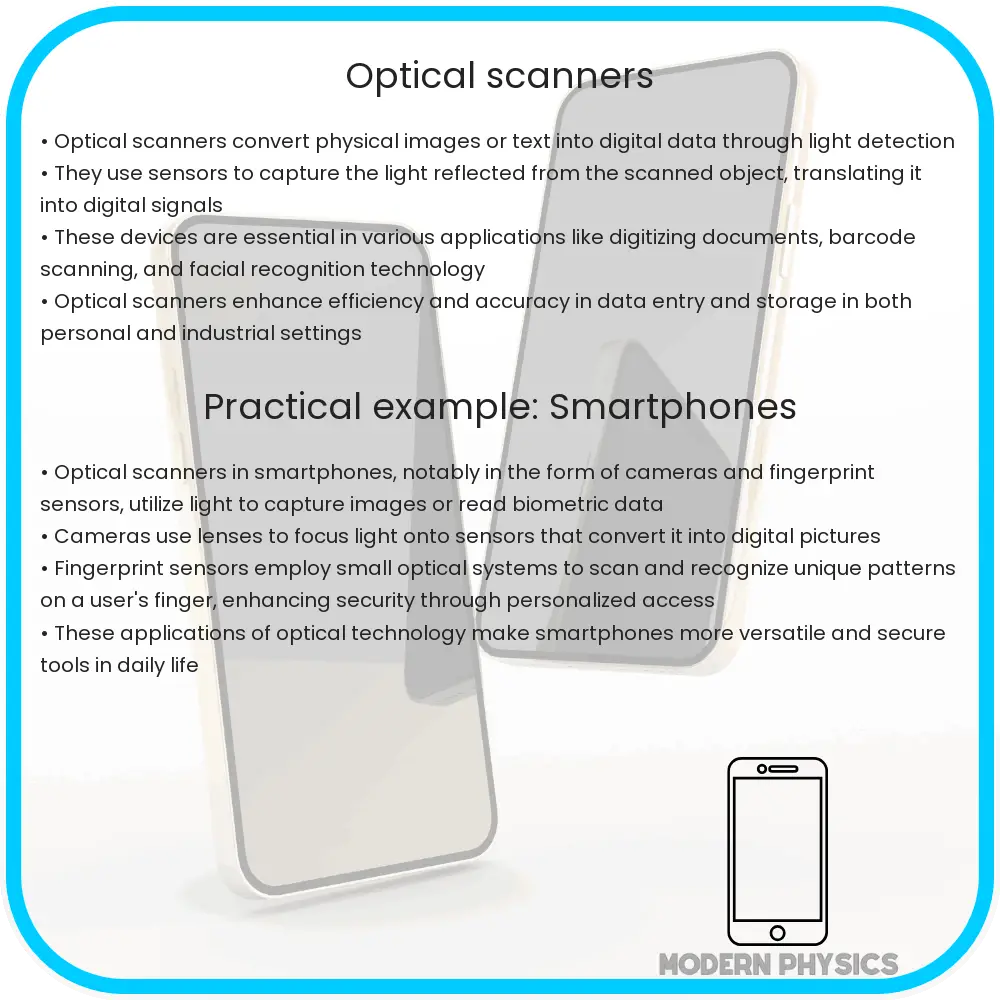
Understanding Optical Scanners: Precision, Speed, and Integration
Optical scanners have become indispensable tools in various industries, revolutionizing the way we capture, analyze, and interpret data. These devices, leveraging the power of light, offer unparalleled precision and speed, making them vital for applications ranging from document scanning and barcode reading to complex scientific research and quality control in manufacturing.
The Core of Optical Scanning Technology
At the heart of optical scanning technology lies the ability to convert physical images or objects into digital data. This process involves capturing light reflected from the object and using sophisticated sensors to detect variations in light intensity or wavelength. The data collected is then processed and interpreted by software, transforming it into a digital representation that can be analyzed, stored, or transmitted.
Precision and Accuracy
Precision in optical scanning refers to the scanner’s ability to discern fine details and reproduce them accurately in the digital output. This is crucial in fields like digital archiving, where preserving the integrity of original documents is paramount, and in industrial inspection, where detecting minute defects can prevent costly production errors. The accuracy of an optical scanner is often measured by its resolution, typically denoted in dots per inch (DPI), indicating the level of detail it can capture.
Speed and Efficiency
The speed of an optical scanner is another key attribute, directly impacting productivity and workflow efficiency. Modern scanners are designed to minimize processing time, enabling rapid scanning of documents or objects without sacrificing quality. This efficiency is vital in environments like retail, where quick barcode scanning ensures smooth customer transactions, and in logistics, where fast package processing enhances supply chain operations.
Integration Capabilities
Integration capabilities of optical scanners with other systems and technologies have expanded their applications. Through integration, scanners can directly feed data into databases, document management systems, or even automated manufacturing processes, streamlining operations and facilitating real-time data analysis. This seamless connectivity is enabled by standard interfaces and protocols, allowing scanners to communicate with a wide range of devices and software platforms.
Is this conversation helpful so far?
Advanced Applications and Future Directions
Optical scanners are not just limited to scanning documents and barcodes. They are increasingly used in biometric security systems, such as fingerprint and iris recognition, offering a high level of security for access control and identity verification. In healthcare, optical scanning technologies enable detailed imaging of tissues and cells, contributing to advanced diagnostics and research. Furthermore, in the field of environmental monitoring, scanners play a crucial role in analyzing atmospheric particles and pollutants, helping in the study of climate change and air quality.
Challenges and Solutions
Despite their numerous advantages, optical scanners face challenges such as sensitivity to environmental conditions like lighting and dust, which can affect their accuracy and reliability. However, ongoing advancements in technology are addressing these issues. For instance, the development of more robust sensors and software algorithms enhances the scanners’ ability to filter out noise and operate in less-than-ideal conditions. Moreover, the integration of artificial intelligence and machine learning technologies is enabling scanners to learn from the data they process, improving their efficiency and adaptability over time.
Conclusion
Optical scanners have profoundly impacted numerous sectors by offering an unmatched combination of precision, speed, and integration capabilities. Their versatility and adaptability have made them indispensable in today’s digital age, catering to a wide range of applications from industrial manufacturing to healthcare diagnostics. As technology continues to advance, the potential for optical scanners to further transform industries and improve our way of life is immense. By overcoming current challenges and exploring new applications, optical scanners will remain at the forefront of digital imaging and data analysis technologies, contributing to innovation and efficiency across the globe.