
Explore the functionalities and benefits of Nickel-Metal Hydride (NiMH) batteries in modern technology, focusing on efficiency, longevity, and safety.
Understanding Nickel-Metal Hydride Batteries
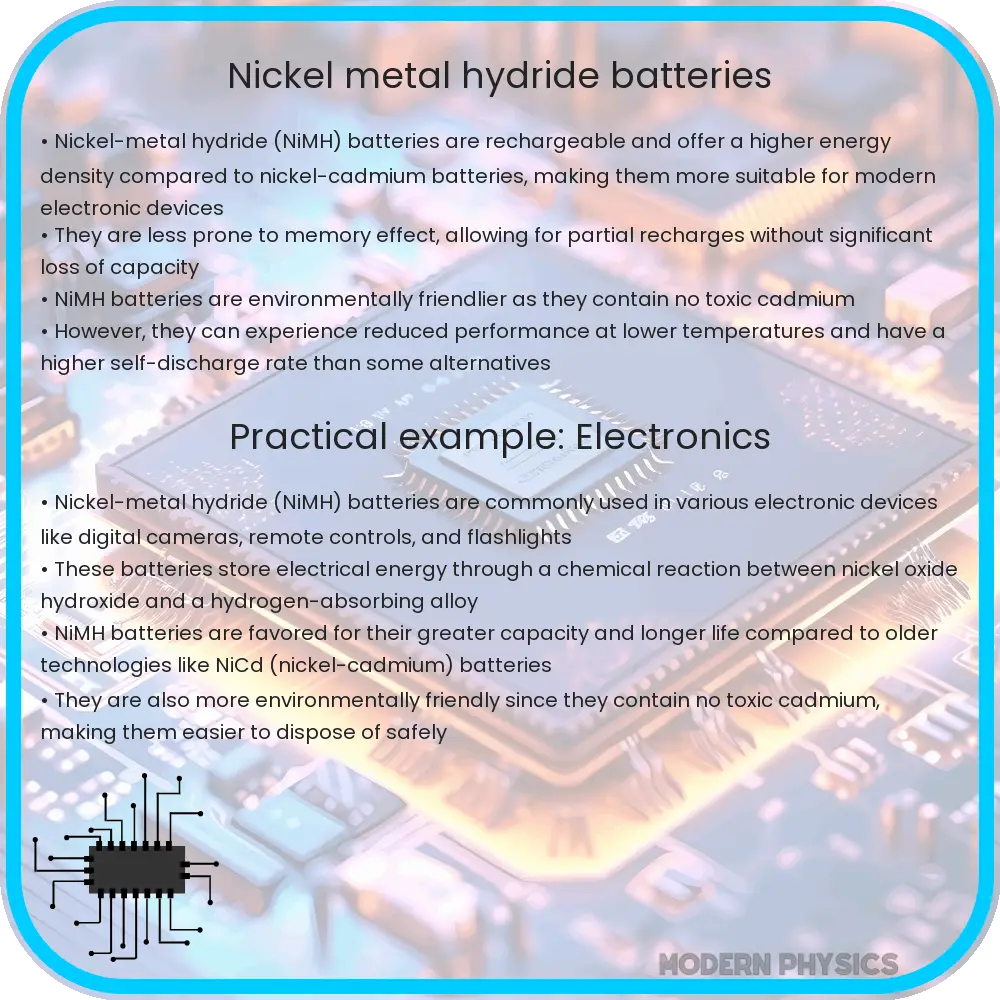
Nickel-metal hydride (NiMH) batteries are a type of rechargeable battery that have been widely used in various applications since their development in the 1980s. They are particularly noted for their favorable balance between cost, performance, and environmental friendliness. This article delves into the efficiency, longevity, and safety aspects of NiMH batteries, making it easier to understand their role and capabilities in modern technology.
Efficiency of NiMH Batteries
One of the main advantages of NiMH batteries is their energy density, which is significantly higher than that of their nickel-cadmium (NiCd) predecessors. Typically, NiMH batteries offer a gravimetric energy density range of 60-120 Wh/kg, which means they can store more energy for the same weight. This feature is particularly beneficial for portable electronic devices and electric vehicles, where weight is an essential factor.
In terms of charging efficiency, NiMH batteries perform well, with about 66% to 92% of the electrical energy used to charge them being converted into stored energy. This efficiency varies depending on the speed of charging and the age of the battery. Other benefits in terms of efficiency include the relatively low self-discharge rate, which is approximately 30% per month for NiMH batteries compared to about 20% per week for NiCd batteries.
Longevity of NiMH Batteries
The lifespan of NiMH batteries is influenced by several factors including charging cycles, depth of discharge, and environmental conditions. Under optimal conditions, a NiMH battery can last from 500 to 1000 charge cycles. A charge cycle involves charging the battery fully and then completely discharging it.
To maximize longevity, it is important to avoid overcharging and deep discharges as much as possible. Many modern chargers for NiMH batteries have smart features designed to prevent overcharging, and they offer trickle charge modes to maintain the battery at full capacity without causing damage due to overcharging.
Safety Features of NiMH Batteries
NiMH batteries are generally safer than lithium-ion batteries in terms of handling and operation. They are less prone to overheat and catch fire, mainly because they have a lower energy density and operate at lower voltages. However, they can still pose risks if damaged or improperly handled. It is important to ensure that NiMH batteries are not exposed to high temperatures, punctured, or tampered with, as these conditions can lead to chemical leaks or, in rare cases, a fire.
Safety mechanisms typically built into NiMH batteries include overpressure valves and thermal cutoffs. These features help manage the internal pressure and temperature of the battery, preventing dangerous scenarios such as thermal runaway—where the battery self-heats and breaks down chemically.
This introduction into the efficiency, longevity, and safety of NiMH batteries sets the stage for a closer look at their chemical composition and how it contributes to their performance and applications, which will be explored in the following sections.
Chemical Composition of NiMH Batteries
NiMH batteries are composed of a nickel oxide hydroxide positive electrode and a hydrogen-absorbing alloy for the negative electrode. This chemical setup is key to their operation and performance. During discharge, hydrogen ions move from the negative to the positive electrode through an electrolyte, usually a potassium hydroxide solution. This flow generates electric power.
One of the reasons NiMH batteries have gained popularity is their lack of toxic cadmium, which is used in NiCd batteries. This makes recycling and disposal of NiMH batteries less of an environmental hazard compared to the disposal of NiCd batteries that contain heavy metals.
Applications and Innovations
NiMH batteries are utilized in a variety of devices — from portable electronics like digital cameras and handheld games to larger applications such as electric vehicles and backup power systems. Their ability to be recharged hundreds of times makes them ideal for devices that require frequent charging.
Innovations in NiMH technology continue to enhance these batteries’ application range and efficiency. For instance, advancements in electrode materials have potential to increase the charge capacity and reduce the self-discharge rate, further improving the energy density.
Additionally, newer hybrids and electric vehicles use advanced NiMH batteries that offer not only greater longevity but also better performance in extreme weather conditions, highlighting the ongoing developments in NiMH battery technology.
Conclusion
Nickel-metal hydride batteries play a crucial role in the realm of rechargeable batteries with their better energy density, safety features, and environmental friendliness compared to older technologies like nickel-cadmium batteries. With ongoing advancements and innovations, the use of NiMH batteries in various fields, especially in portable electronics and automotive applications, is likely to expand. By understanding the basic principles behind their efficiency, longevity, and safety, consumers and engineers can make informed decisions about their use in numerous applications. As technology evolves, so does the potential for NiMH batteries to contribute even more significantly to sustainable energy solutions.