
Explore the fascinating world of microplasma technology: its applications in materials processing, environmental tech, medical field, and the future of plasma physics.
Introduction to Microplasma Technology
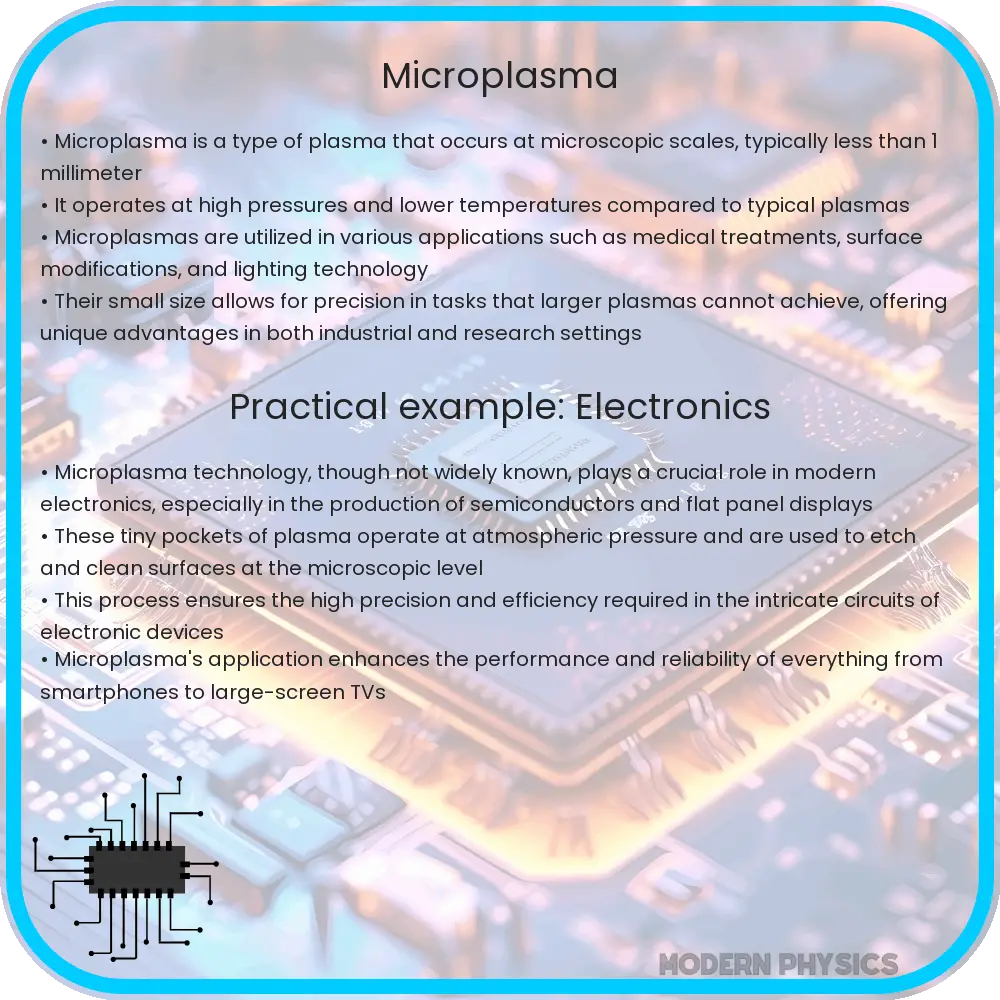
Microplasma, a term that may sound futuristic to many, refers to a state of plasma that exists at a microscopic scale, typically in the range of micrometers. This intriguing phase of matter is not only a cornerstone in the field of plasma physics but also a beacon of innovation across various scientific and industrial domains. By understanding and harnessing the unique properties of microplasma, researchers and engineers are unlocking new potentials in technology and science.
Applications of Microplasma
One of the most notable applications of microplasma is in the field of materials processing. Microplasma technology enables the precise treatment of surfaces, allowing for the cleaning, etching, and functionalization of materials at a microscopic level. This precision opens up new possibilities in the fabrication of semiconductors, the development of hydrophobic surfaces, and the creation of nanoscale devices.
Another significant application is in environmental technology. Microplasma can be used for the decomposition of hazardous pollutants in air and water, offering a high-efficiency, low-energy method for detoxifying environments. Its ability to break down complex organic compounds into harmless molecules makes it an invaluable tool in the fight against pollution.
Benefits of Microplasma
- Energy Efficiency: Microplasma operates at low temperatures and can be generated at atmospheric pressure, making it an energy-efficient alternative to traditional plasma technologies.
- Selectivity: The ability to precisely control the conditions of microplasma reactions allows for unmatched selectivity in chemical processes, enabling targeted modifications without affecting surrounding materials.
- Environmental Friendliness: As a clean technology, microplasma plays a crucial role in environmental protection and sustainability, offering pollution-free solutions to industrial challenges.
Research in Plasma Physics
Research in the field of plasma physics is continuously expanding our understanding of microplasma and its applications. Scientists are exploring the fundamental principles that govern the behavior of microplasma, such as ionization mechanisms, electron energy distributions, and interactions with materials. This research not only deepens our theoretical knowledge but also drives the development of new technologies and applications.
Innovations in Microplasma Research
The frontier of microplasma research is teeming with innovations that promise to revolutionize industries. In medicine, for instance, microplasma technology is being explored for its potential in sterilization processes, cancer treatment, and wound healing. Its ability to kill bacteria and other pathogens without harming surrounding healthy tissues offers a new paradigm in medical treatment and device sterilization.
Furthermore, the field of electronics benefits immensely from microplasma research. The development of microplasma displays, for example, showcases the potential for creating more energy-efficient, brighter, and sharper displays than current LCD or OLED technologies. Additionally, microplasma is instrumental in the manufacturing of microelectronic components, where it enables precise etching and deposition processes that are critical for the production of integrated circuits and microchips.
The Future of Microplasma
Looking ahead, the future of microplasma technology is bright with possibilities. The ongoing miniaturization of plasma devices opens up new applications in portable and wearable technology, offering potential breakthroughs in personal healthcare monitoring and environmental sensing. Moreover, the integration of microplasma systems into microfluidic devices is a burgeoning area of research, promising advancements in lab-on-a-chip technologies and point-of-care diagnostics.
As the global demand for cleaner, more efficient, and precise technologies grows, the role of microplasma in meeting these challenges becomes increasingly significant. With its versatile applications, environmental benefits, and potential for innovation, microplasma technology is poised to make a substantial impact across a broad spectrum of scientific and industrial fields.
Conclusion
Microplasma technology, with its small-scale operations and myriad applications, represents a significant leap forward in plasma physics and its practical applications. From environmental remediation and materials processing to advancements in medical treatments and electronic manufacturing, the benefits of microplasma are vast and varied. As research continues to unravel the complexities of microplasma and its interactions, we can expect to see further innovations and applications that harness the power of this unique state of matter. The convergence of multidisciplinary research efforts in microplasma technology not only enhances our understanding of plasma physics but also paves the way for future technological breakthroughs that will benefit society in countless ways.