
Learn about magnetic shape memory foams, advanced materials that respond to magnetic fields, offering durability and versatility for various industries.
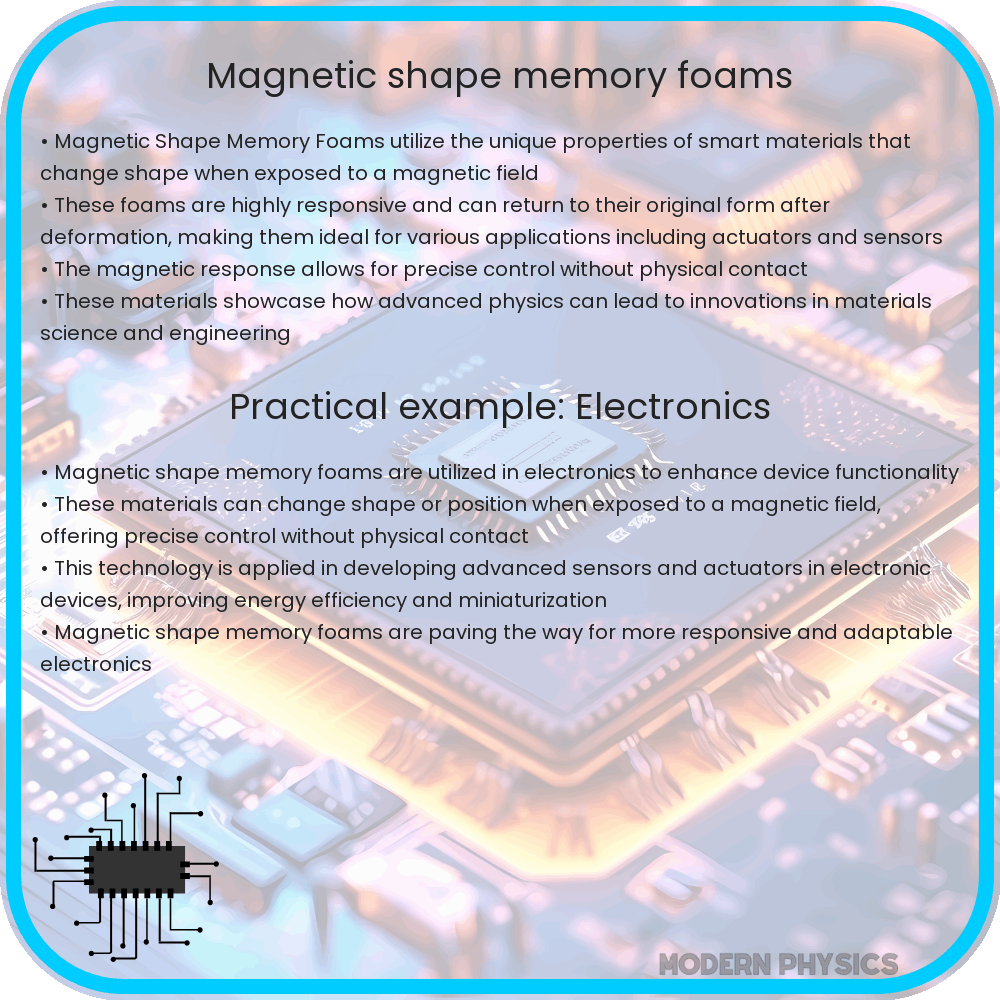
Magnetic Shape Memory Foams: Innovative, Durable & Versatile
Magnetic shape memory foams are emerging as a frontier technology blending the principles of physics and materials science to create smart materials capable of responding to external magnetic fields. This advanced material is not only durable but also highly versatile, opening up a plethora of applications in various industries including robotics, aerospace, and biomedical engineering.
Understanding Magnetic Shape Memory Foams
At the core, magnetic shape memory foams are based on the integration of ferromagnetic micro-particles into polymeric foams. When subjected to a magnetic field, these particles realign themselves in a way that changes the shape of the foam. This adjustment is reversible; once the magnetic field is removed, the foam can return to its original form. This unique feature is derived from the elastic properties of the polymeric matrix and the magnetic characteristics of the embedded particles.
- Composition: Typically, the foam is composed of a flexible, porous polymer base, such as polyurethane or silicone, embedded with tiny ferromagnetic particles like iron, nickel, or cobalt alloys.
- Mechanism: The science behind these foams involves the magneto-mechanical response of the ferromagnetic particles which align along the lines of magnetic force applied externally. This alignment induces a strain in the foam, altering its shape.
- Reversibility: Once the magnetic force is discontinued, the elastic nature of the polymer encourages the foam to spring back to its original state, demonstrating excellent reversibility properties.
Advantages of Using Magnetic Shape Memory Foams
The unique characteristics of magnetic shape memory foams lend them several advantages over conventional materials:
- Programmable Actuation: The shape and actuation of these foams can be precisely controlled by adjusting the strength and orientation of the magnetic field, allowing for complex and precise movements required in sophisticated engineering applications.
- High Durability: These foams are capable of enduring numerous cycles of deformation without significant wear or tear, making them suitable for applications where longevity and reliability are critical.
- Versatility: The ability to be engineered with different polymers and ferromagnetic particles makes these foams highly versatile, enabling their use in diverse environmental conditions and for various functional requirements.
- Remote Controllability: Since the actuation of these foams can be controlled remotely via magnetic fields, they are ideal for use in situations where direct physical contact is not feasible or desirable.
The integration of magnetic shape memory technology in foams presents a significant step forward in the development of smart responsive materials. As we delve deeper into their properties and potential applications, it’s clear that they hold the promise of revolutionizing multiple industries by offering smart, adaptable solutions to complex engineering challenges.
Potential Applications of Magnetic Shape Memory Foams
The adaptable nature and smart capabilities of magnetic shape memory foams enable a broad range of applications:
- Robotics: These foams can be used to develop soft robotic components that bend, twist, or stretch in response to magnetic signals, mimicking the natural movements of biological organisms.
- Biomedical Devices: In medical technology, these materials could be used to create stent grafts or artificial muscles that adjust and move according to precise magnetic controls, improving patient outcomes with responsive implantable devices.
- Aerospace: These foams could also be utilized in the aerospace sector to develop components that change shape to adapt to different aerospace dynamics, contributing to the efficiency and performance of spacecraft or aircraft.
- Automotive: In automotive applications, magnetic shape memory foams could help in the development of responsive, adaptive seating that improves comfort and safety for vehicle occupants.
Challenges and Future Directions
Despite the many advantages, there are challenges that need addressing to fully capitalize on this technology:
- Sensitivity to External Conditions: The performance of magnetic shape memory foams can be influenced by environmental factors such as temperature and humidity, which may affect their reliability and efficiency.
- Cost: The incorporation of precious metals and advanced polymers can make these foams expensive. Research into cost-effective materials and production techniques is crucial.
- Scalability: Scaling up the production of customized foams for widespread applications remains a technical challenge that needs innovative solutions.
However, with ongoing research and development, solutions to these challenges are likely to emerge, leading to wider adoption and new utilities of magnetic shape memory foams.
Conclusion
Magnetic shape memory foams represent a cutting-edge innovation at the frontier of materials science and engineering. With their ability to respond dynamically to external magnetic fields, these materials open up new possibilities for creating more adaptable, efficient, and sophisticated systems across a range of industries. From robotics to aerospace and biomedical devices, the potential applications are vast and varied. While there are challenges to be addressed, particularly in terms of environmental sensitivity, cost, and scalability, the ongoing advancements in this field hold great promise. As research continues to refine and enhance the properties of these innovative materials, the future of magnetic shape memory foams looks bright, signaling a new era of smart material applications that could transform our approach to engineering and technology.