
Dive into the world of loudspeakers, focusing on clarity, power, and acoustic design to enhance your audio experience.
Loudspeakers: Clarity, Power, and Acoustic Design
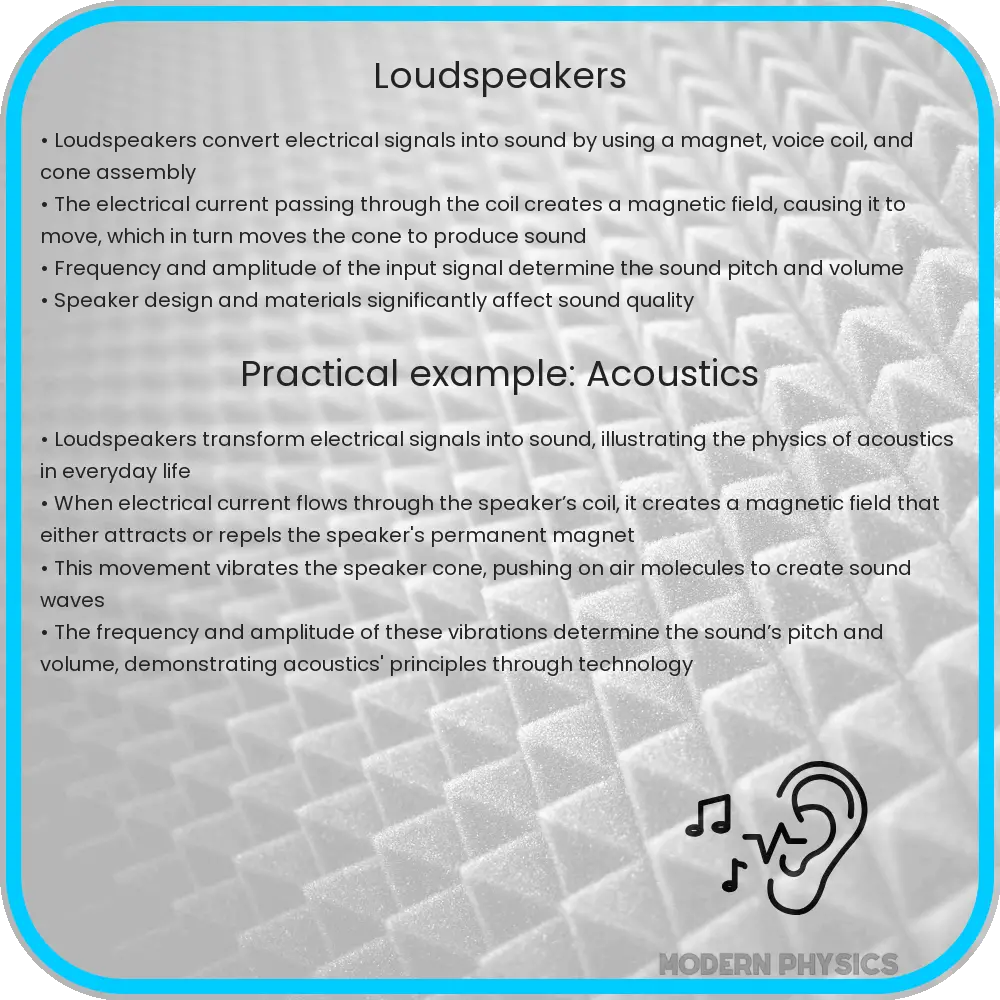
Loudspeakers are a fundamental component in both consumer electronics and professional sound systems. Their primary function is to convert electrical signals into audible sound, but the quality of this sound can vary greatly depending on the design and build of the loudspeaker. In this article, we will explore the core aspects of loudspeaker technology, focusing on clarity, power, and acoustic design.
Understanding Loudspeaker Clarity
Clarity in loudspeakers refers to how accurately a speaker reproduces the sound as intended in the original recording. The clarity of a loudspeaker depends on several factors including the design of its drivers, the materials used, and how it manages distortion.
- Driver Design: The driver is the part of the speaker that converts the electrical signal into mechanical energy to produce sound. Drivers come in various types, such as woofers for low frequencies and tweeters for high frequencies. The precision with which these drivers are built significantly influences the speaker’s clarity.
- Materials: The materials used in constructing the speaker components like the cone and the surround (the ring that supports the cone) affect sound quality. For example, stiffer cone materials such as metal or Kevlar reproduce sound more accurately than cheaper alternatives like paper or cloth.
- Distortion Management: Lower distortion means higher clarity. Distortion can occur at different components of a speaker, including the driver and crossover circuits. Advanced loudspeakers employ technologies to reduce distortion and enhance the fidelity of sound.
Diving Into Loudspeaker Power
Loudspeaker power is crucial because it impacts how loud a speaker can sound without distorting audio. Speaker power is typically measured in watts and can be classified into several types, including RMS (Root Mean Square), peak power, and program power.
- RMS Power: This is the measure of how much continuous power a speaker can handle without sustaining damage. RMS power is a good indicator of the speaker’s ability to perform consistently under normal conditions.
- Peak Power: This represents the maximum power level a speaker can handle in short bursts. It is higher than RMS power but cannot be sustained for long periods as it may lead to speaker damage.
- Program Power: Often seen in professional audio equipment, program power is generally considered as twice the RMS power rating. It suggests the speaker’s ability to handle standard audio playback with occasional peaks.
Acoustic Design in Loudspeakers
The acoustic design of a loudspeaker involves its physical structure and how it interacts with the environment. It is crucial for the overall performance, affecting the dispersion of sound, bass response, and the acoustic signature of the speaker.
- Enclosure Design: The enclosure or cabinet of a speaker plays a pivotal role in sound quality. Different designs like sealed, ported, or bass reflex have unique impacts on sound characteristics, particularly in terms of bass response and how sound waves are managed within the cabinet.
- Sound Dispersion: The shape and layout of the speaker influence how sound is spread across a space. For instance, some speakers are designed to deliver more directional sound which is suitable for personal listening, while others provide a broader dispersion ideal for larger spaces.
- Room Acoustics Interaction: The interaction between the speaker and room acoustics can greatly affect perceived sound quality. Factors such as room size, shape, and furnishing play roles in how sound waves are absorbed or reflected, necessitating different speaker placements and types for optimal audio reproduction.
In understanding these elements—clarity, power, and acoustic design—one can better appreciate what makes a loudspeaker perform well and suit particular needs, whether for home entertainment, professional audio engineering, or personal audio enjoyment.
Integrating Technology for Enhanced Loudspeaker Performance
Modern loudspeakers integrate various technologies to enhance performance and meet the diverse demands of different listening environments. These include digital signal processing (DSP), advanced materials, and wireless connectivity.
- Digital Signal Processing (DSP): DSP technology allows for precise control over the sound output by manipulating the audio signal. This can include equalization, crossover control, and other audio enhancements to optimize performance tailored to specific environments.
- Advanced Materials: Beyond the basic construction of drivers and enclosures, the use of cutting-edge materials like carbon fiber and advanced composites contributes to improving durability and sound quality, particularly in reducing unwanted resonances.
- Wireless Technology: The inclusion of Bluetooth, Wi-Fi, and other wireless technologies in loudspeakers adds convenience and flexibility, allowing users to stream audio from various devices without the physical constraints of cables.
The Future of Loudspeakers
As we look towards the future, the evolution of loudspeaker technology shows no signs of slowing down. Innovations such as immersive audio formats like Dolby Atmos and DTS:X are pushing the boundaries of spatial audio, providing listeners with a more three-dimensional sound experience. Furthermore, smart technologies are increasingly being integrated into loudspeakers, enabling voice control and seamless interaction with other smart home devices.
The ongoing advancements in materials science, digital processing, and connectivity promise to further enhance the audio quality and user experience, making loudspeakers even more versatile and integral to our daily lives.
Conclusion
Loudspeakers play a crucial role in our experiences with audio, whether for personal enjoyment, professional settings, or public events. Understanding the principles of clarity, power, and acoustic design, along with the integration of advanced technologies and anticipation of future developments, not only enhances our appreciation of these devices but also guides us in choosing the right loudspeakers for our specific needs. By keeping informed about these developments, listeners can ensure they are obtaining not only high-quality sound but also the best fit for their audio environments and lifestyle.
In a world continuously enriched by sound, knowing what goes into making effective loudspeakers can transform ordinary listening into a truly immersive and fulfilling auditory experience.