
Explore the role of magnets in loudspeakers, covering their strength, design, materials like ferrite and neodymium, and environmental impacts.
Loudspeaker Magnet: Understanding Its Strength, Design, and Materials
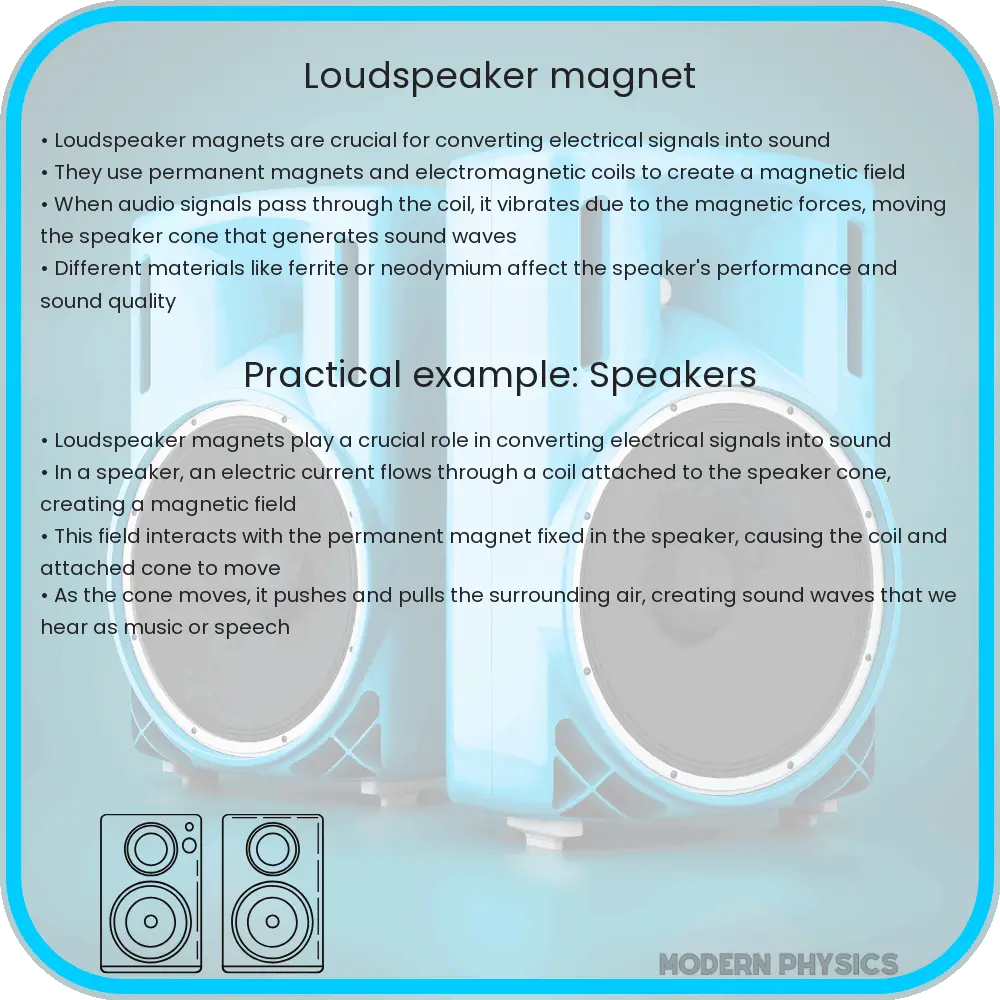
Loudspeakers are an integral part of modern audio systems, and the magnet within them plays a crucial role in their functionality. The strength, design, and material of a loudspeaker magnet not only determine the quality of sound produced but also the efficiency and longevity of the speaker itself.
Strength of Loudspeaker Magnets
The strength of a loudspeaker magnet is measured in terms of magnetic flux density. This is a key factor that influences the speaker’s sensitivity and power handling. Higher magnetic flux density results in better control of the speaker cone, leading to clearer and more precise sound reproduction. The strength of the magnet affects the efficiency of the voice coil’s movement, directly impacting the acoustic output.
Design Considerations
The design of loudspeaker magnets varies depending on the application. For instance, woofers require large and heavy magnets for better low-frequency response, whereas tweeters use smaller magnets for higher frequencies. The shape of the magnet, usually ring or bar-shaped, is optimized to provide a uniform magnetic field in the voice coil gap. This uniformity is crucial for the linear movement of the coil and thus for the fidelity of the sound.
Materials Used in Loudspeaker Magnets
The most common materials used for loudspeaker magnets are ferrite and neodymium. Ferrite, a ceramic compound made from iron oxide (Fe2O3) mixed with other metallic elements, is popular due to its cost-effectiveness and decent performance. It’s typically used in budget to mid-range speakers.
Neodymium, on the other hand, is a rare-earth element that forms a part of the Nd2Fe14B compound when used in magnets. It is known for its exceptional magnetic strength, which allows for smaller and lighter magnets that produce a powerful magnetic field. This makes neodymium magnets a preferred choice for high-end and portable speakers where space and weight are constraints.
Understanding the interplay of these factors – strength, design, and materials – is crucial for anyone looking to delve deeper into the engineering behind loudspeakers and their performance. In the next section, we will explore further aspects such as the impact of magnet strength on sound quality and the environmental considerations in magnet manufacturing.
Impact of Magnet Strength on Sound Quality
The magnet strength in a loudspeaker has a direct influence on its sound quality. A stronger magnet yields a more controlled and powerful electromagnetic interaction with the voice coil. This control is essential for accurate sound reproduction, especially in handling complex audio signals. The improved magnetic force ensures a wider dynamic range and better transient response, meaning the speaker can quickly and accurately respond to changes in the audio signal.
Environmental Considerations in Magnet Manufacturing
While discussing loudspeaker magnets, it’s essential to consider the environmental impact of their manufacturing. Neodymium magnets, despite their superior qualities, are made from rare-earth elements whose extraction can be environmentally taxing. The mining process for these elements often involves significant land disruption and the use of harmful chemicals. On the other hand, ferrite magnets, though less powerful, are made from more abundant materials and have a lesser environmental impact. Manufacturers and consumers alike are increasingly aware of these factors, driving innovation towards more sustainable practices in magnet production.
Future Trends in Loudspeaker Magnet Technology
Advancements in materials science are paving the way for new developments in loudspeaker magnet technology. Researchers are exploring alternative materials that can offer high magnetic strength while being more environmentally friendly. One such area of research is in composite magnets, which could potentially offer a balance between performance, cost, and environmental impact. Additionally, there’s ongoing research in improving the efficiency of neodymium and ferrite magnets, aiming to achieve higher performance with smaller amounts of material.
Conclusion
In summary, the magnet in a loudspeaker is a critical component that significantly influences its performance and sound quality. The choice of magnet – be it ferrite or neodymium – depends on various factors including desired sound quality, application, and environmental considerations. The strength and design of the magnet are pivotal in determining the speaker’s efficiency and audio fidelity. With ongoing technological advancements, the future of loudspeaker magnet technology holds promising potential for higher performance, increased sustainability, and better sound quality. As we continue to innovate and improve, the loudspeaker will undoubtedly evolve, offering even more impressive auditory experiences for users around the globe.