
Discover how lightboxes enhance photography clarity, color, and details, offering tips on choosing, setting up, and post-processing for optimal results.
Understanding Lightboxes in Photography
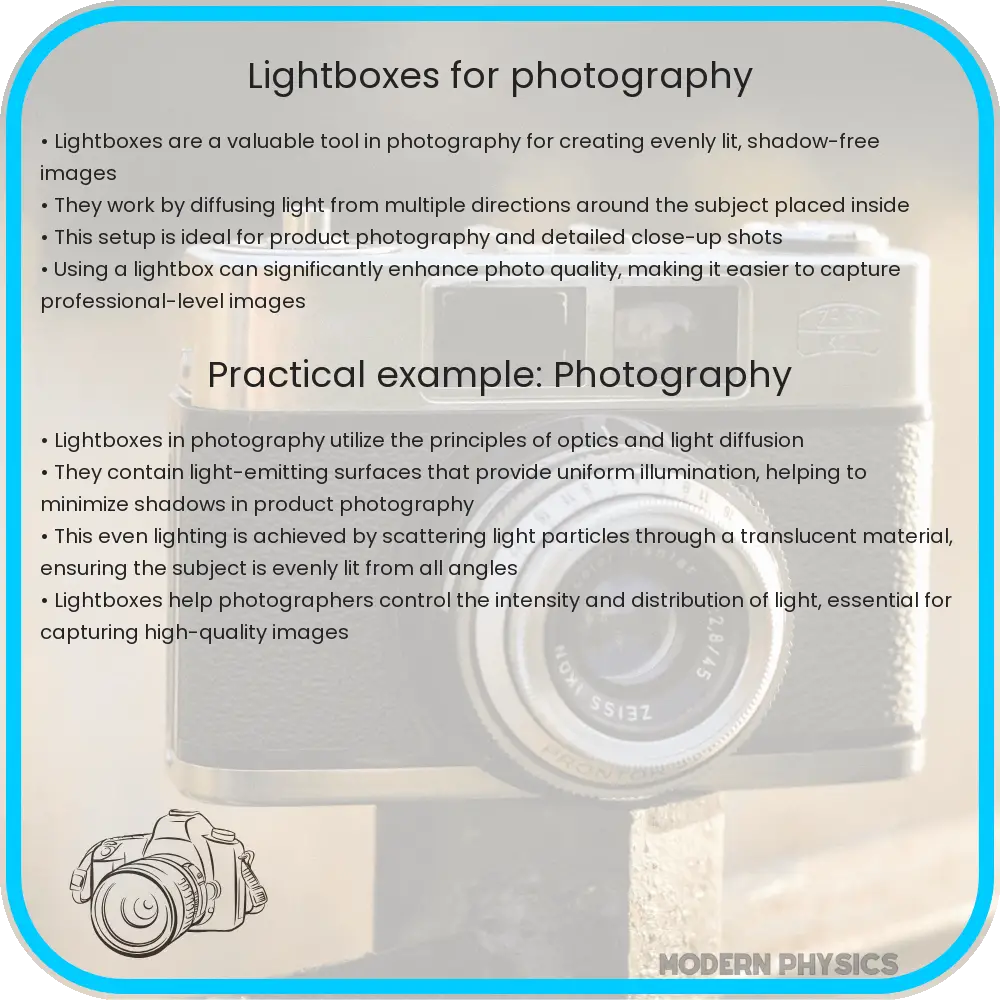
Lightboxes are an essential tool for photographers looking to enhance the clarity, color, and details of their subjects. These devices, essentially a box with light-emitting sides, provide a controlled lighting environment that is perfect for product photography, macro shots, and detailed work where precision is key. By illuminating the subject from all sides, lightboxes eliminate unwanted shadows and distribute light evenly, ensuring the subject is captured in its best light.
The Benefits of Using Lightboxes
One of the primary advantages of using a lightbox is the ability to achieve consistent lighting. This is particularly beneficial for photographers who require steady conditions to highlight the features of their subjects without the variability of natural light. Furthermore, lightboxes can significantly improve the appearance of colors in photography. By providing a neutral background and balanced light, colors appear more vibrant and true to life, making the images more appealing and accurate.
Choosing the Right Lightbox
When selecting a lightbox, size and light source are critical considerations. The size of the lightbox should correspond to the size of the objects being photographed, ensuring they can be comfortably placed inside without crowding. As for the light source, LED lights are popular due to their long lifespan and consistent output. They also produce very little heat, making them safe for extended use. Additionally, the color temperature of the lightbox is an important factor; a temperature around 5000K to 5500K is ideal as it closely mimics daylight, ensuring that the colors in the photographs are natural and accurate.
Setting Up Your Lightbox for Optimal Results
Setting up a lightbox properly can make a significant difference in the quality of the photographs. Placement of the lightbox in a room with minimal external light interference is recommended to maintain control over the lighting conditions. Moreover, using a tripod to stabilize the camera can prevent any movement, ensuring that the images are sharp and clear. Experimentation with the positioning of the subject within the lightbox can also lead to more creative and visually interesting results.
Enhancing Photography with Post-Processing
While lightboxes provide an excellent starting point for high-quality photography, post-processing plays a crucial role in enhancing the final image. Adjusting the exposure, contrast, and saturation can help bring out the full potential of the photos taken within a lightbox. Software such as Adobe Photoshop or Lightroom offers tools to fine-tune these elements, ensuring that the clarity, color, and details of the subject are showcased to their fullest extent.
Practical Applications of Lightboxes
Lightboxes are not just for product photography; they are also incredibly useful for capturing details in small objects, such as jewelry, plants, or even food. For hobbyists and professionals alike, lightboxes offer a simple yet effective way to produce studio-quality images. Whether for online sales, catalogues, or artistic photography, the applications are vast, making lightboxes a versatile tool in a photographer’s arsenal.
Customizing Your Lightbox Experience
For those looking to further customize their lightbox photography experience, there are several DIY options and accessories available. Creating a lightbox at home can be as simple as using a cardboard box and some white fabric or paper. Additionally, purchasing different colored backdrops or adjustable LED lights can provide more control over the mood and feel of the photographs. Experimentation is key to discovering the vast possibilities lightbox photography offers.
Conclusion
Lightboxes are a powerful tool for photographers aiming to enhance the clarity, color, and detail in their work. By providing a controlled lighting environment, lightboxes help in achieving consistent, high-quality images that stand out. Whether through the use of a commercial lightbox or a DIY setup, the benefits of incorporating this tool into your photography practice are clear. With the addition of post-processing and the potential for customization, lightboxes offer a pathway to elevate your photography, making them an invaluable addition to any photographer’s toolkit.