
Explore the captivating world of laser show systems, where stunning visuals meet precision optics and high-tech innovations for unforgettable experiences.
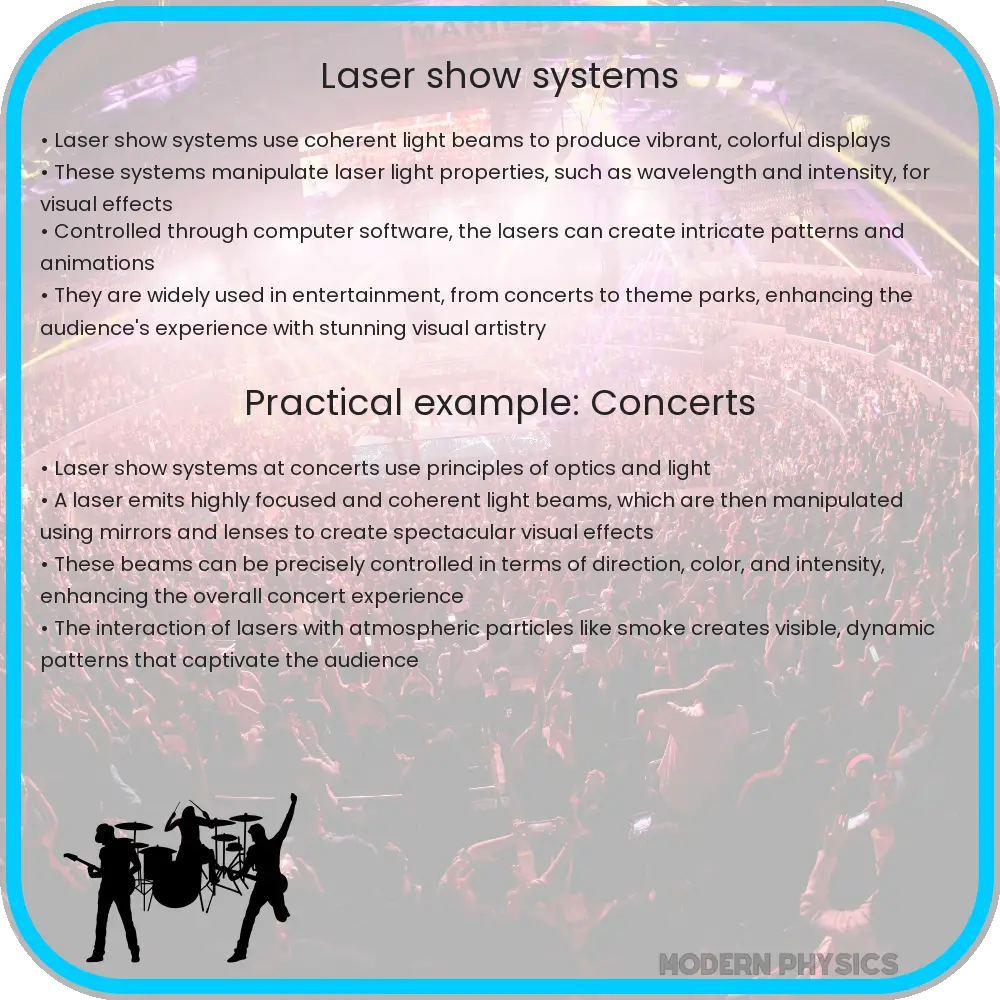
Laser Show Systems: The Art of Light and Precision
Laser show systems have revolutionized the way we experience visual entertainment, combining stunning visuals, precision optics, and high-tech innovations to create unforgettable experiences. These systems use lasers to generate vibrant, intricate patterns and animations that captivate audiences in concerts, festivals, corporate events, and more. At the core of their appeal is the blend of art and technology, where precision optics and advanced software come together to paint the night sky or indoor venues with light.
Understanding Laser Technology
At the heart of any laser show system is the laser itself, a device that emits light through a process of optical amplification based on the stimulated emission of electromagnetic radiation. The key components include a laser medium, an energy source, and two mirrors that form an optical cavity. Lasers in show systems often utilize RGB (Red, Green, Blue) color mixing, allowing for a wide spectrum of colors by varying the intensity of each primary color. This color mixing capability enables the creation of millions of hues, from the deepest blues to the brightest yellows, making every show a unique visual spectacle.
Precision Optics and Beam Steering
Precision optics play a crucial role in laser show systems. High-quality lenses and mirrors direct and focus the laser beams, creating sharp, clear images that can travel vast distances without losing integrity. The technology behind beam steering allows for the dynamic control of laser beams, enabling them to move with incredible speed and accuracy. This is achieved through the use of galvanometers—devices that rapidly adjust the mirrors’ angles to steer the beam across surfaces or through the air, tracing patterns, shapes, and animations with pinpoint precision.
The Role of Software in Laser Shows
Behind every mesmerizing laser show is sophisticated software that choreographs the light display. This software controls every aspect of the performance, from beam colors and patterns to synchronization with music. Designers can program intricate sequences that tell a story or amplify the music’s impact, creating a multi-sensory experience. The software also includes safety features to ensure that the laser beams are operated within legal and safety guidelines, preventing potential hazards.
The integration of stunning visuals, precision optics, and high-tech software makes laser show systems a powerhouse of entertainment technology. As we continue to push the boundaries of what’s possible with light, these systems promise to deliver ever more impressive and immersive experiences.
Is this conversation helpful so far?
Advancements in Laser Technology and Future Trends
The future of laser show systems is bright, with ongoing advancements in laser technology, optics, and control software paving the way for even more spectacular displays. Innovations in solid-state lasers, for example, offer more efficient, reliable, and powerful light sources, enabling creators to design shows that were previously unimaginable. Furthermore, the integration of artificial intelligence and machine learning into control software is beginning to allow for real-time, adaptive shows that can respond to the environment, audience reactions, or live music, making each performance truly unique.
Environmental Considerations and Safety Measures
As the technology evolves, so does the focus on sustainability and safety. Modern laser systems are being designed to consume less power and have a smaller environmental footprint, without compromising on performance. Safety remains paramount, with stringent standards and regulations in place to protect both operators and audiences. Advances in software have not only enhanced the visual capabilities of laser shows but also improved safety protocols, ensuring that laser beams are controlled precisely to avoid direct exposure to eyes or unintended surfaces.
Expanding Applications Beyond Entertainment
While entertainment remains the primary application for laser show systems, their use is expanding into new areas such as architectural lighting, educational tools, and even therapeutic applications. In architectural lighting, lasers are used to highlight buildings and landmarks, adding to the night-time ambiance of cities. In education, they offer interactive, engaging ways to illustrate scientific and artistic concepts. Additionally, researchers are exploring the therapeutic potential of laser light in settings ranging from psychological stress relief to physical rehabilitation environments, showcasing the versatility and potential of laser technology beyond traditional entertainment.
Conclusion
Laser show systems encapsulate the incredible potential of light when combined with technology and creativity. From the precise choreography of light and color to the integration of cutting-edge technology and safety measures, these systems continue to push the boundaries of visual entertainment. As we look to the future, the ongoing advancements in laser technology, optics, and software promise to expand the possibilities of what can be achieved, ensuring that laser shows remain a mesmerizing spectacle for audiences around the world. Whether illuminating the night sky, enhancing a live performance, or finding new applications in education and therapy, laser show systems stand as a testament to human ingenuity and the endless quest for innovation.