
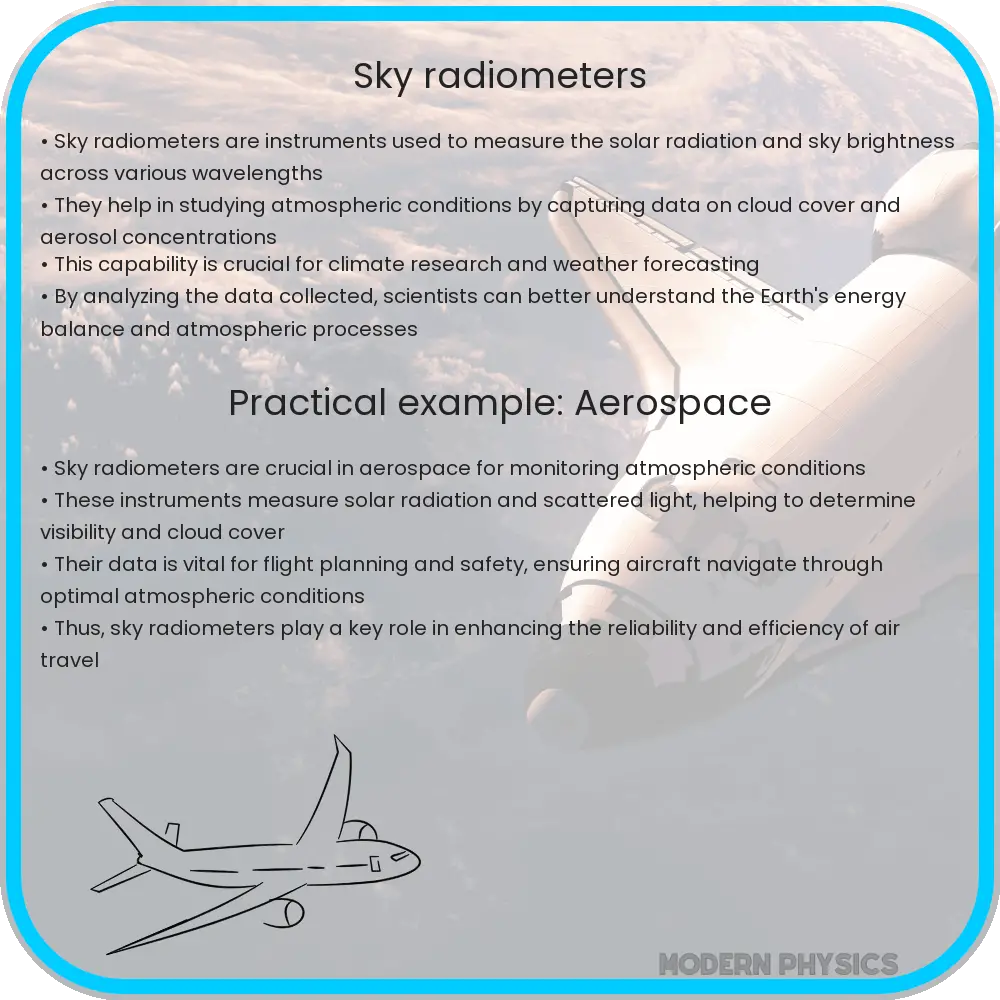
Sky radiometers are precision instruments used to measure sky radiation across various wavelengths, critical for climate research and meteorology.
Understanding Sky Radiometers: Precision Tools for Climate Research
Sky radiometers are specialized instruments designed to measure the radiation emitted by the sky across various wavelengths. These precise devices play a crucial role in enhancing our understanding of the Earth’s atmosphere, particularly in the context of climate science and meteorology.
The Accuracy of Sky Radiometers
The accuracy of sky radiometers is paramount in ensuring reliable data collection for atmospheric studies. These instruments typically measure solar and sky radiation, which includes direct sunlight, diffuse sky radiation, and total global solar radiation. The key to their accuracy lies in their sensitivity and calibration. High-precision sensors are used to detect minute changes in solar irradiance, equipped with filters that precisely isolate different spectral bands.
To maintain their accuracy, sky radiometers undergo rigorous calibration processes, both before installation and periodically throughout their operational life. Calibration is typically done using reference instruments that are traceable to international standards, ensuring consistent and accurate measurements.
Data Insights from Sky Radiometers
Sky radiometers can provide a wealth of information crucial for climate research and meteorological applications. They primarily collect data in three core areas:
- Spectral Analysis: By analyzing the spectrum of sunlight and sky radiation, these instruments can determine the amount of aerosols, water vapor, and other particulates in the atmosphere. This is critical for assessing air quality and visibility conditions.
- Cloud Cover and Type: Data collected can help in identifying cloud types and their cover, which are essential parameters for weather prediction and climate modeling.
- Solar Energy Studies: Sky radiometers are indispensable in solar energy research, providing detailed measurements that help in designing and improving solar panels and other solar energy harvesting systems.
The data collected by sky radiometers are often used in combination with other meteorological data sources to improve the accuracy of weather forecasting models and to study atmospheric phenomena such as the radiative effects of clouds and aerosols on climate change.
Contributions to Climate Studies
Sky radiometers directly contribute to climate studies by monitoring long-term changes in the Earth’s atmosphere. The detailed data they provide help scientists to:
- Track changes in the amounts and types of aerosols and their impact on the Earth’s climate.
- Analyze atmospheric conditions that influence weather patterns and climate variability.
- Study the radiative properties of clouds, which play a critical role in the Earth’s radiative balance.
Such detailed atmospheric data are invaluable in building and refining the models that predict future climate scenarios. With the escalating concerns regarding global warming and climate change, the role of sky radiometers in providing accurate and reliable atmospheric data becomes all the more significant.
Technological Advancements in Sky Radiometers
Recent technological advancements have significantly improved the functionality and reliability of sky radiometers. Developments include enhanced sensor capabilities that provide greater spectral resolution and accuracy. The integration of digital technologies has facilitated real-time data processing and remote monitoring, enabling scientists to access and analyze data with unprecedented speed and efficiency.
Furthermore, the advent of machine learning and big data analytics has opened new avenues for interpreting the vast amounts of data collected by sky radiometers. These technologies help in identifying patterns and trends that may not be apparent through traditional data analysis methods, offering deeper insights into atmospheric dynamics.
Educational and Policy Implications
The data from sky radiometers not only advances scientific research but also serves as a critical educational tool. By making real-time data accessible, educators can provide students with practical examples of atmospheric science, enhancing their understanding and stimulating interest in environmental issues.
Moreover, the reliable data provided by sky radiometers is vital for informing policy decisions related to environmental protection and climate change mitigation. Policymakers rely on accurate, up-to-date atmospheric data to craft regulations and strategies that combat environmental challenges and promote sustainable practices.
Conclusion
In conclusion, sky radiometers are indispensable tools in the field of atmospheric science, offering precise measurements that enhance our understanding of the Earth’s environment. Their contribution extends beyond scientific research, impacting educational approaches and informing crucial policymaking. As technology advances, the capabilities of these instruments continue to evolve, promising even greater contributions to climate studies and environmental monitoring. The ongoing developments and applications of sky radiometers not only underscore their importance in current climate research but also highlight their potential to foster a better understanding of our planet’s atmospheric phenomena in the future.