
Explore the future of wireless technology with our comprehensive guide on inductive charging pads – efficient, safe, and seamlessly integrated.
Understanding Inductive Charging Pads
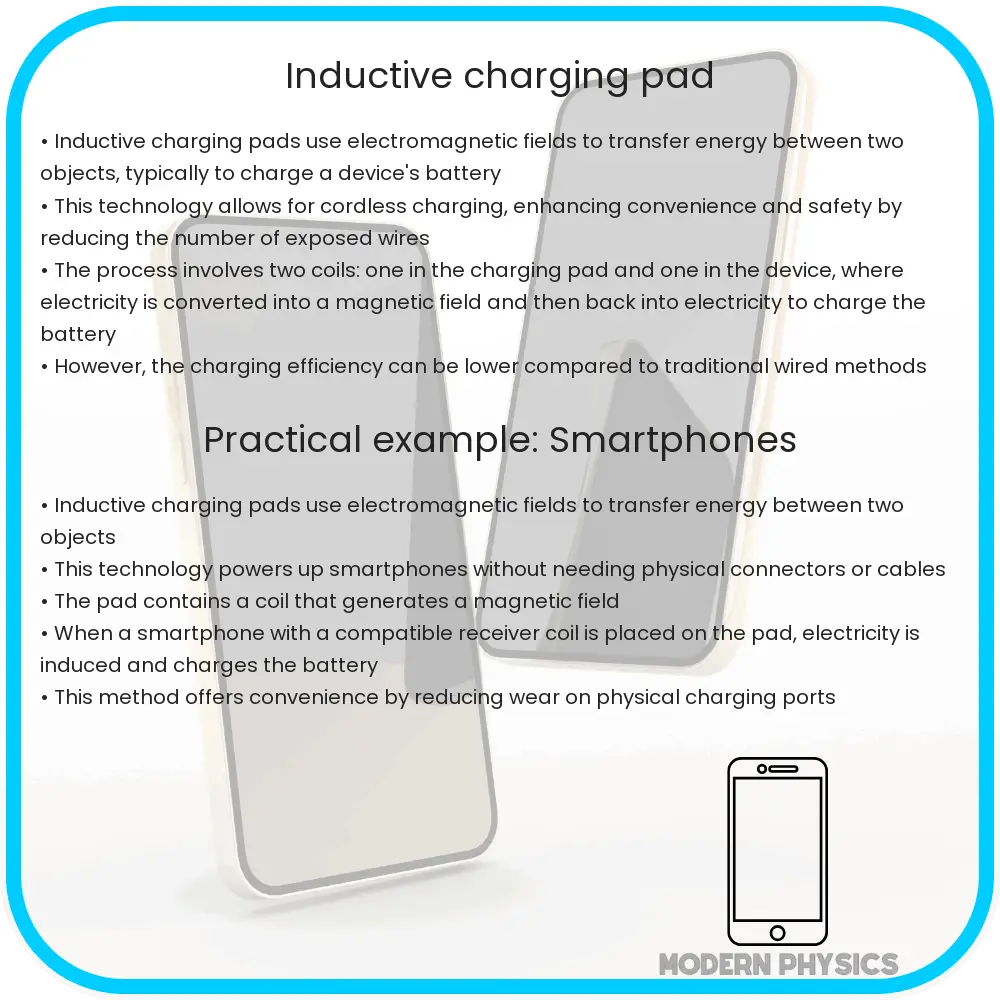
Inductive charging pads represent a leap in wireless technology, offering a convenient and efficient way to charge electronic devices. This technology, also known as wireless charging, eliminates the need for physical connectors, allowing users to simply place their devices on a charging pad for power replenishment. The underlying mechanism involves electromagnetic induction, a principle where an electric current can be generated in a conductor by a changing magnetic field.
How Inductive Charging Works
The core of inductive charging lies in its two main components: the transmitter (charging pad) and the receiver (built into the device). The transmitter contains a coil through which an alternating current (AC) passes, creating an electromagnetic field. When a device with a compatible receiver coil is placed on the pad, this field induces a current in the receiver coil, which is then converted into direct current (DC) to charge the battery.
The Advantages of Wireless Charging
Inductive charging pads offer numerous benefits:
- Convenience: The primary advantage is the ease of use. Users can simply drop their device onto the pad without fumbling with cables.
- Reduced Wear: Wireless charging eliminates the physical wear and tear on the device’s charging port.
- Aesthetics: Charging pads often feature sleek designs that blend seamlessly with modern decor.
- Safety: With no exposed electrical connectors, inductive charging is inherently safer, reducing the risk of electric shock.
Efficiency and Compatibility
Modern inductive charging pads have significantly improved in terms of efficiency, rivaling traditional wired methods. The latest Qi standard, for instance, ensures compatibility across a wide range of devices and offers fast charging capabilities. However, it’s important to note that the efficiency can be affected by factors such as the alignment of the device on the pad and the presence of foreign objects between the device and the charger.
Environmental Considerations
While wireless charging offers convenience, it’s crucial to consider its environmental impact. The production of inductive chargers involves materials and processes that contribute to environmental footprints. Furthermore, wireless charging can be less energy-efficient compared to wired charging, leading to higher energy consumption in some cases.
Inductive charging pads are a step towards a future of seamless technology integration, offering an efficient and safe way to keep our devices powered. As technology advances, we can expect further enhancements in efficiency, compatibility, and environmental sustainability.
Future Trends and Developments in Inductive Charging
The future of inductive charging is promising, with several advancements on the horizon. Innovations in materials science and electromagnetic technology are expected to further improve efficiency and reduce environmental impacts. Additionally, the integration of smart features, such as automatic device recognition and power management, will enhance user convenience and energy conservation.
Integrating Inductive Charging into Everyday Life
Inductive charging is increasingly becoming a part of everyday life. Public spaces, such as cafes and airports, are beginning to offer wireless charging spots. Furthermore, the automotive industry is exploring inductive charging for electric vehicles, paving the way for more convenient electric car charging solutions. In the household sector, furniture manufacturers are incorporating charging pads into tables and desks, showcasing the versatility and adaptability of this technology.
Challenges and Considerations
Despite its advantages, inductive charging faces several challenges. One significant concern is the heat generation during charging, which can affect battery longevity and efficiency. Moreover, the current necessity for close proximity between the device and the charging pad limits mobility while charging. Ongoing research aims to address these issues, with developments in long-range wireless charging being a key area of focus.
Consumer Awareness and Adoption
Consumer awareness and education are vital for the widespread adoption of inductive charging. Understanding the benefits, limitations, and proper usage of wireless charging pads is essential for consumers to make informed decisions. As more devices become compatible with wireless charging standards like Qi, it’s likely that consumer adoption will continue to rise.
Conclusion
Inductive charging pads symbolize a significant step in the evolution of wireless technology, offering a blend of convenience, efficiency, and safety. While there are challenges to be addressed, the potential for this technology to transform how we power our devices is immense. As advancements continue, we can anticipate a future where wireless charging becomes a ubiquitous and integral part of our daily lives, seamlessly powering a wide array of devices and vehicles. Embracing this technology responsibly and sustainably will ensure its benefits are maximized for both consumers and the environment.