
Learn about heat treatment, a key process in modifying the properties of metals and alloys to enhance their performance in various industries.
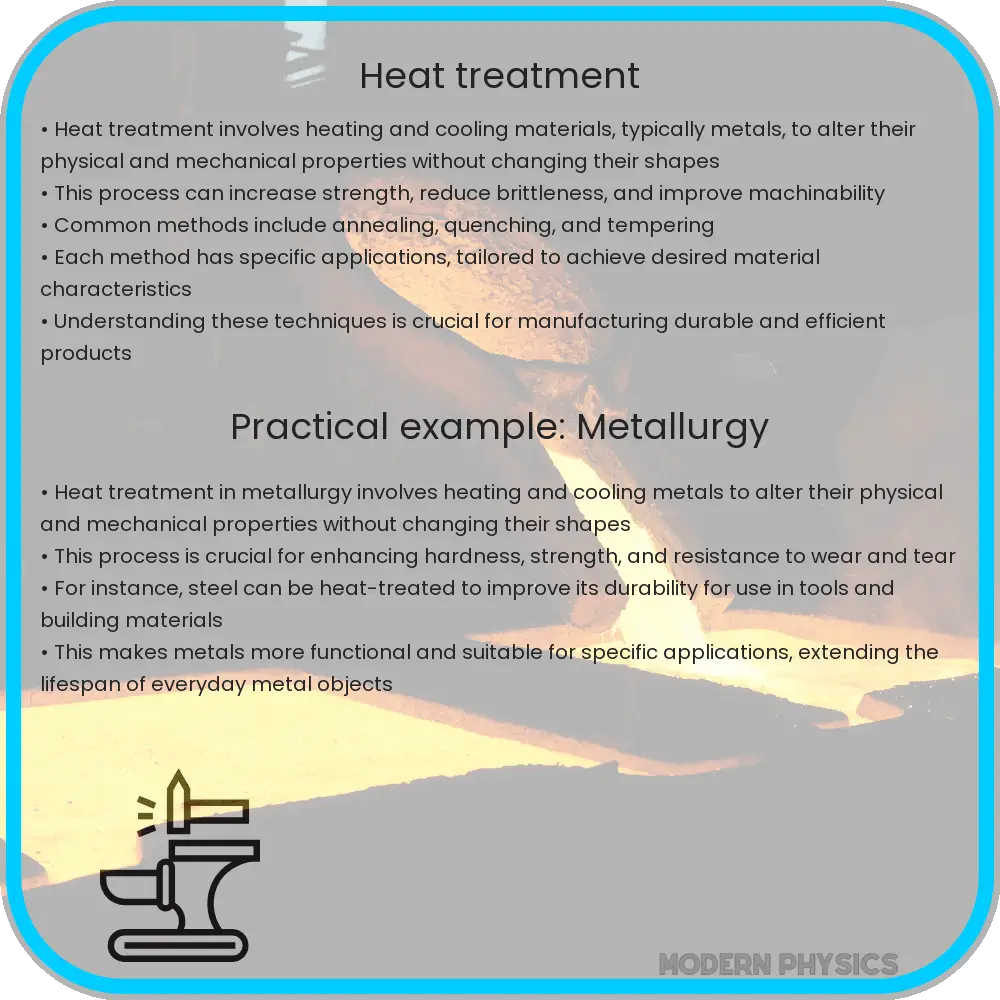
Understanding the Basics of Heat Treatment
Heat treatment is a controlled process used to alter the physical and sometimes chemical properties of materials, most commonly metals and alloys. This process is essential for enhancing the durability, strength, and performance of materials, making it integral to manufacturing industries, especially those related to metalwork.
How Heat Treatment Works
At its core, heat treatment involves heating and cooling metals in a precise, controlled manner to achieve desired mechanical properties such as hardness, ductility, toughness, and strength. The specific method and process parameters used are determined by both the material being treated and the properties that are targeted for improvement.
Common Types of Heat Treatment Processes
- Annealing: This process heats metal to a specific temperature and then allows it to cool slowly. The purpose of annealing is to reduce hardness, improve ductility, and relieve internal stresses.
- Normalizing: Metal is heated to a temperature slightly above its critical point and then cooled in air. Normalizing is typically used to refine grains, enhancing both strength and toughness of ferrous alloys.
- Quenching: In quenching, metal is heated to a high temperature and then rapidly cooled using water, oil, or another cooling medium. The rapid cooling alters the metal’s microstructure, increasing its hardness and strength.
- Tempering: After quenching, metals are often too hard and brittle, leading to the need for tempering. This process involves heating the metal to a temperature below its critical point, which can reduce brittleness while maintaining the hardness achieved through quenching.
The Effects of Heat Treatment on Microstructure
The microstructure of metals plays a pivotal role in determining their properties. Heat treatment affects the microstructure in a way that can be tailored to specific needs. For instance, the process can create a range of microstructures from very fine grains to fully transformed martensite, each with distinct properties suitable for different applications.
During heating, the structure of the metal becomes austenitic. As the metal cools (rate depending on the method used), the structure transforms into martensite, ferrite, pearlite, or bainite, depending on the cooling rate and the chemical composition of the material. Each of these microstructural changes impacts the physical properties of the metal in significant ways.
Factors Influencing Heat Treatment
- Temperature: The temperature to which a metal is heated is one of the most critical factors. It must be accurately controlled to avoid detrimental effects like grain growth or excessive hardening.
- Time: The period the metal remains at a certain temperature also affects the outcome. Longer times at high temperatures can lead to over-aging, where the peak strength and hardness begin to decline.
- Environment: The environment in which heat treatment takes place (such as the presence of an inert atmosphere to prevent oxidation) can also significantly affect the properties of the metal.
- Cooling Rate: The rate at which a metal is cooled from the treatment temperature is crucial, as different cooling rates can lead to vastly different microstructures and consequently different properties.
Understanding these factors is crucial for optimizing the heat treatment process to attain specific material characteristics. By manipulating the heating and cooling cycles, it’s possible to tailor the performance of metals to meet rigorous service conditions and functionality demands across a wide range of industries.
Practical Applications of Heat Treatment
Heat treatment plays a vital role in various industries. In the automotive industry, parts like gears, axles, and shafts are heat-treated to enhance their strength and wear resistance, directly impacting vehicle performance and safety. In aerospace, crucial components such as turbine blades benefit significantly from tailored heat treatments that ensure resistance to high temperatures and mechanical stress. Consumer goods, ranging from kitchen knives to electronic housings, also undergo heat treatment to ensure durability and functionality.
Challenges and Innovations in Heat Treatment
Despite its importance, heat treatment presents challenges such as energy consumption, process control, and scalability. Advances in technology are helping overcome these issues. For example, computer-controlled heat-treatment furnaces now allow for more precise control of temperature and cooling rates, enhancing consistency and quality of the output. Moreover, environmentally friendly techniques are also being developed to reduce the process’s carbon footprint, aligning with global sustainability goals.
Key Takeaways for Beginners
To summarize, understanding the basics of heat treatment involves recognizing its role in altering the microstructure of metals to achieve desired mechanical properties. Each type of heat treatment process serves a specific purpose, from increasing hardness and strength with quenching and tempering to improving ductility and reducing internal stresses through annealing and normalizing. Factors such as temperature, duration, environment, and cooling rate play critical roles in determining the effectiveness of a heat treatment process.
A firm grasp of these concepts not only contributes to foundational knowledge in materials science but also provides a glimpse into the intricate processes that enhance the performance of everyday objects and critical industrial components.
Conclusion
Heat treatment is a fascinating aspect of material science that illustrates the profound impact of thermal processes on the properties of metals and alloys. By mastering the fundamentals of how heat treatment works and its practical applications, one can appreciate the technological prowess behind the creation of stronger, more resilient materials. This understanding not only empowers industries to innovate and improve products but also opens up myriad opportunities for further exploration and development in the field of materials engineering.