
Explore the role of heat-induced valves in industry, focusing on their safety, efficiency, and thermodynamic applications, plus future innovations.
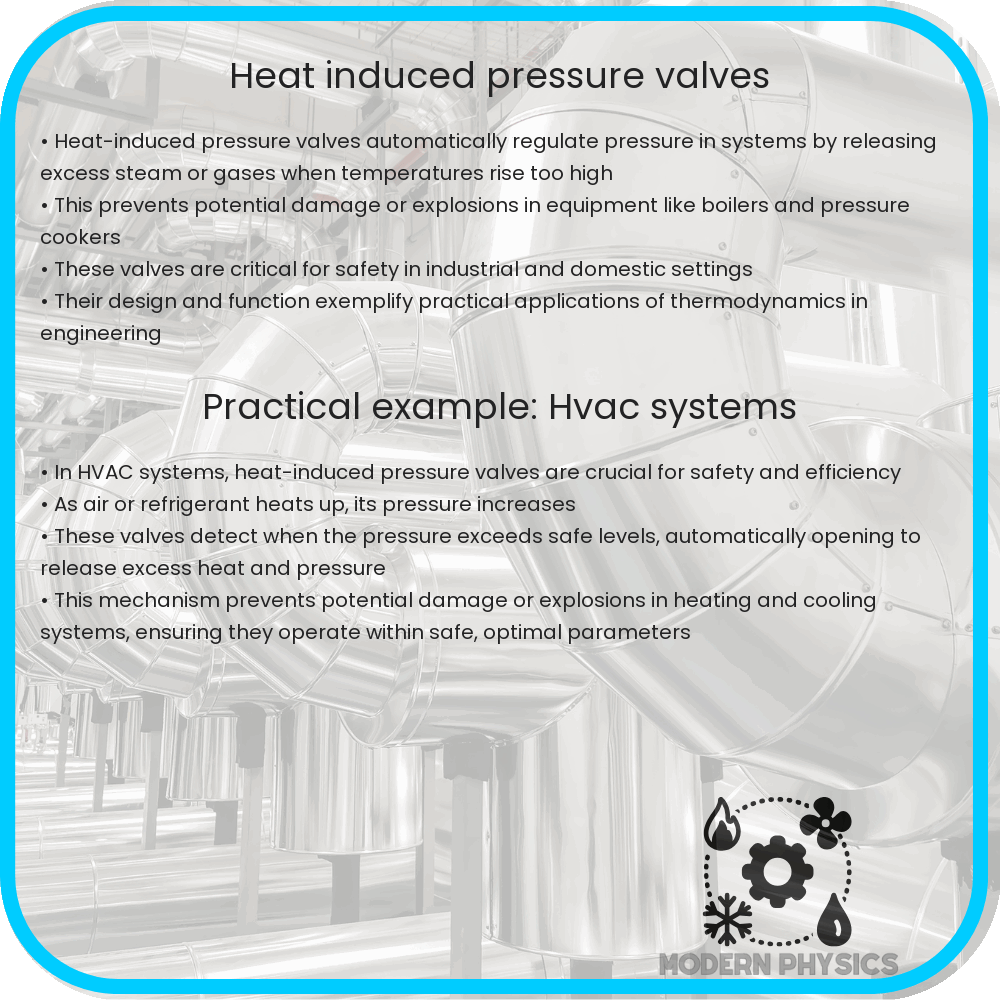
Understanding Heat-Induced Valves: A Blend of Safety, Efficiency, and Thermodynamics
Heat-induced valves, a critical component in many industrial processes, represent an innovative convergence of safety, efficiency, and thermodynamic principles. These valves, engineered to respond to temperature changes, are essential in systems where temperature regulation and safety are paramount. This article delves into the mechanisms, applications, and benefits of heat-induced valves, providing a comprehensive understanding of their role in modern industries.
The Mechanism Behind Heat-Induced Valves
At the core of heat-induced valves lies the principle of thermal expansion and contraction of materials. These valves typically incorporate a temperature-sensitive element, often made of materials like bimetallic strips or shape-memory alloys. Upon reaching a predetermined temperature, these elements undergo a physical transformation—either expanding or contracting. This change in physical state triggers the opening or closing of the valve, thereby regulating the flow of fluids or gases within the system.
Applications in Industry
Heat-induced valves find widespread applications across various industries. In the chemical sector, they are crucial for controlling reactions that are highly temperature-dependent. In HVAC systems, these valves help in maintaining optimal temperatures, enhancing energy efficiency. Similarly, in the oil and gas industry, they play a vital role in preventing overheating and ensuring the safe operation of equipment.
Advantages of Heat-Induced Valves
- Safety: By automatically responding to temperature changes, these valves prevent hazardous situations such as overheating or explosions, particularly in volatile environments.
- Energy Efficiency: These valves contribute to energy conservation by optimizing the flow and temperature of fluids, leading to reduced energy consumption.
- Reduced Maintenance: The self-acting nature of heat-induced valves lowers the need for manual intervention and maintenance, leading to cost savings.
Thermodynamics of Heat-Induced Valves
Understanding the thermodynamics of heat-induced valves is crucial. These valves operate based on the fundamental laws of thermodynamics, particularly the concepts of thermal expansion and heat transfer. The efficacy of a heat-induced valve is determined by its ability to accurately sense and respond to temperature changes, which is governed by the specific heat capacity and thermal conductivity of the material used in the temperature-sensitive element.
In conclusion, heat-induced valves are a vital technological advancement that seamlessly integrates safety, efficiency, and thermodynamic principles. Their ability to autonomously respond to temperature changes makes them an indispensable component in numerous industrial processes, marking a significant stride in technological innovation.
Exploring Materials and Design Innovations in Heat-Induced Valves
The advancement of heat-induced valves heavily relies on material science and design innovations. Modern valves utilize advanced alloys and composites that offer superior thermal responsiveness and durability. Innovations in design, such as incorporating micro-electromechanical systems (MEMS), have enabled the creation of more precise and reliable valves. These advancements ensure that the valves operate effectively under a wide range of temperatures and pressures, making them adaptable to various industrial applications.
Challenges and Future Prospects
Despite their numerous advantages, heat-induced valves face challenges such as material degradation under extreme conditions and the need for calibration over time. Research is ongoing to develop materials that can withstand higher temperatures and corrosive environments, extending the lifespan and reliability of these valves. The future of heat-induced valves lies in integrating smart technologies, such as IoT connectivity, which will enable real-time monitoring and predictive maintenance, further enhancing their efficiency and safety features.
Environmental Impact and Sustainability
Heat-induced valves also play a significant role in promoting environmental sustainability. By optimizing energy use and reducing emissions, these valves contribute to more sustainable industrial practices. Furthermore, the development of eco-friendly materials for these valves is a growing area of interest, aiming to minimize the environmental footprint of their manufacturing and disposal.
Conclusion
In summary, heat-induced valves are a quintessential example of how engineering and thermodynamics can converge to create solutions that are not only efficient and safe but also sustainable. Their role in various industries is undeniable, offering precise control over processes that are sensitive to temperature fluctuations. The ongoing advancements in materials and design promise to overcome current challenges, paving the way for smarter, more resilient systems. As industries continue to evolve, the importance of such innovations becomes increasingly paramount, highlighting the need for continuous research and development in this field. Ultimately, heat-induced valves stand as a testament to human ingenuity, demonstrating how technological advancements can harmoniously blend with the principles of thermodynamics to create safer and more efficient industrial environments.