
A heat burst is a short-lived, nocturnal atmospheric phenomenon marked by sudden temperature increases and strong winds.
Understanding Heat Bursts
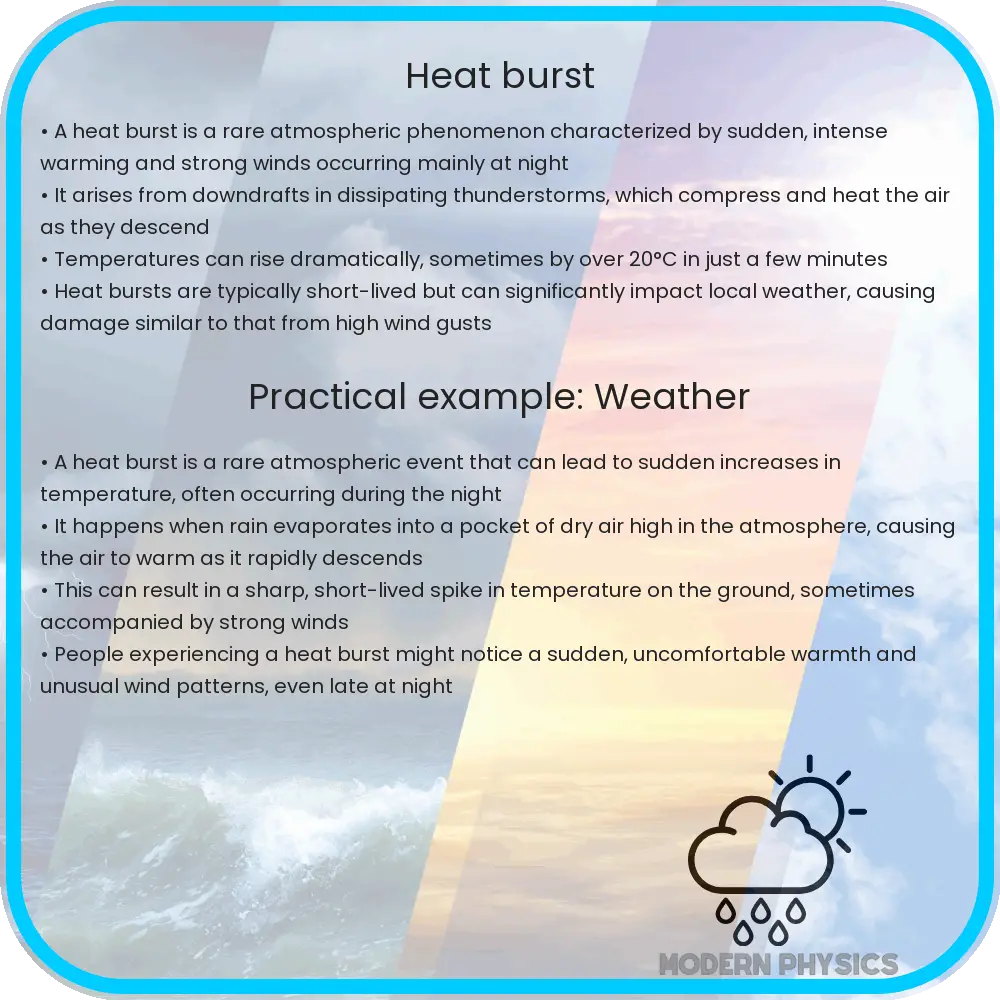
A heat burst is a rare atmospheric phenomenon typically observed during the night or early morning hours. It is characterized by a sudden increase in temperatures, accompanied often by strong gusty winds. Unlike the more commonly understood heat wave, a heat burst lasts only a short period, from minutes to a few hours, but its effects can be dramatic and startling.
Causes of Heat Bursts
Heat bursts primarily occur during the collapse of a thunderstorm. The mechanics start with the downdraft process. As rain evaporates in this downdraft, the air cools and accelerates downward due to the increased density from the cooling. If the rain completely evaporates before reaching the ground – a condition more likely in arid or semi-arid regions – the air continues to warm due to the higher compression under increased atmospheric pressure.
The core conditions for a heat burst to develop include:
- A decaying thunderstorm: Heat bursts generally happen around dying thunderstorms.
- Dry lower atmosphere: An essential factor is insufficient moisture at lower levels to absorb the cooling effect from the rain evaporation, allowing for more intense heating on compression.
- Suitable downdraft: A strong downdraft is required to push the cooled air rapidly downward.
Characteristics of Heat Bursts
When a heat burst occurs, several distinguishing features appear:
- Temperature Spike: Rapid increase in surface temperature, sometimes by 20 degrees Fahrenheit (about 11 degrees Celsius) or more within an hour.
- Wind Gusts: As the hot, dense air hits the ground, it spreads out horizontally, resulting in strong wind gusts that can exceed 60 mph (97 kph).
- Quick Dissipation: Despite their intensity, heat bursts are usually short-lived, often dissipating as quickly as they developed.
- Clear Skies: Heat bursts typically clear the area of clouds, due to the drying effect of descending air, leaving behind clear skies.
The occurrence of a heat burst can significantly affect local conditions, leading to discomfort among residents, and sometimes, damage similar to that caused by severe wind storms. This phenomenon also impacts atmospheric readings, leading to sudden spikes in temperature data, which can perplex meteorologists and climate scientists.
Recording Heat Bursts
Identifying and recording heat bursts can be complex due to their sudden development and brief duration. They are typically identified through:
- Weather Station Data: Abrupt changes in temperature and wind speed are logged by local meteorological stations.
- Eyewitness Accounts: Reports from individuals experiencing the unexpected heat and wind often provide initial clues.
- Satellite and Radar Data: Post-event analysis sometimes helps in understanding the atmospheric conditions that led to the heat burst.
As rare as they are, heat bursts provide valuable insights into the dynamic nature of the Earth’s atmosphere and help scientists gain a deeper understanding of weather pattern complexities.
Impacts of Heat Bursts
The immediate impacts of heat bursts can be wide-ranging:
- Agricultural: Sudden temperature rises can stress plants, especially during critical growth stages, potentially reducing crop yields.
- Wildlife: Rapid changes in temperature and wind can disrupt local wildlife, affecting their behavior and survival strategies.
- Human Comfort and Safety: The sudden onset of extreme conditions can lead to health issues, especially among the elderly and individuals with pre-existing conditions. Additionally, strong winds can pose structural dangers.
Preventive Measures and Safety Tips
To mitigate the effects of heat bursts, understanding and preparedness are key. Here are some tips to help stay safe if a heat burst is predicted or occurs:
- Stay Informed: Keep a close eye on weather forecasts and alerts from trusted meteorological agencies.
- Secure Loose Objects: Strong winds associated with heat bursts can turn unsecured items into projectiles. Tie down or bring indoors any loose objects around your property.
- Stay Hydrated: Rapid increase in temperatures can lead to dehydration. Drink plenty of fluids and avoid strenuous activities during the hottest parts of the day.
- Check on Vulnerable Individuals: Ensure that elderly neighbors, relatives, or individuals with health issues are aware of the heat burst and have a plan to stay cool and safe.
- Emergency Kit: Maintain an emergency kit with essential supplies like water, non-perishable food, a flashlight, batteries, and first aid resources in case of power outages or other emergencies.
Conclusion
Heat bursts, although brief and localized, are powerful natural phenomena that challenge our understanding of weather dynamics. Their sudden appearance and dramatic effects on temperature and wind speed not only pose risks but also fascinate those keen on meteorology. By studying and recording heat bursts, scientists and meteorologists continue to uncover valuable insights into their causes and effects, enhancing predictive models and ultimately helping us better prepare for these and other meteorological events. Understanding and preparation are crucial in minimizing the impact of these intense, yet fleeting events on our lives and environments.
As we advance our knowledge and technology, the mysteries of such phenomena will continue to unravel, allowing for more accurate forecasts and effective response strategies. For now, staying informed, vigilant, and prepared is the best defense against the unpredictable nature of heat bursts.