
Explore the dynamics of guyed masts, covering stability, loading, tension management, and advanced design and material innovations in telecommunications.
Understanding Guyed Mast Dynamics: An Overview
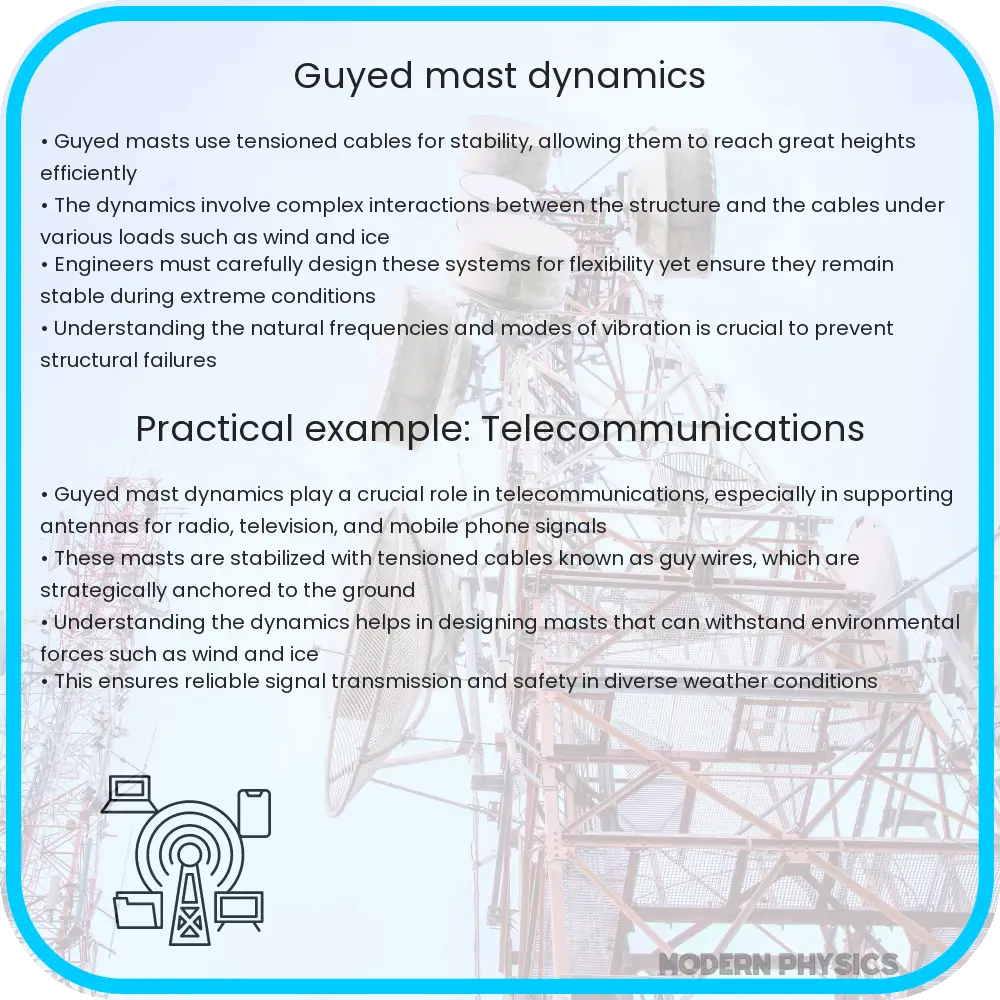
Guyed masts, towering structures supported by guy lines, are fundamental in telecommunications and broadcasting. Their stability and performance depend on various factors, including dynamics, loading, and tension in the guy lines. This article delves into these crucial aspects, shedding light on the principles that ensure the structural integrity and functionality of guyed masts.
Stability of Guyed Masts
The stability of a guyed mast is primarily influenced by its design and the tension in the guy lines. A well-designed mast distributes loads evenly, reducing the risk of failure. The guy lines, typically made of high-strength materials like steel, provide lateral support. The tension in these lines is critical; too little tension can lead to swaying, while excessive tension may cause structural damage.
Loading Considerations
Loading on guyed masts comes from various sources, including wind, ice, and the weight of attached equipment. Wind loading is particularly significant, as high winds can exert considerable force on the mast and its components. Engineers use specific formulas to calculate wind loading, considering factors like wind speed, mast height, and geographic location. Ice accumulation, common in colder climates, adds weight and alters the aerodynamic properties of the mast, requiring additional considerations in design and maintenance.
Tension in Guy Lines
The tension in guy lines is a balance between stability and structural integrity. Correct tensioning ensures that the mast can withstand environmental loads without overstressing the lines. Regular maintenance and monitoring are essential, as tension can change over time due to factors like temperature variations and material stretching.
Understanding the dynamics of guyed masts involves a complex interplay of physics, materials science, and engineering principles. The stability of these structures under various environmental conditions is a testament to the meticulous planning and design that goes into their construction.
In the next section, we will explore advanced topics in guyed mast dynamics, including detailed analysis of load distribution, tension management techniques, and the latest advancements in materials and design methodologies.
Advanced Topics in Guyed Mast Dynamics
Delving deeper into the dynamics of guyed masts, it’s essential to consider advanced aspects such as load distribution, tension management, and innovative design strategies. These elements play a pivotal role in enhancing the functionality and longevity of these structures.
Load Distribution in Guyed Masts
Load distribution in guyed masts is a complex phenomenon. The design must account for both static and dynamic loads. Static loads include the weight of the mast and attached equipment, while dynamic loads arise from environmental factors like wind and seismic activity. Advanced computational models are used to simulate these loads and their effects on the mast structure, allowing engineers to optimize the design for even load distribution and minimize stress points.
Tension Management Techniques
Effective tension management in guy lines is crucial for the stability of guyed masts. Advanced techniques, such as real-time tension monitoring and automated adjustment systems, are being employed. These systems use sensors to detect changes in tension and adjust it dynamically, ensuring optimal stability under varying environmental conditions.
Innovations in Design and Materials
Recent advancements in materials science have led to the development of stronger, more durable materials for both the masts and the guy lines. The use of high-strength alloys and composites has improved the overall resilience of these structures. Additionally, innovative design approaches, like aerodynamic profiling and modular construction, have enhanced their performance and ease of installation.
Conclusion
Guyed masts are a vital component in modern communication networks, and understanding their dynamics is crucial for their effective design and operation. From stability considerations to advanced tension management techniques, every aspect plays a significant role in ensuring their reliability and safety. With ongoing advancements in materials and technology, the design and construction of guyed masts continue to evolve, meeting the growing demands of the telecommunications industry and beyond. This exploration into the dynamics of guyed masts not only underscores the complexity of these structures but also highlights the ingenuity and precision engineering that goes into their creation.