
An in-depth exploration of global warming, focusing on its causes like greenhouse gas emissions, impacts including severe weather changes, and solutions involving renewable energy and carbon sequestration.
Understanding Global Warming: Causes, Impacts, and Atmospheric Physics
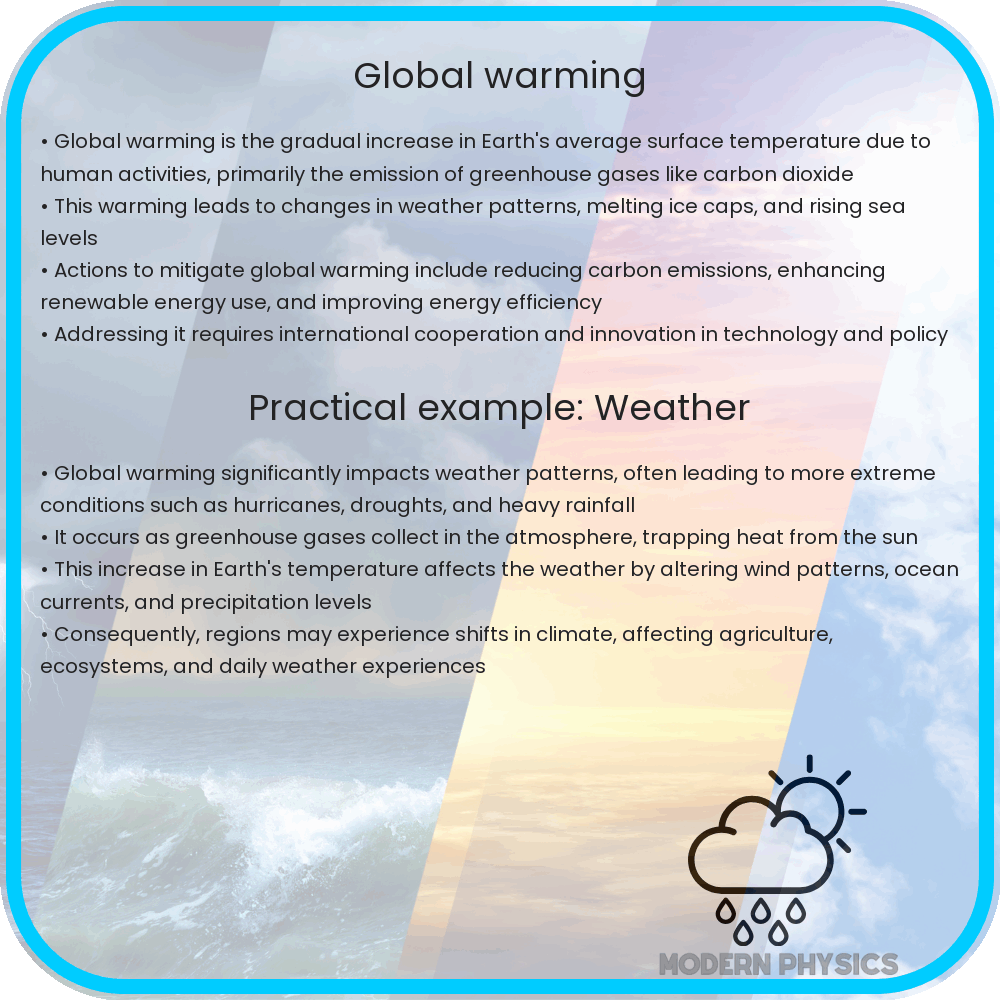
Global warming, the long-term rise in Earth’s average surface temperature, poses significant challenges to the global climate and its extensive ecosystems. This phenomenon is primarily driven by human activities, especially those that release greenhouse gases into the atmosphere. In this article, we delve into the causes, impacts, and potential solutions to global warming from the perspective of atmospheric physics.
Causes of Global Warming
The primary cause of global warming is the enhancement of the natural greenhouse effect due to human activities. The greenhouse effect is a natural process where certain gases in Earth’s atmosphere trap heat, keeping the planet warm enough to sustain life. However, the industrial revolution marked the beginning of significant increases in greenhouse gas emissions due to the burning of fossil fuels like coal, oil, and gas.
- Carbon Dioxide (CO2): The major contributor to global warming, resulting from burning fossil fuels, deforestation, and industrial processes.
- Methane (CH4): Emitted during the production and transport of coal, oil, and natural gas. Methane is also the by-product of organic decay and is released by certain agricultural practices.
- Nitrous Oxide (N2O): Comes from agricultural and industrial activities, as well as combustion of fossil fuels and solid waste.
- Fluorinated Gases: Synthetic, powerful greenhouse gases emitted from industrial processes that are not naturally present in the atmosphere.
These gases, particularly CO2, are effective at trapping heat in the atmosphere, leading to a gradual increase in Earth’s average temperature.
Impacts of Global Warming
Global warming affects virtually every aspect of Earth’s environment and ecosystem. The impacts are wide-ranging and potentially devastating.
- Temperature Increases: Global surface temperatures have increased, leading to heat waves and disrupted weather patterns.
- Melting Ice: Higher temperatures cause polar ice sheets to melt, contributing to rising sea levels and impacting polar ecosystems.
- Severe Weather Events: The increased energy in the climate system can lead to more intense and frequent hurricanes, storms, and heavy rainfall.
- Ocean Acidification: CO2 absorbed by the ocean increases its acidity, affecting marine life and coral reefs that provide essential ecosystems and coastal protection.
All of these impacts pose serious challenges to human societies and natural habitats, which depend on a stable climate for survival and well-being.
Solutions to Mitigate Global Warming
Addressing the root causes of global warming involves a global effort to reduce greenhouse gas emissions and enhance natural processes that can absorb CO2 from the atmosphere. Here are some strategies from an engineering and atmospheric physics standpoint:
- Transition to Renewable Energy: Replacing fossil fuels with renewable energy sources like solar, wind, and hydroelectric systems reduces CO2 emissions.
- Improving Energy Efficiency: Making cars, buildings, and manufacturing processes more energy-efficient helps to lessen CO2 emissions.
- Carbon Sequestration: Developing technologies to capture and store CO2 underground can mitigate atmospheric CO2 levels.
- Reforestation: Planting trees and restoring forests are natural ways to absorb CO2from the atmosphere.
- International Cooperation: Global problems require global solutions. International agreements and cooperation are essential to enforce emission reductions.
Implementing these solutions requires innovations in technology, policy-making, and community involvement. While the task is daunting, the growing understanding of atmospheric physics and global dynamics empowers humanity to take effective action. Ready availability and advancements in technology also play crucial roles in tackling these environmental challenges.
Role of Education and Public Awareness
To combat global warming effectively, education and public awareness are critical. Increasing understanding of climate change and its impacts motivates individual and collective action. Educational initiatives can teach people of all ages about sustainable practices and the importance of reducing carbon footprints. Public awareness campaigns can help disseminate information on how daily activities contribute to global warming and encourage more sustainable choices.
- School Curricula: Integrating climate science into school curricula can spark interest and knowledge from a young age.
- Community Workshops: Local workshops and seminars can engage communities in sustainability efforts and share successful strategies for reducing emissions.
- Media Coverage: Leveraging traditional and new media to regularly inform the public about climate change research and progress towards sustainability is vital for keeping this issue at the forefront of public consciousness.
Challenges in Combating Global Warming
Despite the clear paths to potentially mitigate global warming, numerous challenges exist. Economic, political, and social factors play significant roles in shaping the global response to climate change. The cost of transitioning to renewable energy and updating infrastructure can be high, and there is often resistance from industries and institutions rooted in fossil fuel use.
- Economic Hurdles: Initial investments in green technologies and infrastructure can be costly, though they offer long-term savings and benefits.
- Political Resistance: Governments might delay implementing stricter emissions standards due to economic or political pressures.
- Social Inertia: Changing public behavior and lifestyle to more sustainable modes requires overcoming ingrained habits and cultural norms.
Addressing these challenges requires a concerted effort from all sectors of society, including governments, businesses, and individuals. Progress may be slow, but with each small step, significant changes can accrue over time.
Conclusion
Global warming is a complex issue that threatens the stability of Earth’s climate system and the well-being of all life forms. Understanding the causes, impacts, and potential solutions from the perspective of atmospheric physics highlights the critical role of human activity in this global challenge. By adopting renewable energy sources, improving energy efficiency, and engaging in reforestation, significant strides can be made in reducing global warming. Moreover, education and widespread public awareness are essential in fostering an environmentally responsible society. Although challenges persist, the combination of technological innovation, informed policy-making, and community involvement holds the key to effectively addressing this urgent issue. As stewards of the planet, it is imperative for everyone to contribute to tackling global warming, ensuring a sustainable future for generations to come.