
Evapotranspiration is the combined process of water evaporation from surfaces and transpiration through plants, critical to the hydrological cycle.
Understanding Evapotranspiration: Its Drivers and Impacts
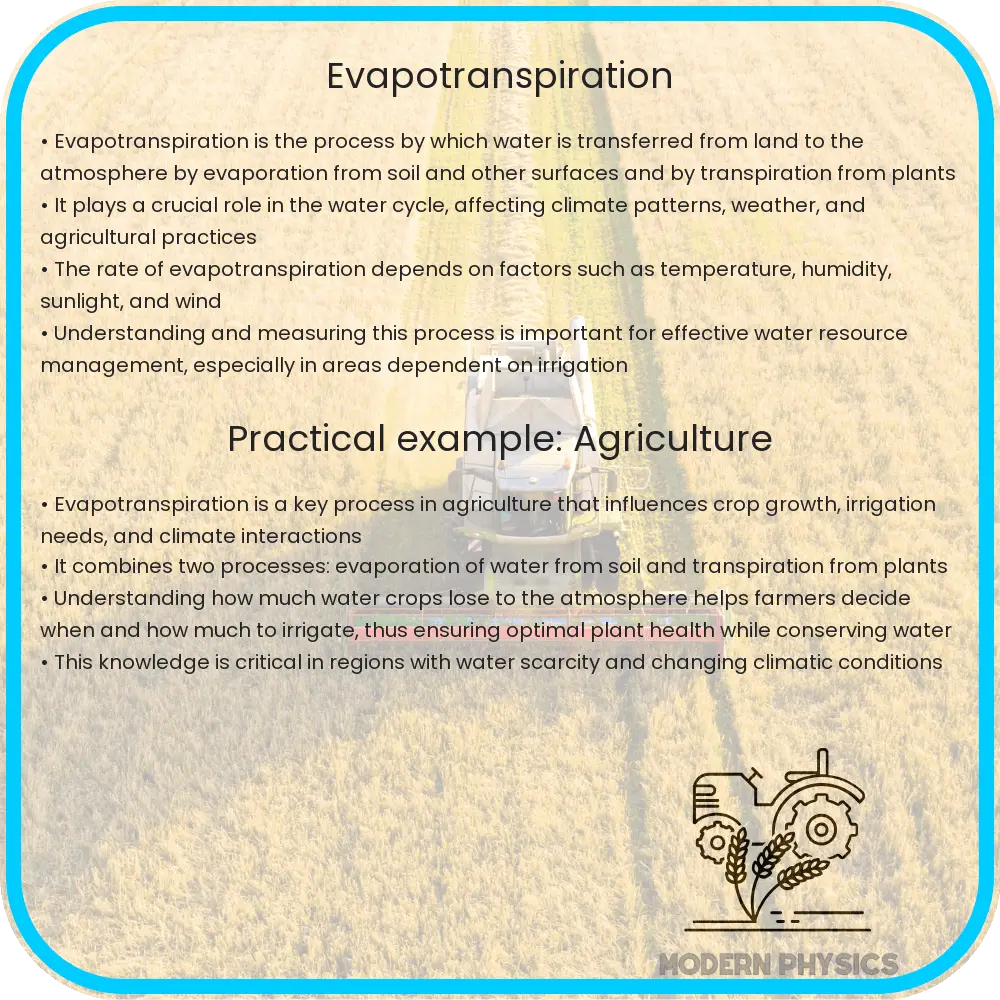
Evapotranspiration (ET) is a fundamental process in the hydrological cycle, combining the processes of evaporation and transpiration. It plays a crucial role in the water cycle, influencing weather patterns, climate systems, and the management of water resources. In this article, we will explore the key drivers of evapotranspiration, its impacts on the environment and agriculture, and how it is measured.
What is Evapotranspiration?
Evapotranspiration refers to the total movement of water into the atmosphere, from both the surfaces of bodies of water and land, and through plants. Evaporation involves the transition of water from a liquid or solid state into a gas, occurring from surfaces like lakes, rivers, and soil. Transpiration, on the other hand, refers to the process by which water is absorbed by plant roots, moves up through the plants, and is vaporized into the atmosphere from the plant surfaces, predominantly from leaves.
Key Drivers of Evapotranspiration
- Solar Radiation: Solar energy is the primary driver of evapotranspiration. Higher solar radiation increases the energy available for water molecules to transition from liquid to vapor.
- Temperature: Higher temperatures generally promote more vigorous evapotranspiration, as warmer air holds more moisture and increases the rate of evaporation and transpiration.
- Humidity: The moisture content in the air influences ET rates. Lower humidity levels lead to higher ET rates as dry air enhances the moisture gradient between the air and water surfaces or plant leaves, thus facilitating evaporation and transpiration.
- Wind Speed: Wind can remove the boundary layer of saturated air around the evaporative surface, enhancing ET rates by transporting moisture away from the surface more rapidly.
- Vegetation types and growth stages: Different types of vegetation and their stages of growth can significantly affect the rate of transpiration, with variations in leaf area, root depth, and plant water use efficiency.
Impact of Evapotranspiration
The effects of evapotranspiration extend across various domains, influencing ecological, meteorological, and agricultural systems:
- Water Resources: ET is a major component of the water cycle, influencing the amount of water available in soil and surface water bodies. High rates of ET can contribute to water scarcity in already dry regions.
- Climate Regulation: By modulating the latent heat flux in the atmosphere, evapotranspiration has a cooling effect on the local climate, which can mitigate the impact of local heatwaves.
- Agricultural Productivity: Understanding and managing ET is crucial in agriculture to ensure optimal irrigation practices, reducing water waste, and ensuring crop health.
- Ecosystem Health: Natural ecosystems rely on balanced ET for maintaining soil moisture and supporting biodiversity. Changes in ET patterns can disrupt ecosystem dynamics, impacting species distribution and health.
Measurement of Evapotranspiration
Accurate measurement of evapotranspiration is crucial for efficient water management, particularly in agriculture and urban planning. Various methods are employed to estimate ET:
- Lysimeters: These are devices that directly measure the amount of water used by plants by enclosing a segment of the soil-plant system and tracking changes in water weight.
- Weather Stations: By collecting data on relevant weather conditions (like temperature, solar radiation, humidity, and wind), ET rates can be estimated using empirical formulas.
- Remote Sensing: Satellite and aerial imagery can be used to estimate ET at larger scales, using algorithms that consider surface temperatures and vegetation indices.
- Simulation Models: Computational models integrate climatic and soil data to simulate water movement through the landscape, providing estimates of ET under various conditions.
Each of these methods presents unique challenges and benefits, influenced by their suitability to different environments and the scale of application.
Evaluating Variability and Trends
As climatic patterns shift due to global warming, the patterns of evapotranspiration are also changing. These changes can have profound impacts on local and global water cycles. Analyzing historical data and modeling future scenarios are essential for predicting changes in ET and preparing accordingly. Monitoring current trends and adapting resource management strategies is crucial for sustaining water resources in the face of these changes.
Adapting to Changes in Evapotranspiration
Adaptation strategies are vital for managing the effects of changing evapotranspiration rates. Stakeholders in agriculture, urban planning, and environmental management need to consider these strategies to optimize water use and sustain ecological balances:
- Improved Irrigation Techniques: Implementing efficient irrigation systems such as drip or sprinkler systems can help reduce water loss and make better use of available water by targeting the water directly to the plant roots.
- Vegetation Management: Choosing plant varieties that are better adapted to local conditions and altering planting schedules can help in managing the impacts of varying ET rates.
- Urban Planning: Cities can integrate green infrastructure, like parks and green roofs, which utilize evapotranspiration to help cool urban environments and manage stormwater.
- Educational Programs: Educating farmers and the public about the implications of ET on water resources and sharing knowledge on sustainable practices can lead to more informed decision-making.
Conclusion
Evapotranspiration is a key element in the Earth’s water cycle and climate system, and understanding it is crucial for effective water management and environmental protection. As we face the challenges brought about by climate change, the role of evapotranspiration becomes even more significant. Technologies and strategies to measure and manage ET are rapidly evolving, providing us with better tools to forecast and adapt to changes. By staying informed and proactive, we can ensure the sustainability of our precious water resources and the health of our environment. Understanding and managing evapotranspiration effectively allows us to face these challenges more confidently, thereby securing a better future for the next generations.