
Environmental radioactivity involves the study of radioactive substances in the environment originating from natural sources and human activities, impacting health and ecosystems.
Understanding Environmental Radioactivity
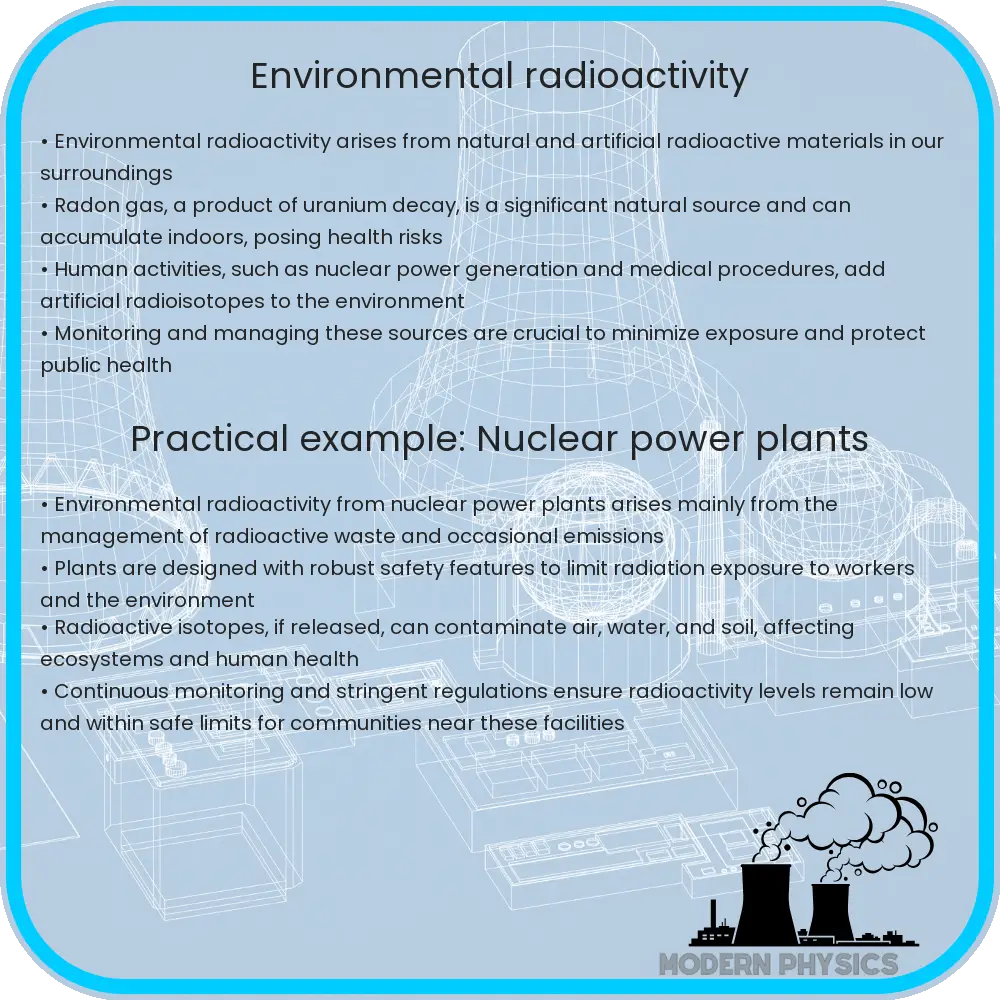
Environmental radioactivity refers to the presence of radioactive materials in the environment, which emanate from both natural sources and human activities. While radioactivity is a natural phenomenon, the increase in human-generated radioactive substances poses concerns about its effects on health and the environment.
Sources of Environmental Radioactivity
Radioactivity in the environment originates from several sources:
- Natural Sources: The Earth contains naturally occurring radioactive materials (NORM). Examples include uranium, thorium, and radon gas, which are found in the Earth’s crust.
- Human Activities: Activities such as nuclear power generation, medical applications of radioisotopes, and nuclear weapon tests introduce radionuclides into the environment. Accidents at nuclear facilities also release radioactive materials.
Risks of Environmental Radioactivity
Radioactive materials are hazardous due to their ionizing radiation, which can damage living cells and DNA. The primary health risks include:
- Cancer: Long-term exposure to low levels of radiation increases the risk of cancer. Higher doses can lead to radiation sickness and acute health effects.
- Environmental Impact: Radioactivity can affect ecosystems. It can accumulate in soils, water bodies, and living organisms, disrupting habitats and food chains.
Detection of Radioactive Materials
Detecting and measuring radioactivity is crucial for assessing risks and managing safety. Various methods and devices are used:
- Geiger Counters: Hand-held devices that detect and measure ionizing radiation.
- Scintillation Counters: These detect radiation by using materials that fluoresce when struck by radioactive particles.
- Radiation Dosimeters: Worn by individuals working with or around radioactive materials, these devices measure the accumulated exposure to radiation over time.
Management of Radioactive Contamination
Effectively managing environmental radioactivity involves multiple strategies to minimize exposure and mitigate risks.
- Regulations and Guidelines: Governments and international bodies set limits on radiation levels and oversee nuclear activities.
- Remediation Techniques: These include removing contaminated materials, containing radioactive sources, and decontaminating affected areas.
- Public Health Measures: Monitoring public health and educating communities living near radioactive sites are vital aspects of managing radioactivity risks.
To ensure public safety and environmental protection, understanding, detecting, and managing environmental radioactivity is crucial. In the next section, we will further discuss case studies, provide additional insights into the mitigation techniques, and explore the future challenges in managing environmental radioactivity.
Case Studies and Lessons Learned
Examining specific incidents of environmental radioactivity helps us understand the challenges and effectiveness of response strategies. Two notable cases are:
- Chernobyl Disaster (1986): One of the most catastrophic nuclear accidents where a reactor explosion released large quantities of radioactive isotopes into the environment. It highlighted the need for better safety protocols and emergency response in nuclear power plants.
- Fukushima Daiichi Nuclear Disaster (2011): Triggered by a massive tsunami, this disaster showed the risks of nuclear facilities in prone to natural disasters areas. It also stressed the importance of timely information and the implementation of advanced safety technologies.
Advancements in Mitigation Techniques
Recent advancements in technology have improved the ways we manage environmental radioactivity. Innovations include:
- Bioremediation: Using microorganisms to consume or break down radioactive contaminants in soils and water bodies.
- Robotic Monitoring: Employing robots to enter hazardous areas, reducing human exposure to high radiation levels and improving the accuracy of data collection in real-time.
- Advanced Containment Materials: Development of new materials that can more effectively contain or block the spread of radioactivity.
Future Challenges
While we have made significant progress in managing environmental radioactivity, future challenges remain:
- Waste Management: The long-term storage and disposal of nuclear waste continue to be a critical issue, requiring sustainable and secure solutions.
- Global Nuclear Safety: As nuclear technology spreads, international cooperation and stringent safety standards become increasingly essential to prevent future disasters.
- Environmental Surveillance: Enhancing global monitoring networks to detect and respond to radioactive releases quickly and efficiently.
Conclusion
Environmental radioactivity, whether from natural sources or human activities, presents significant risks to both human health and ecosystems. Through the study of past incidents and advancements in science and technology, we have developed robust methods for detecting, managing, and mitigating the effects of radioactivity. However, continuous efforts in research, innovation, and international collaboration are crucial to address the evolving challenges and ensure a safer future. Understanding the dynamics of environmental radioactivity paves the way for better disaster preparedness and a more informed public, ultimately contributing to the overall resilience against nuclear hazards.