
Explore the world of electrothermal actuators: uncover their working principles, applications, benefits, and future trends in precision technology.
Understanding Electrothermal Actuators: An Overview
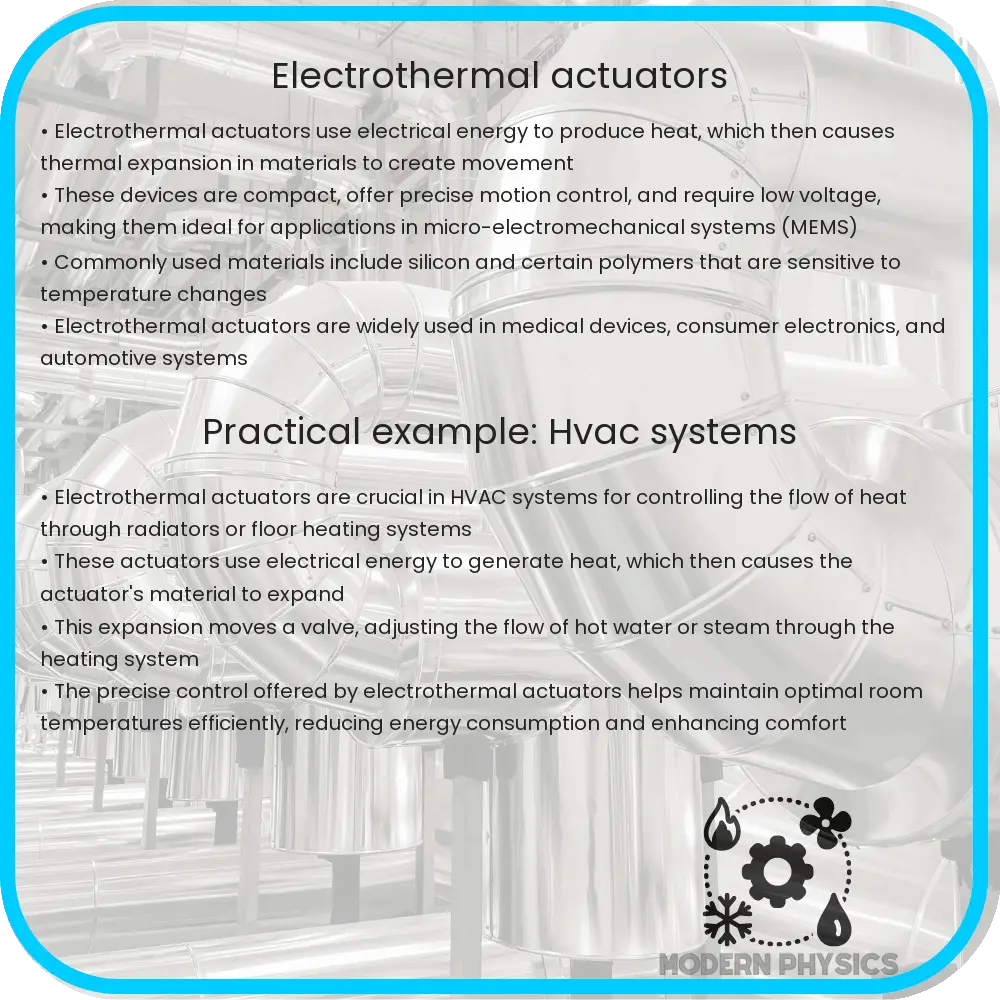
Electrothermal actuators are critical components in various industrial and technological applications. These devices convert electrical energy into thermal energy, which then generates mechanical motion. This unique functionality is pivotal in applications where precision, efficiency, and control are of utmost importance. This article delves into the principles, applications, and advantages of electrothermal actuators.
Working Principle of Electrothermal Actuators
At the core of an electrothermal actuator is a heating element. When an electric current passes through this element, it heats up. This increase in temperature causes a physical expansion in the actuator material, typically a specialized metal or alloy. This expansion is translated into linear or rotary motion, depending on the actuator design. When the current is cut off, the actuator cools and contracts, returning to its original position.
Materials Used in Electrothermal Actuators
The choice of material for the actuator is crucial. Commonly, materials with a high coefficient of thermal expansion (CTE) are used, such as nickel-titanium alloys (NiTi) or certain stainless steels. These materials ensure significant motion for relatively small temperature changes, enhancing the actuator’s efficiency.
Applications of Electrothermal Actuators
- Precision Instrumentation: In fields like aerospace and medical technology, where exact movements are critical, electrothermal actuators provide the necessary precision.
- Micro-Electro-Mechanical Systems (MEMS): These actuators are integral in MEMS, enabling minute yet precise movements in devices like micro-pumps and optical switches.
- Automation and Robotics: Electrothermal actuators contribute to the streamlined and efficient operation of automated systems and robots, especially in environments where electromagnetic interference is a concern.
Advantages of Electrothermal Actuators
Electrothermal actuators offer several benefits:
- High Precision: They provide exceptionally accurate and repeatable movements, essential in precision engineering.
- Compact Size: Due to their simple design and small size, they are perfect for applications with space constraints.
- Energy Efficiency: These actuators typically consume less power compared to other types, making them ideal for battery-powered or energy-sensitive applications.
The synergy of efficiency, control, and precision makes electrothermal actuators indispensable in modern technology. In the following section, we will explore their design considerations, challenges, and future prospects in greater detail.
Design Considerations and Challenges in Electrothermal Actuators
Designing electrothermal actuators requires balancing several factors to achieve optimal performance. The actuator’s material composition, electrical properties, and physical dimensions all play a role in its functionality. Engineers must consider the actuator’s operating environment, including temperature ranges and potential mechanical stresses. Additionally, ensuring consistent performance over numerous cycles is a significant challenge, requiring robust design and high-quality materials.
Future Prospects and Innovations
As technology advances, the potential for electrothermal actuators expands. Innovations in materials science, such as the development of new alloys with higher CTEs or improved fatigue resistance, could enhance actuator performance. Additionally, integrating smart technologies, such as sensors for real-time feedback and adaptive control systems, can further refine their precision and efficiency.
Electrothermal Actuators in Sustainable Technology
Electrothermal actuators also have a role in promoting sustainability. Their energy-efficient nature and potential for use in renewable energy systems, like solar trackers, make them valuable in eco-friendly applications. Furthermore, ongoing research is focused on making these actuators more recyclable and environmentally friendly, aligning with global sustainability goals.
Conclusion
Electrothermal actuators represent a fusion of precision, control, and efficiency in a compact form factor. Their ability to convert electrical energy into precise mechanical movements is invaluable in various fields, from medical technology to aerospace. As we continue to push the boundaries of what’s possible in automation and robotics, the importance of these actuators is only set to grow. Innovations in material science and intelligent systems integration will further enhance their capabilities, paving the way for more advanced, efficient, and sustainable technologies. Electrothermal actuators, therefore, stand as a testament to the ingenuity and potential of modern engineering, promising a future where precision and efficiency go hand in hand with technological advancement.