
Electrospinning is a method for creating ultrafine fibers with applications in biomedical engineering, environmental science, and energy storage.
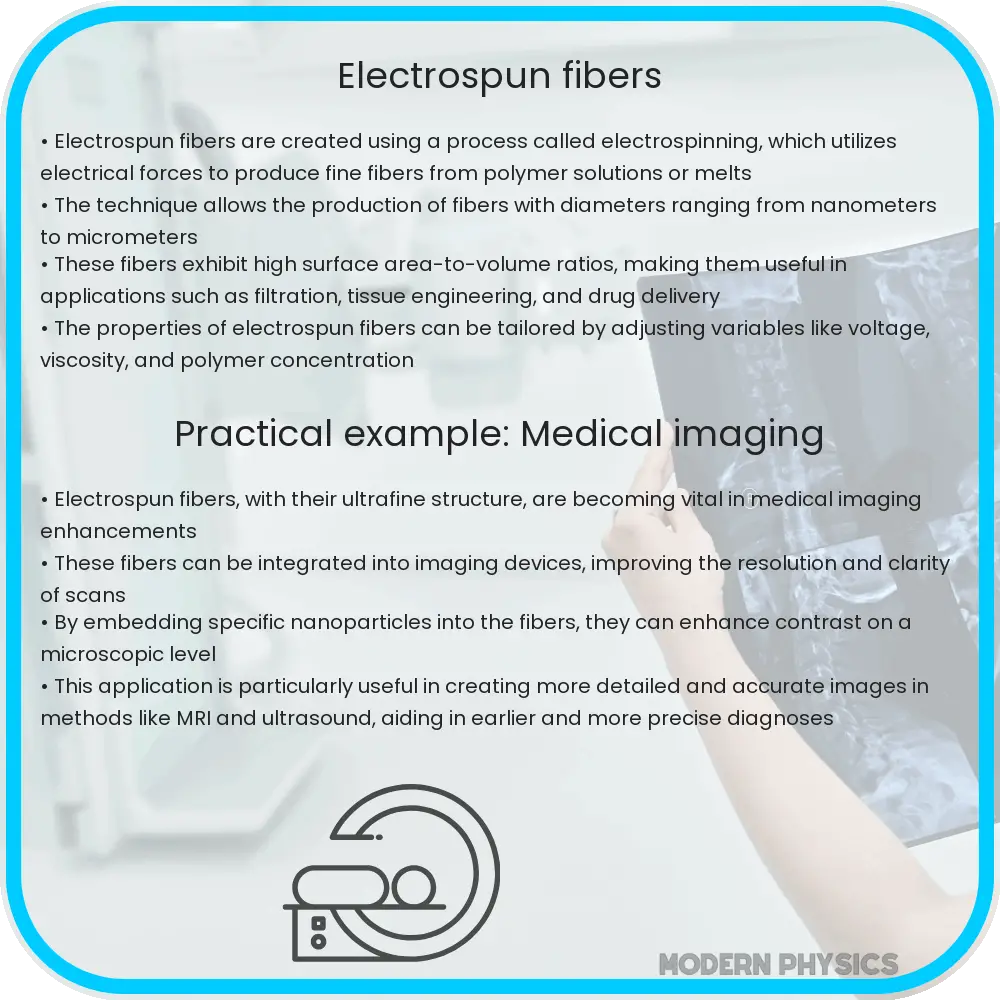
Electrospun Fibers: Versatility, Strength, and Innovation
Electrospinning is a fascinating fabrication process used to produce ultrafine fibers, with diameters ranging from nanometers to micrometers. This technique harnesses the principles of both electric forces and material science, leading to the production of fibers with high surface area-to-volume ratios and outstanding mechanical properties. These characteristics make electrospun fibers highly valuable in various advanced applications.
Understanding Electrospinning
The process of electrospinning starts with a polymer solution or melt being loaded into a syringe equipped with a needle. When a high voltage is applied to the needle, the polymer solution is ejected due to electrostatic repulsion. As the solution travels through the air, solvents evaporate, and what remains is a solid fiber that can be collected on a grounded collector, forming a nonwoven fabric. This simple yet effective mechanism can be tuned to control the fiber’s diameter, morphology, and composition.
Applications in Various Fields
One of the reasons electrospun fibers are so versatile is their applicability in numerous fields. Here are a few key areas:
- Biomedical Engineering: In the medical field, electrospun fibers can be used to create scaffolds for tissue engineering, wound dressings with superior healing properties, and filters that can prevent microbial contamination.
- Environmental Science: Due to their high surface area, these fibers are excellent for filtration applications, such as removing pollutants from air and water.
- Energy Storage: Electrospun fibers are used in the production of battery separators and electrodes, contributing to enhanced performance of batteries and supercapacitors.
Innovations in Material Enhancement
To further broaden the utility of electrospun fibers, ongoing research is focused on enhancing their properties and functionalities:
- Incorporating Nanoparticles: By embedding nanoparticles like silver or graphene oxide, fibers can acquire additional properties like antimicrobial effects or increased conductivity.
- Alignment and Patterning: Controlled alignment and specific patterning of fibers can lead to the production of materials with anisotropic properties, which are critical in applications such as muscle tissue engineering and neural tissues.
- Composite Fibers: Composite fibers made from blending different polymers or incorporating other materials can achieve customized mechanical, thermal, or biochemical properties.
The ongoing development of electrospun fibers is a testament to the power of combining material science principles with innovative engineering techniques. Stay tuned as we explore more about how the strength and versatility of these fibers are being leveraged in cutting-edge applications.
The Role of Electrospinning in Sustainability
As the world moves towards more sustainable practices, electrospun fibers present an opportunity to contribute to environmental sustainability. Their high efficiency in filtration can be pivotal in developing advanced systems that reduce pollutants, thus lessening the global ecological footprint. Moreover, because electrospinning can process natural and biodegradable polymers, it supports the creation of eco-friendly materials that decompose naturally without leaving harmful residues.
Future Perspectives
Electrospinning technology, with its extensive range of potential applications, is poised for further expansion in both research and industry. Future advancements may include increased automation in electrospinning processes, scaling up production capabilities, and pioneering new applications in fields such as smart textiles and responsive materials. Researchers are also exploring the utilization of less common polymers and sustainable materials to push the boundaries of what electrospun fibers can do.
Educational and Research Opportunities
For students and researchers, electrospinning offers a fertile ground for innovation and study. Universities and academic institutions around the world are increasingly focusing on electrospinning techniques in their curricula and research projects, providing young scientists with the opportunity to contribute to this dynamic field. The interdisciplinary nature of electrospinning—combining elements of chemistry, physics, and engineering—makes it an excellent research area for fostering collaboration and creativity.
Conclusion
From revolutionizing medical applications to advancing environmental sustainability, electrospun fibers demonstrate the impressive impact of engineering innovations on daily life and global challenges. The journey of understanding and harnessing the potential of these fibers is ongoing, with each discovery and application providing deeper insights and more expansive possibilities. As technology develops and research progresses, electrospun fibers are set to become even more integral to our future in myriad industries. This marks not just an achievement in material science, but a testament to the power of human ingenuity in the continual quest for better solutions in a changing world.