
Electrocaloric materials are substances that change temperature under the influence of an electric field, offering potential for efficient, eco-friendly cooling solutions.
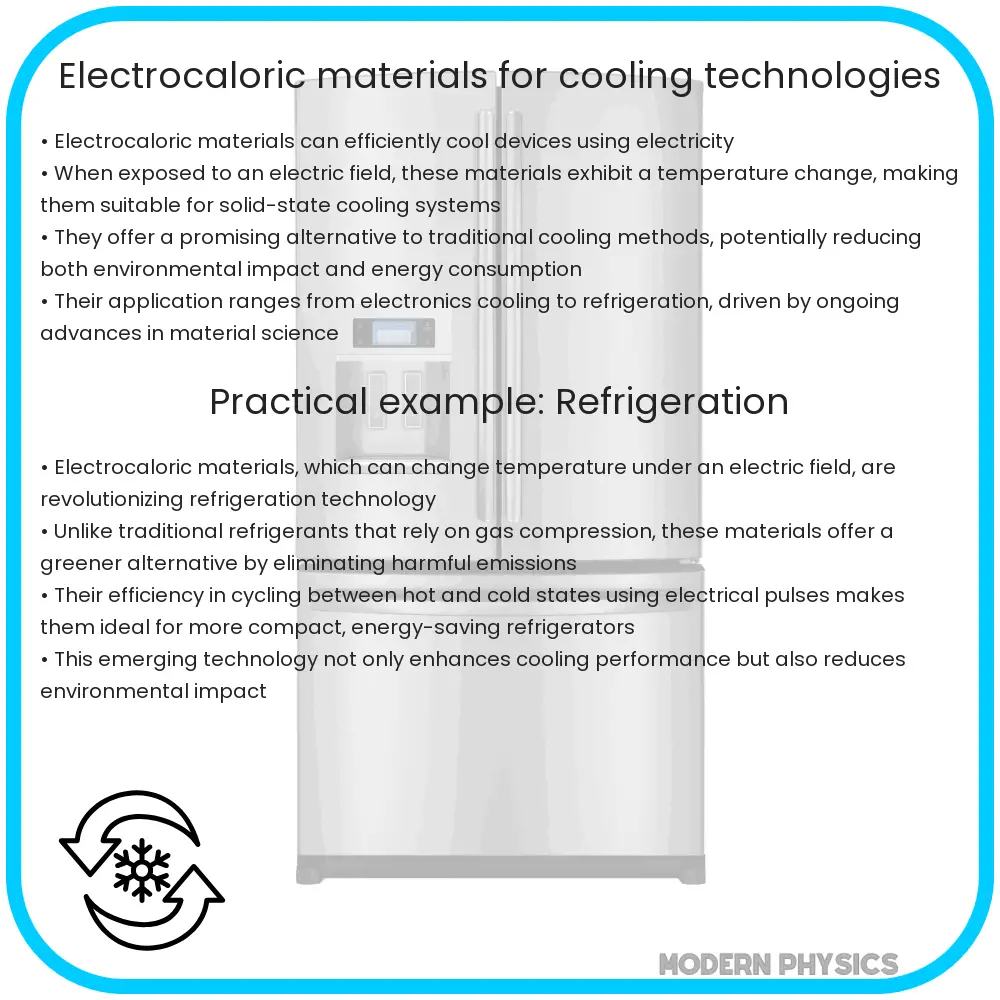
Understanding Electrocaloric Materials
Electrocaloric materials are a fascinating class of materials that can produce cooling through the electrocaloric effect, where a change in electric field causes a change in the material’s temperature. This phenomena is being explored for its potential in creating more efficient and environmentally friendly cooling systems. As global demand for cooling technologies continues to rise, electrocaloric materials present an innovative solution that could transform the cooling industry.
Efficiency of Electrocaloric Materials
The efficiency of electrocaloric materials is measured by the change in entropy and temperature of the material when subjected to an external electric field. This is quantified by the electrocaloric strength, which can be written in equation form:
ΔT = (Pf – Pi)ΔE / ρC,
where ΔT is the change in temperature, Pf is the final polarization, Pi is the initial polarization, ΔE represents the change in electric field, ρ is the density of the material, and C is the specific heat capacity. A greater change in temperature for a given electric field change indicates a more efficient electrocaloric material.
Innovation in Electrocaloric Materials
In recent years, research has focused on enhancing the electrocaloric effect in various materials to improve their practical applicability. Innovations include the development of polymer-based electrocaloric materials, which are lighter and more flexible compared to their ceramic counterparts. Furthermore, composite materials that combine ceramics and polymers aim to harness the strengths of both materials, providing improved thermal and electrical properties. Another innovative approach involves nanostructuring the electrocaloric materials to enhance their surface area, thereby increasing the electrocaloric effect.
Application of Electrocaloric Materials
One of the most promising applications of electrocaloric materials is in solid-state cooling systems. These systems offer a potential alternative to traditional refrigeration technologies, which often rely on gases that can contribute to greenhouse gas emissions. Solid-state coolers utilizing electrocaloric materials can be more compact, quieter, and potentially more energy-efficient than current cooling methods. Additionally, because they move away from the use of harmful refrigerants, they represent a more environmentally friendly option. Applications extend from consumer electronics, where they can provide localized cooling without the bulk and noise of fans, to large-scale industrial systems that require precise temperature control.
- Portable cooling devices
- Medical device temperature regulation
- Targeted cooling in electronics
Challenges in Developing Electrocaloric Materials
Despite the potential and innovative progress of electrocaloric materials, there are several challenges to be addressed. One major issue is the durability and stability of these materials under continuous operation. Electrocaloric materials, especially polymers, can degrade under prolonged exposure to high electric fields. Additionally, the efficiency of the cooling effect often diminishes over time, which can limit the practical implementation of these materials in commercial applications.
Another challenge is the cost of production. High-quality electrocaloric materials require precise manufacturing conditions, making them more expensive than traditional materials used in cooling systems. Economies of scale may reduce these costs in the future, but currently, they represent a significant barrier to widespread adoption.
Future Outlook
The field of electrocaloric materials is still in its developmental stages but holds a promising future. With continued research and development, these materials could become more cost-effective and durable, making them suitable for widespread commercial use. Ongoing innovations could also lead to enhanced electrocaloric properties, potentially revolutionizing the cooling industry. The success of this technology will largely depend on overcoming the current challenges and proving the long-term reliability of electrocaloric-based systems.
Conclusion
Electrocaloric materials offer a groundbreaking approach to cooling that could lead to more efficient, quieter, and environmentally friendly cooling systems. Through advancements in material science and engineering, these materials are being refined to improve their efficiency and practical applicability. Despite facing challenges such as cost and material durability, the future of electrocaloric materials looks promising. As research continues to advance, these materials might soon be part of our everyday lives, providing cooling solutions that are more in tune with the needs of our environment and the demands of modern technology.