
An in-depth look at electroacoustic feedback, exploring its causes, effects, and various strategies for effective management and control in audio systems.
Understanding Electroacoustic Feedback: An Overview
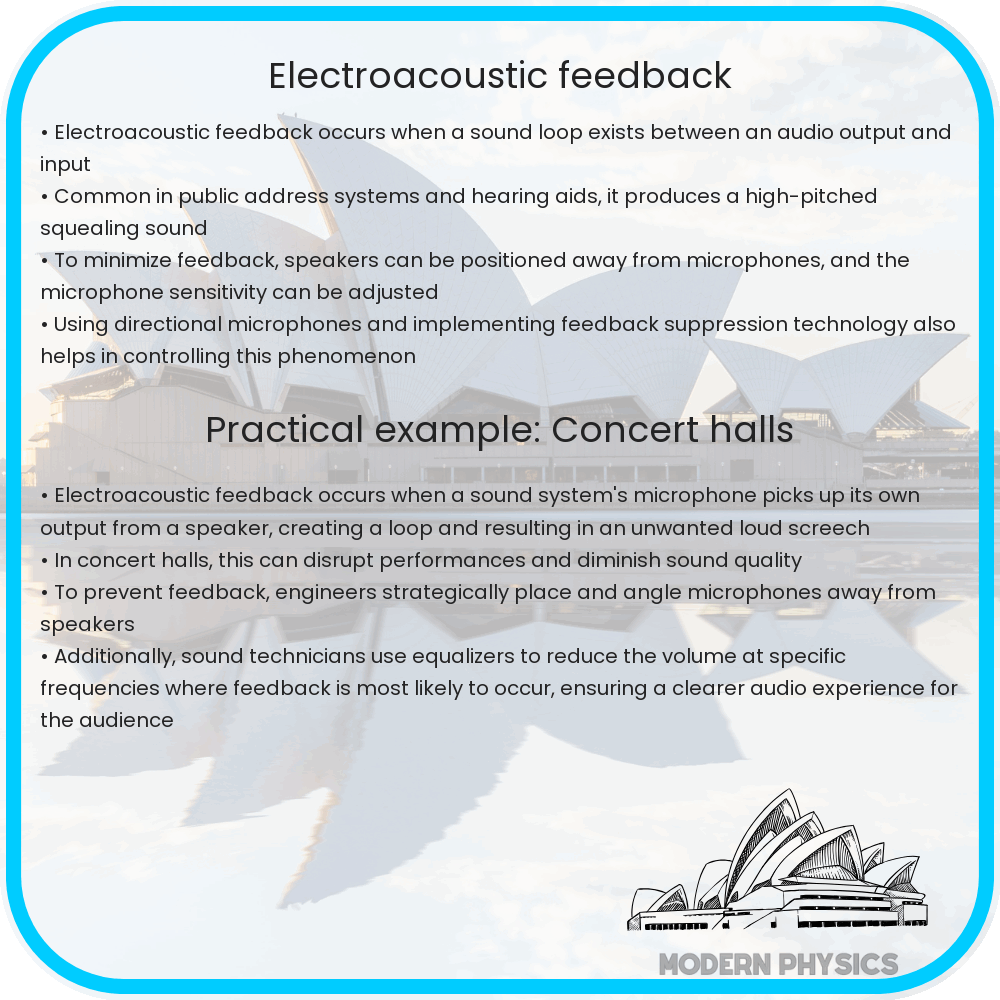
Electroacoustic feedback is a common phenomenon in sound systems, often recognized as a loud, high-pitched squeal that disrupts audio output. It occurs when a sound loop exists between an audio output (like speakers) and an audio input (like a microphone). Understanding and controlling this feedback is crucial in various settings, from live concerts to public speaking events.
The Basics of How Feedback Occurs
Feedback starts when sound from a speaker enters a microphone and gets re-amplified. This loop continues, with the sound increasingly being amplified at certain frequencies until it becomes audible as feedback. The specific frequencies at which feedback occurs depend on several factors including the acoustics of the environment, the placement of speakers and microphones, and the characteristics of the audio equipment.
Feedback Frequencies and Resonance
At its core, feedback is about resonance; certain frequencies are naturally amplified by the environment or equipment. This can be expressed by the equation:
\[ f_{feedback} = \frac{v}{2L} \cdot n \]
where \( v \) is the speed of sound in the medium, \( L \) is the distance between the speaker and microphone, and \( n \) is a positive integer. This equation reveals that feedback is more likely to occur at discrete frequencies, which are harmonics of the base frequency calculated.
Strategies for Analyzing Feedback
To control and optimize feedback, it’s essential to first analyze it effectively. This analysis typically involves:
- Identifying the frequencies most prone to feedback, often using a graphic equalizer or a real-time analyzer (RTA).
- Assessing the placement and orientation of speakers and microphones to understand how their positions affect feedback.
- Evaluating the acoustic characteristics of the venue, as surfaces and objects can reflect or absorb sound, thus affecting feedback potential.
Feedback Control Techniques
Several techniques can be employed to manage and reduce feedback:
- Adjust Microphone and Speaker Placement: Altering the distance and relative positions of microphones and speakers can help break the feedback loop.
- Use of Feedback Suppressors: Modern audio systems often include digital feedback suppressors, which automatically detect and notch out feedback frequencies.
- Acoustic Treatments: Installing materials that absorb or diffuse sound can reduce the effects of feedback by altering the room’s acoustics.
- Gain Before Feedback Optimization: Carefully adjusting the system’s gain settings can increase the volume threshold before feedback occurs, balancing loudness and clarity without triggering feedback.
Applying these strategies effectively requires a deep understanding of both the technical aspects and the practical challenges of managing audio systems in different environments. By optimizing these elements, the overall impact of feedback can be significantly mitigated, ensuring clearer, more reliable sound reproduction.
Real-World Examples of Feedback Management
Understanding feedback control is not just theoretical; it also demands practical insight. Consider the case of live concerts. Here, sound engineers must frequently adjust the audio setup in response to changing crowd dynamics and unforeseen acoustic challenges. For example, the adjustment of stage monitors and the main PA system is critical to allow performers to hear themselves without causing feedback that affects the audience’s experience.
In conference settings, where speech clarity is paramount, the strategic placement of microphones relative to speakers and the use of unidirectional or cardioid microphones can significantly minimize feedback occurrences. These microphones are designed to capture sound primarily from one direction, thus reducing the pickup of extraneous noise and feedback.
Feedback in Recording Studios
In the controlled environment of a recording studio, feedback management involves sophisticated setups, such as the use of isolation booths and carefully calibrated microphone arrays. Here, engineers can exploit the directional properties of microphones and the acoustical design of studios to capture the purest sound qualities without interference from feedback. The precise placement of acoustic panels and bass traps also plays an essential role in controlling resonance and feedback within these spaces.
Conclusion
Electroacoustic feedback, while a challenge in the audio world, is manageable with the right knowledge and tools. From understanding the fundamental physics of sound waves and resonance frequencies, to implementing practical strategies like optimal placement and technical adjustments in audio equipment, the potential for disruptive feedback can be significantly reduced. Whether in a live concert hall, a bustling conference room, or a meticulous recording studio, mastering feedback control enhances audio quality and ensures that communications are delivered clearly and effectively. By continuously analyzing and adapting to the audio environment, sound engineers and technicians can create an optimal listening experience, free from the disturbances of feedback.
Ultimately, the key to effective feedback management lies in a balanced approach that combines technical understanding with practical application. As technology evolves, so too do the tools and techniques at our disposal for managing feedback, pushing the boundaries of what’s possible in audio production and reproduction.