
Explore key aspects of door hinge mechanics, including load capacity, alignment, design principles, and advanced features for optimal functionality.
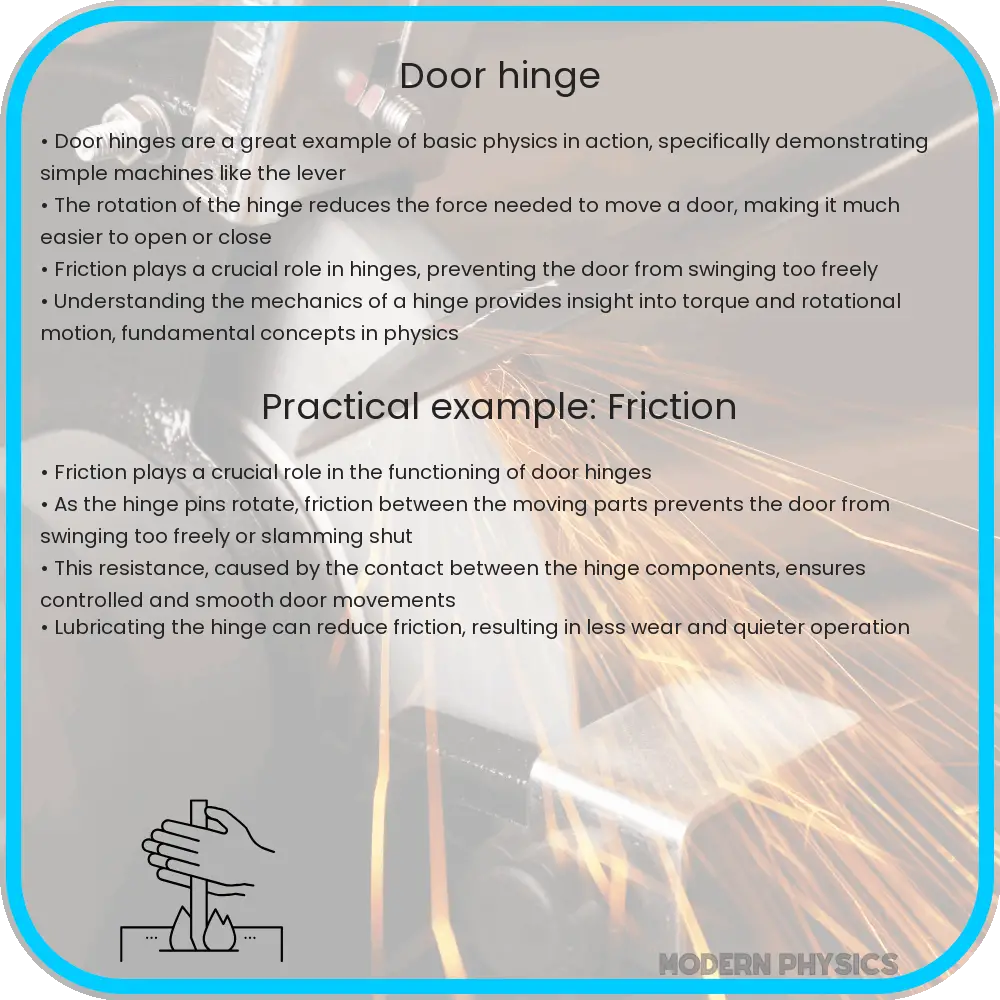
Understanding Door Hinge Mechanics: Load Capacity, Alignment, and Design Principles
Door hinges are pivotal components in the construction and design of doors, ensuring smooth operation and long-term functionality. This article delves into the critical aspects of door hinge mechanics, focusing on load capacity, alignment, and design principles.
Load Capacity of Door Hinges
One of the most crucial factors in hinge selection is its load capacity, which determines the weight a hinge can support without failure. This capacity is influenced by the hinge’s material, size, and design. Common materials include steel, brass, and stainless steel, each offering different strength and durability characteristics. The load capacity is often denoted as a force value in Newtons (N) or as weight in kilograms (kg).
Alignment Considerations
Proper alignment of hinges is essential for the smooth operation of the door. Misalignment can lead to undue stress on the hinge and door, causing premature wear or even failure. Key alignment factors include the hinge’s placement on the door and frame, the angle of the hinge relative to the door plane, and the distribution of weight across the hinges.
Design Principles of Door Hinges
The design of a door hinge is a balance of functionality, aesthetics, and durability. Common hinge types include:
- Butt Hinges: The most common type, ideal for most standard doors.
- Pivot Hinges: Suitable for heavy doors, allowing rotation without traditional hinge pin mechanisms.
- Concealed Hinges: Invisible when the door is closed, offering a clean aesthetic.
Each type of hinge has its unique installation requirements and load-bearing capacities. For instance, butt hinges are typically installed with screws and require precise alignment, while pivot hinges are often used for heavier doors and need robust anchoring in the floor and door frame.
Another essential aspect of hinge design is its resistance to environmental factors like humidity, temperature changes, and chemical exposure. For example, stainless steel hinges (\( \text{FeCr}_{\text{18}}\text{Ni}_{\text{10}} \)) offer excellent corrosion resistance, making them ideal for outdoor or high-moisture environments.
Advanced Features in Modern Door Hinge Designs
In the realm of door hinges, technological advancements have introduced features that enhance functionality and user experience. Some of these features include:
- Self-closing Hinges: These hinges automatically close the door after opening, ideal for maintaining privacy and security.
- Adjustable Hinges: They allow for post-installation adjustments to ensure perfect alignment and gap consistency.
- Soft-close Hinges: These reduce the noise and wear associated with door slamming.
Installation and Maintenance Tips
Proper installation and maintenance are key to maximizing the lifespan and effectiveness of door hinges. Installation precision is crucial; even minor misalignments can significantly impact hinge performance. Regular maintenance, including lubrication and checking for loose screws, can prevent many common issues.
Environmental and Safety Considerations
Environmental sustainability and safety are also vital in hinge design. Materials should be chosen not only for their strength and durability but also for their environmental impact. Safety considerations include ensuring that hinges are free from sharp edges and that they comply with fire safety and accessibility regulations.
Conclusion
The mechanics of door hinges — encompassing load capacity, alignment, and design principles — play a pivotal role in the functionality and longevity of doors. From the basic considerations of material and type to advanced features like self-closing and soft-close mechanisms, each aspect contributes to the hinge’s overall performance. When selecting hinges, it’s essential to consider the specific requirements of the door, including its weight, frequency of use, and environmental exposure. Furthermore, proper installation and regular maintenance are critical to ensure the hinges perform effectively over time. By understanding these fundamentals, one can make informed decisions that lead to the seamless operation and durability of doors in various settings.