
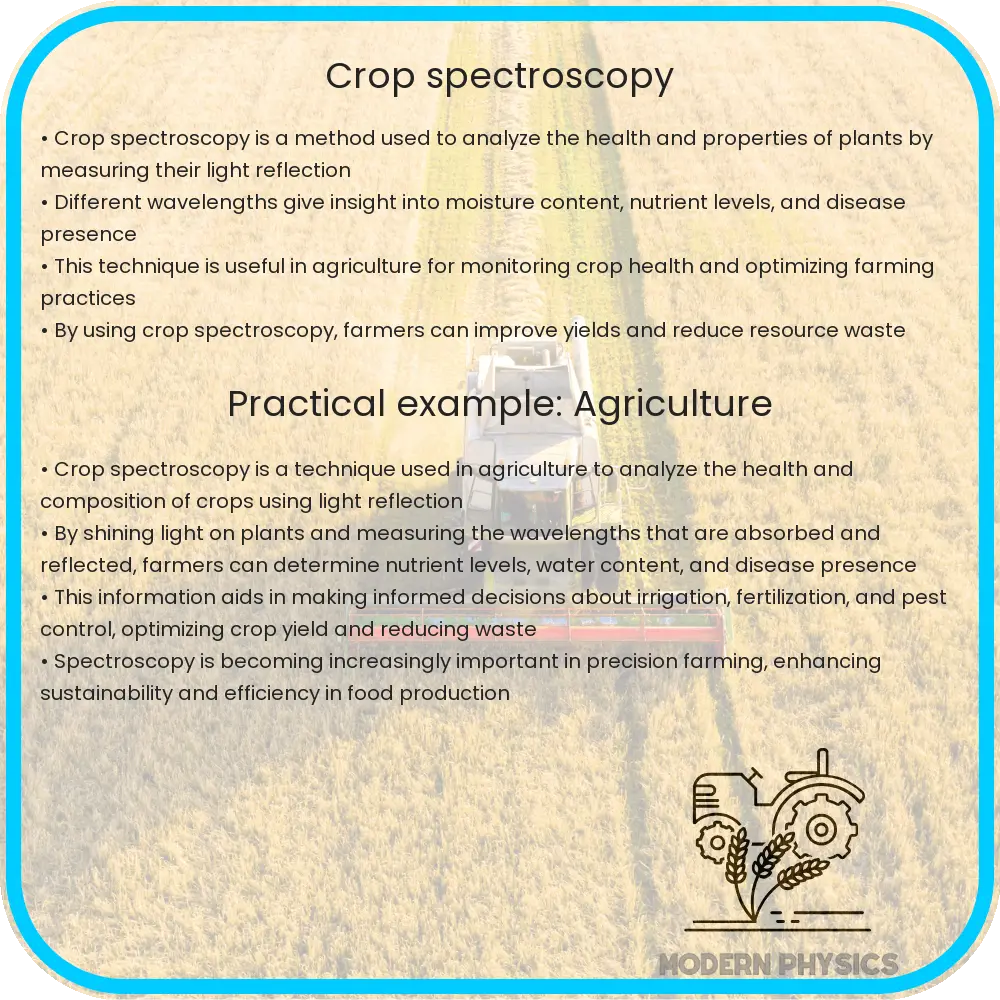
Crop spectroscopy uses light spectrum analysis to assess and enhance crop health and yield for precision agriculture.
Understanding Crop Spectroscopy: The Path to Precision Agriculture
Crop spectroscopy is a burgeoning field within agricultural science that leverages the principles of spectroscopy to assess, monitor, and improve the health and yield of crops. By analyzing the light spectrum reflected by plants, scientists and farmers can gain detailed insights into crop vigor and nutrient status, leading to more informed agricultural practices.
The Basics of Spectroscopy in Agriculture
At its core, spectroscopy involves measuring the interaction between light and matter. In the context of agriculture, this typically means analyzing the light reflected off a plant’s surface. Plants absorb most wavelengths of light but reflect near-infrared and green light. The specific patterns of reflection and absorption are indicative of various physiological and biochemical states of the crop.
How Crop Spectroscopy Enhances Precision Agriculture
- Early Disease Detection: Spectral analysis can identify disease signatures before they become visible to the eye. By detecting anomalies in the spectrum, farmers can apply targeted treatments, potentially saving entire crops from widespread disease.
- Nutrient Management: Different nutrients affect plant biochemistry in specific ways that alter the spectral signature. Monitoring these changes helps in assessing nutrient deficiencies or surpluses, allowing for precise fertilizer application, which enhances nutrient uptake efficiency and reduces waste.
- Water Stress Analysis: Water stress alters the plant’s spectral response, particularly in the near-infrared region. Spectroscopy can therefore be instrumental in irrigation management, ensuring crops receive the right amount of water at the right time.
Technological Integration and Crop Spectroscopy
Modern precision agriculture tools integrate spectroscopy with advanced technologies like drones and satellite imaging. Drones equipped with spectral sensors can cover extensive areas quickly, providing vital data on crop health that helps in making timely decisions that can boost overall yield. Satellite-based spectroscopy offers broader perspectives, enabling the monitoring of large-scale agricultural trends and improving crop management on a macro scale.
By merging spectroscopic data with other forms of agricultural data, such as soil health metrics and weather patterns, farmers can employ a holistic approach to farm management. This integration is facilitated by advancements in data analytics and machine learning, which help parse complex datasets into actionable insights.
The relevance and application of crop spectroscopy are witnessing rapid growth, spurred by the demands of a rising global population and the corresponding need for efficient food production methods. As we delve deeper into the specifics of how crop spectroscopy works and its practical impacts on agriculture, it becomes clear that this technology is not just beneficial but essential for the future of farming.
Future Prospects and Challenges in Crop Spectroscopy
As with any emerging technology, crop spectroscopy faces its share of challenges and opportunities. Technological advancements continue to enhance the precision and ease of data collection, yet the interpretation of this data demands a high level of expertise and resources. Furthermore, integrating this new technology into traditional farming practices poses logistical and educational hurdles that must be addressed.
However, the future looks promising. Ongoing research and development are leading to more sophisticated sensors and analytical tools that could lower costs and improve accessibility. Efforts are also being made to enhance farmer education and support systems to ensure technology adoption is as seamless as possible.
Environmental Impact and Sustainability
Crop spectroscopy not only boosts productivity but also contributes to environmentally sustainable farming practices. By enabling precise application of water and nutrients, this technology reduces the runoff and leaching of chemicals into water sources, thereby minimizing ecological footprints. Furthermore, early disease detection helps in managing crop health with minimal use of chemicals, promoting a healthier ecosystem.
- Reduced Chemical Usage: Targeted disease management cuts down on the indiscriminate application of pesticides and fungicides.
- Conservation of Resources: Efficient water and nutrient management contribute to the conservation of vital agricultural resources.
Conclusion
Crop spectroscopy is revolutionizing the agricultural landscape by providing detailed insights into crop health and environmental conditions. Through the precise monitoring and analysis of spectral data, farmers can significantly enhance their crop management strategies, leading to increased yield, reduced waste, and improved sustainability. The integration of this technology with advanced data analytics and farming practices holds the potential to transform agriculture into a more productive and sustainable industry, capable of meeting the global demands of the future.
The journey from traditional farming techniques to precision agriculture powered by spectroscopy represents a pivotal shift. As this technology continues to evolve, the implications for global food security and sustainable agricultural practices are profoundly positive. Embracing these advancements will not only benefit farmers but also ecosystems, economies, and communities worldwide.