
Explore the vital role of concrete reinforcing bar in construction, covering its durability, strength, statics, and modern technological advancements.
Understanding Concrete Reinforcing Bar: An Overview
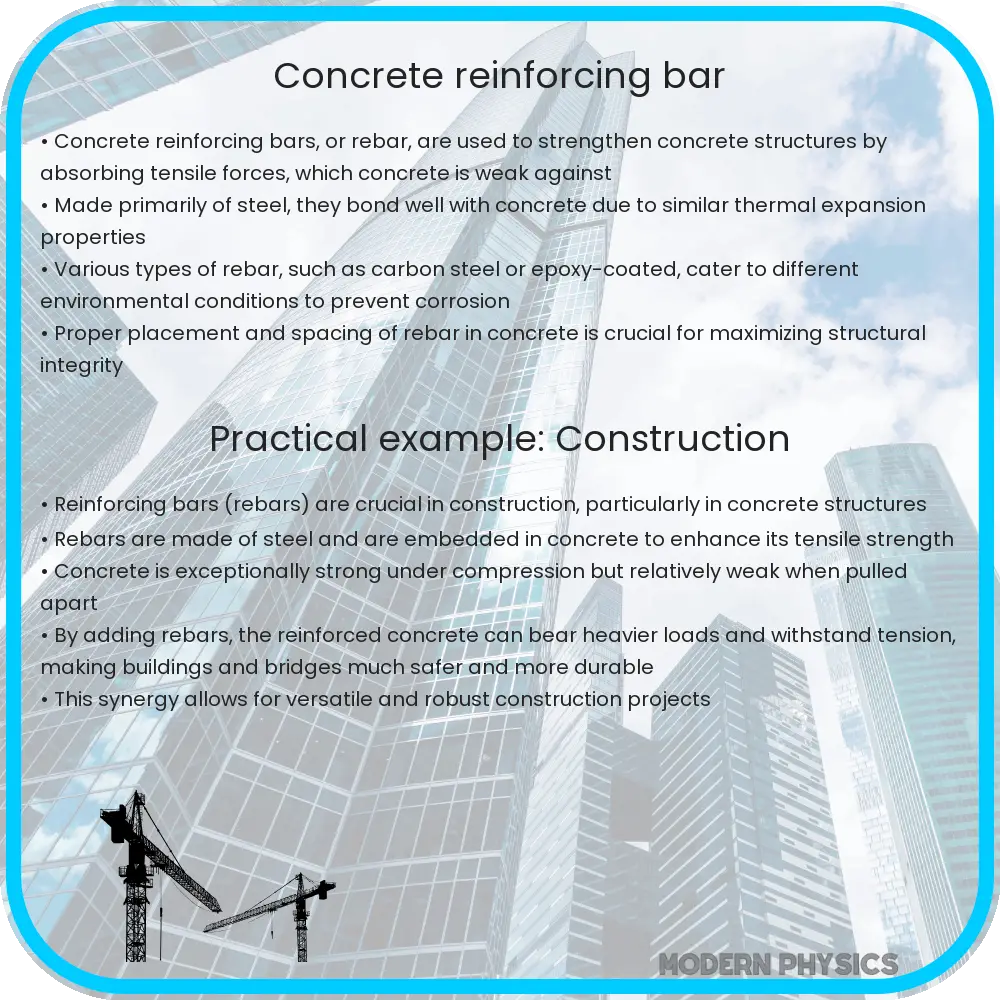
Concrete reinforcing bar, commonly known as rebar, is a crucial component in the construction industry, providing enhanced strength and stability to concrete structures. This article delves into the aspects of durability, strength, and statics that make rebar an indispensable material in construction.
Durability of Rebar
The durability of rebar is paramount in ensuring the longevity of concrete structures. Rebar is typically made from carbon steel, which provides excellent strength and durability. However, steel is susceptible to corrosion, especially when exposed to moisture and environmental elements. To counter this, rebar is often coated with protective materials such as epoxy, which forms a barrier against moisture and reduces the risk of corrosion. In environments with high salinity or acidity, stainless steel or galvanized rebar may be used for additional protection.
Strength Characteristics
Rebar’s strength is a vital factor in supporting the weight and stress loads of concrete structures. The strength of rebar is measured in terms of its yield strength, which is the amount of stress a material can withstand without permanently deforming. Common grades of rebar, such as Grade 40, Grade 60, and Grade 75, indicate their yield strength in thousands of pounds per square inch (psi). For instance, Grade 60 rebar has a yield strength of 60,000 psi. The choice of rebar grade depends on the specific requirements of the construction project.
Statics and Load Distribution
Rebar plays a critical role in the statics of concrete structures, which involves the study of forces and their effects on materials at rest. In concrete, rebar provides tensile strength, which is essential since concrete is strong in compression but weak in tension. By embedding rebar within concrete, the composite material can withstand both compressive and tensile forces effectively. The arrangement and spacing of rebar within concrete are carefully calculated based on load distribution, ensuring that the structure can support various types of loads, including dead loads (permanent fixtures) and live loads (temporary loads like traffic or occupancy).
Chemical Composition and Its Impact
The chemical composition of rebar significantly affects its properties. Carbon steel rebar, the most common type, typically contains iron (Fe) and carbon (C), along with traces of manganese (Mn), silicon (Si), sulfur (S), and phosphorus (P). The presence of carbon imparts strength to the steel, but too much carbon can reduce its ductility. Advanced alloying techniques involve adding elements like chromium (Cr), nickel (Ni), and molybdenum (Mo) to enhance corrosion resistance and strength. The specific composition of rebar is chosen to balance strength, ductility, weldability, and resistance to environmental factors.
Modern Innovations in Rebar Technology
In recent years, advancements in technology have led to significant improvements in rebar design and functionality. One such innovation is the development of fiber-reinforced polymer (FRP) rebars, which offer superior corrosion resistance compared to traditional steel rebar. FRP rebars are made from a polymer matrix reinforced with fibers such as glass, carbon, or aramid, providing an excellent strength-to-weight ratio. This makes them particularly useful in structures susceptible to corrosive elements, like marine environments or areas with heavy use of de-icing salts.
Environmental Considerations and Sustainability
The production and use of rebar also have environmental implications. The steel industry is known for its high carbon footprint, primarily due to the energy-intensive processes involved in steel production. However, the industry is making strides towards sustainability through recycling and using electric arc furnaces, which are more energy-efficient than traditional blast furnaces. Recycled steel is commonly used in rebar manufacturing, reducing the need for raw materials and minimizing environmental impact. Furthermore, the longevity and recyclability of steel rebar contribute to its sustainability profile.
Application in Complex Structures
Rebar’s versatility allows for its use in various complex and architecturally challenging structures. In high-rise buildings, bridges, and tunnels, rebar is integral to maintaining structural integrity under diverse stress conditions. For earthquake-prone areas, special seismic rebars with higher ductility are used to provide additional flexibility and shock absorption. In such applications, the layout and design of the rebar network are critical to ensure that the structure can withstand seismic forces without catastrophic failure.
Conclusion
In summary, concrete reinforcing bar is a fundamental element in modern construction, providing essential strength and stability to concrete structures. Its durability, especially when enhanced through protective coatings and innovative materials, ensures the longevity of buildings and infrastructure. The strength characteristics of rebar, tailored to specific project requirements, enable structures to withstand various loads and stress conditions. Additionally, advancements in rebar technology, coupled with an increasing focus on environmental sustainability, are shaping the future of construction. With its pivotal role in statics and load distribution, rebar remains an indispensable material in the construction industry, driving the development of safe, durable, and sustainable structures worldwide.