
Explore the role, efficiency, materials, and durability of catalytic converters in modern vehicles to reduce emissions and meet regulatory standards.
Understanding Catalytic Converters: Efficiency, Durability, and Materials
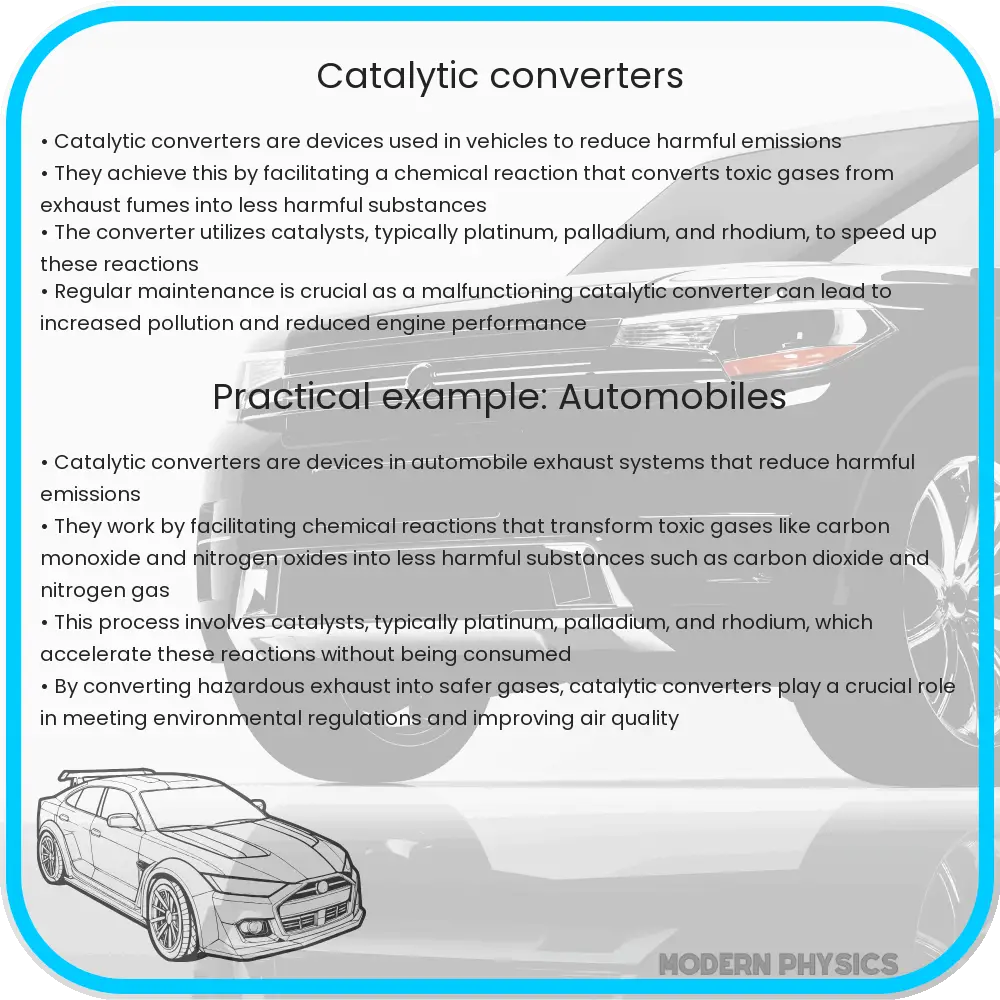
Catalytic converters are critical components in modern vehicles, designed to reduce the harmful emissions produced by internal combustion engines. Their function not only contributes to protecting the environment but also helps vehicles meet more stringent emission regulations. In this article, we delve into the efficiency, durability, and materials of catalytic converters to better understand their crucial role.
Efficiency of Catalytic Converters
The primary goal of a catalytic converter is to convert harmful pollutants into less harmful gases before they exit a vehicle’s exhaust system. The efficiency of a catalytic converter is defined by its ability to reduce the concentration of toxic gases such as carbon monoxide (CO), nitrogen oxides (NOx), and hydrocarbons (HC) released into the atmosphere. This is achieved through a series of redox reactions where:
- Reduction of NOx to nitrogen (N2) and oxygen (O2): 2NOx → xO2 + N2
- Oxidation of CO to carbon dioxide (CO2): 2CO + O2 → 2CO2
- Oxidation of HC to CO2 and water (H2O): CxHy + (x + y/4)O2 → xCO2 + y/2H2O
The catalytic converter’s efficiency largely depends on the catalyst’s ability to facilitate these reactions effectively and withstand operational temperatures. The efficiency is measured by the conversion rate, typically expressed in percentages, indicating how much of the pollutant is converted into non-toxic substances.
Durability of Catalytic Converters
Durability in catalytic converters is a measure of how well they maintain their efficiency over time under normal operating conditions. Factors affecting their durability include:
- Thermal degradation: High temperatures can degrade the catalyst materials, reducing their effectiveness.
- Poisoning: Exposure to chemicals such as lead, sulfur, and phosphorus can poison the catalyst, diminishing its performance.
- Physical damage: Rough roads or accidents can cause physical damage to the converter, leading to decreased efficiency.
Manufacturers typically design catalytic converters to last the life of the vehicle, usually around 10 years or 100,000 miles, whichever comes first. However, their lifespan can be significantly shortened by engine malfunctions, poor maintenance, or severe operating conditions.
Materials Used in Catalytic Converters
The choice of materials in the construction of catalytic converters is crucial for their performance, durability, and resistance to poisoning and thermal degradation. The most commonly used materials include:
- Ceramic substrates: These form the core of the converter and provide a large surface area for the catalyst.
- Catalyst materials: Platinum, palladium, and rhodium are precious metals commonly used due to their excellent catalytic properties.
- Washcoat: A washcoat is used to increase the surface area of the catalyst and improve the distribution of catalyst materials. It is usually made of aluminum oxide.
These materials are selected to withstand the harsh conditions inside the exhaust system and to provide efficient catalysis over the converter’s operational life. Advances in material science continue to improve the functionality and cost-effectiveness of these essential components.
Optimizing Catalytic Converter Performance
Maintaining optimal performance of catalytic converters involves regular vehicle maintenance and adherence to manufacturer guidelines. Some strategies to ensure long-term efficiency and functionality include:
- Regular engine tune-ups to prevent engine misfire and reduce the risk of catalyst poisoning.
- Using the correct type of fuel and avoiding fuel additives that might contain harmful substances.
- Performing timely oil changes to prevent engine oil from entering the exhaust system, which can lead to catalyst poisoning.
Understanding the engineering behind catalytic converters, and the factors impacting their performance, can help consumers and automotive professionals make informed decisions about vehicle maintenance and environmental compliance.
Environmental Impact of Catalytic Converters
The introduction of catalytic converters has had a significant positive impact on the environment by reducing the emission of noxious gases from vehicles. Statistically, catalytic converters can eliminate up to 90% of harmful emissions from an engine, dramatically lowering the output of pollutants such as nitrogen oxides and carbon monoxide.
By converting these harmful gases into less toxic substances, catalytic converters play a crucial role in improving air quality, particularly in urban areas with high volumes of vehicle traffic. This reduction in air pollutants not only contributes to a cleaner environment but also helps in reducing the ozone depletion and the effects of smog.
Economic Aspects of Catalytic Converters
The initial and maintenance costs of catalytic converters are an important consideration for vehicle owners. While catalytic converters add an extra cost to vehicle production and purchase, they prevent potential fines from emissions violations and contribute to the overall vehicle efficiency and fuel economy when functioning correctly.
The precious metals used in the catalysts, such as platinum, palladium, and rhodium, are a significant factor in the cost of converters. Fluctuations in the availability and price of these metals can impact the costs for manufacturers and ultimately for consumers.
Future Trends
Research in catalytic converter technology continues to evolve, focusing on enhancing efficiency and reducing costs. Emerging technologies explore the use of alternative, less costly materials that can resist high temperatures and poisoning while maintaining or improving efficiency. Another area of research aims at developing catalysts that can activate at lower temperatures, thereby reducing the warm-up period and further minimizing emissions during a cold start.
Furthermore, with the increasing popularity of electric vehicles, which do not emit exhaust gases, the automotive industry is investigating how traditional components like catalytic converters will adapt or be repurposed in new vehicle technologies.
Conclusion
Catalytic converters represent a vital technology in the automotive industry, essential for reducing vehicle emissions and protecting the environment. Understanding their functionality, maintenance requirements, and impact on vehicle operation helps both consumers and professionals manage vehicle performance and environmental compliance. As technology progresses, we can anticipate further improvements that will enhance the efficiency and cost-effectiveness of catalytic converters, continuing their role in environmental protection and sustainability in the automotive sector.