
Explore the evolution of automotive headlight systems, focusing on their role in enhancing clarity, safety, and introducing cutting-edge innovations.
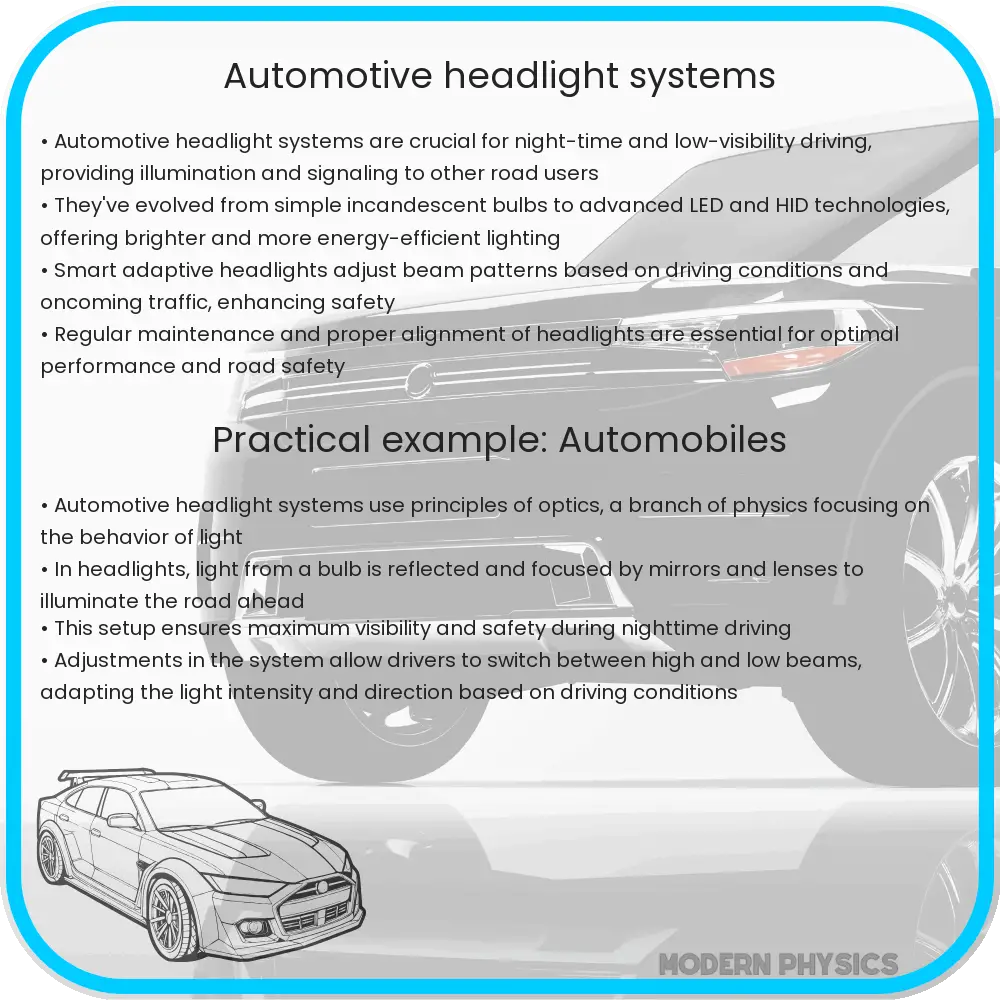
Automotive Headlight Systems: Clarity, Safety & Innovation
The evolution of automotive headlight systems is a testament to the advancements in technology and design that prioritize driver safety, visibility, and comfort. From the early days of acetylene lamps to the modern LED and laser lights, the journey has been marked by significant innovations. This article delves into the key aspects of automotive headlight systems, focusing on their development, the clarity they provide, their safety features, and the innovative technologies that drive their evolution.
The Evolution of Headlight Technology
Automotive headlights have come a long way since their inception. The initial versions were simple acetylene or oil lamps that offered minimal lighting. The invention of the electric headlamp in the early 20th century was a major milestone, providing much better visibility and safety. Halogen lamps, introduced in the 1960s, became the standard due to their improved brightness and longevity. The late 20th and early 21st centuries saw the advent of High-Intensity Discharge (HID) and Light Emitting Diode (LED) headlights, offering superior clarity and efficiency. The latest innovation in this field is laser headlight technology, which promises even greater efficiency and range.
Clarity and Visibility
Clarity and visibility are paramount in automotive headlight design. Modern headlights, especially LED and laser systems, provide bright, white light that closely mimics daylight. This enhances the driver’s ability to see and react to obstacles, pedestrians, and other vehicles, significantly improving nighttime driving safety. The distribution of light is also carefully engineered to maximize visibility without blinding oncoming traffic, thanks to adaptive headlight technology.
Safety Enhancements
Safety is at the core of headlight system innovation. Adaptive headlights, which adjust the beam direction based on the vehicle’s speed and steering, offer improved visibility around curves and over hills. Automatic high-beam systems toggle between high and low beams in response to oncoming traffic, reducing the risk of dazzling other drivers. Moreover, advancements in materials and design have led to more durable headlight enclosures, capable of withstanding impacts and harsh weather conditions.
- LED Headlights: Known for their efficiency and longevity, LED headlights produce a bright, white light that improves visibility and reaction times.
- HID Xenon Headlights: Offering superior brightness compared to halogens, HIDs have been a popular choice for enhanced nighttime visibility.
- Laser Headlights: A cutting-edge technology that provides exceptional range and brightness, making them ideal for driving in low-light conditions.
Is this conversation helpful so far?
Automotive Headlight Systems: Clarity, Safety & Innovation
The evolution of automotive headlight systems has been a journey towards enhancing visibility, safety, and driving comfort, reflecting the broader trends in automotive design and technology. From the early days of acetylene lamps to the advanced LED and laser technologies of today, headlights have come a long way in providing drivers with clearer vision and making vehicles more conspicuous on the road. This article explores the latest innovations in headlight technology, their impact on driving safety, and the future of automotive lighting.
Innovations in Headlight Technology
Modern vehicles are equipped with headlight systems designed to improve clarity, extend visibility range, and reduce glare for oncoming drivers. The most notable advancements include:
- Halogen Headlights: For decades, halogen bulbs have been the standard, known for their brightness and efficiency. However, they are gradually being replaced by more advanced technologies.
- High-Intensity Discharge (HID) Lamps: HID lamps, also known as Xenon headlights, produce a brighter and whiter light compared to halogens. They are more energy-efficient and have a longer lifespan but come at a higher cost.
- Light Emitting Diodes (LEDs): LED headlights are becoming increasingly popular due to their low energy consumption, long lifespan, and compact size, allowing for versatile design options.
- Laser Headlights: Representing the cutting edge of headlight technology, laser headlights offer unparalleled brightness and range, significantly improving night-time visibility and safety.
These technological advances are complemented by intelligent features like adaptive lighting systems, which adjust the beam direction based on vehicle speed, steering angle, and road conditions, further enhancing safety and comfort for night-time driving.
The Future of Automotive Lighting
The future of automotive lighting lies in the integration of smart technologies and the pursuit of sustainability. Organic Light Emitting Diodes (OLEDs) and developments in laser technology promise even greater efficiency, control, and design flexibility. Furthermore, the incorporation of lighting systems into vehicle-to-everything (V2X) communication holds the potential to revolutionize road safety, with headlights that can adapt to varying conditions and communicate with other road users.
As automotive manufacturers continue to innovate, the focus will remain on improving visibility, safety, and the overall driving experience. With advancements in headlight technology moving at a rapid pace, the future looks bright for automotive lighting systems, promising a safer and more comfortable driving experience for all road users.
Conclusion
The evolution of automotive headlight systems is a testament to the industry’s commitment to safety, innovation, and driver comfort. From the simple lamps of the early 20th century to today’s sophisticated LED and laser technologies, headlights have become an integral part of vehicle design and safety systems. As we look forward, the integration of smart technologies and the emphasis on sustainability will continue to drive advancements in this field, making the roads safer and the act of driving a more enjoyable experience. With each innovation, automotive lighting not only illuminates the path ahead but also leads the way in automotive safety and design.