
Learn about the Atmospheric Electric Field Mill (EFM), a device measuring atmospheric electric fields critical for scientific research and weather monitoring.
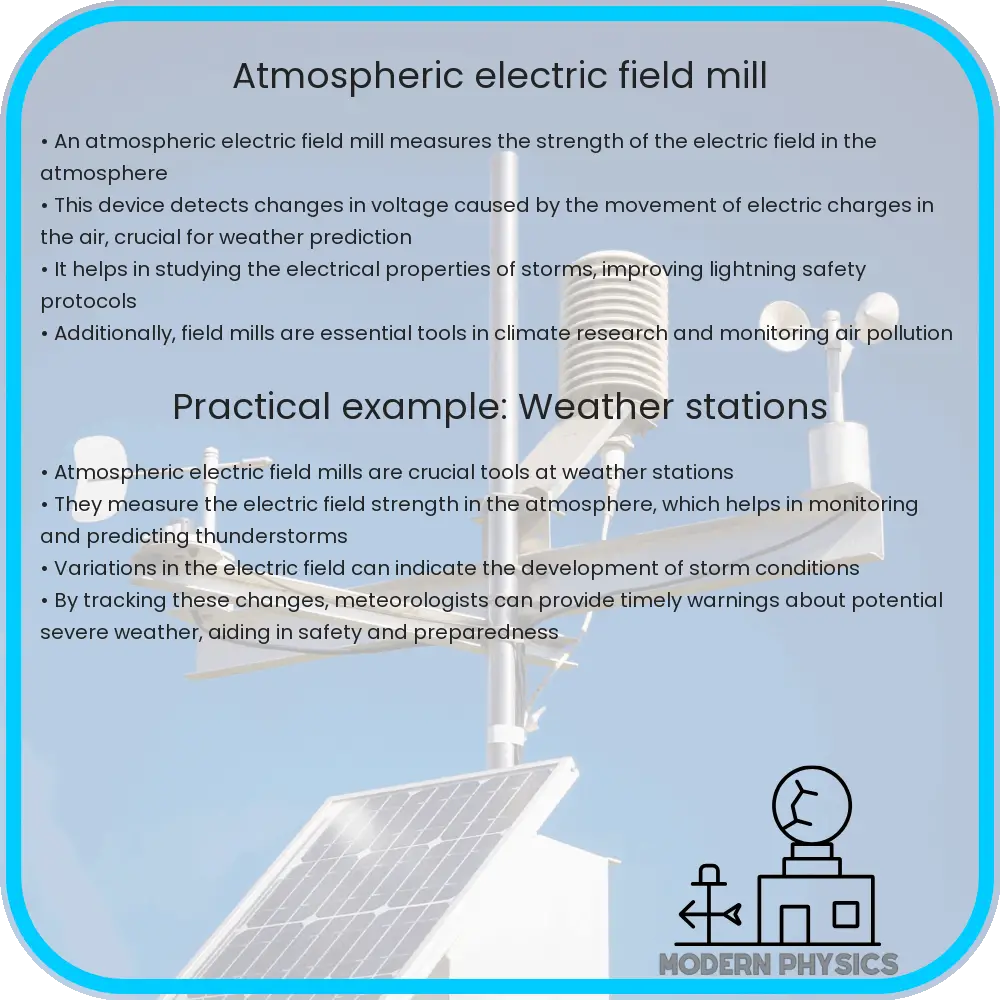
Understanding the Atmospheric Electric Field Mill
The atmosphere is not just a layer of gases surrounding Earth—it is also a dynamic system where various electrical phenomena occur. One of the tools used to measure the electrical characteristics of the atmosphere is the Atmospheric Electric Field Mill (EFM). This device is crucial for scientific research, weather monitoring, and improving the safety in aviation and other industries.
How Does an Electric Field Mill Work?
An electric field mill measures the strength and direction of the electric field in the atmosphere. The basic working principle involves a rotating component known as the rotor and a stationary component called the stator. The rotor periodically exposes and shields the stator from the electric field. As the rotor spins, it alternates between blocking the electric field and allowing it to impinge on the stator, which results in a fluctuating charge on the stator. This fluctuation is measured and converted into an electric field strength.”
The data collected by the EFM is represented in volts per meter (V/m). This measurement gives researchers and engineers insights into the behavior of atmospheric electric fields, which can be influenced by local weather conditions, such as storms and precipitation.
Accuracy of Electric Field Mills
The accuracy of an EFM is critical because it impacts the reliability of the data collected for weather forecasts and scientific research. Several factors affect the accuracy:
- Calibration: Regular calibration using standard measures ensures that the EFM provides accurate readings.
- Design: The design of the field mill affects how well it can detect and measure electric fields. For example, the shape and material of the rotor and stator, and their alignment, play significant roles.
- Shielding: Proper shielding from external electromagnetic interference is necessary to avoid inaccurate readings.
Durability of Electric Field Mills
EFMs are often deployed in harsh environmental conditions, which demands that they be both robust and durable. The durability depends on:
- Materials: Use of corrosion-resistant materials is crucial to withstand various weather conditions, especially moisture and salinity in maritime environments.
- Construction: The overall construction must be solid to resist physical impacts, such as high winds and flying debris.
- Maintenance: Regular maintenance is essential to ensure long-term reliability and performance of the mill.
Applications of Electric Field Mills
Electric Field Mills are versatile in their applications, serving various sectors effectively. Here are some of the key uses:
- Weather Forecasting: By monitoring changes in the electric fields, EFMs can help predict storm development and lightning, enhancing forecasting accuracy.
- Climate Research: Scientists use EFMs to study atmospheric electric fields over time, contributing to our understanding of climate dynamics and potentially linking it to global climate changes.
- Aerospace: In aviation and space industries, EFMs are critical in studying and mitigating the effects of atmospheric electricity on aircraft and spacecraft.
- Environmental Monitoring: These tools play a role in pollution monitoring and studying the environmental impacts of atmospheric electrical discharges.
Challenges in Utilizing Electric Field Mills
Despite their effectiveness, there are challenges associated with the use of Electric Field Mills:
- Interference Issues: The accuracy of an EFM can be compromised by electromagnetic interference from nearby electronic devices and power lines.
- High Sensitivity: EFMs are extremely sensitive instruments. Their high sensitivity to minute changes can sometimes make distinguishing ambient electric fields from noise challenging.
- Placement and Installation: The location where an EFM is installed significantly affects its performance. Ensuring an optimal installation site that minimizes obstructions and interference is crucial.
Future of Electric Field Mills
Advancements in materials science and electronic engineering may lead to the development of more accurate, durable, and efficient Electric Field Mills. These improvements could allow for enhanced real-time data analysis, better integration with other meteorological tools, and reduced maintenance requirements, widening their applicability in more fields and offering more reliable data for research and practical applications.
Conclusion
The Atmospheric Electric Field Mill is a powerful tool in our quest to understand and monitor the complex dynamics of the Earth’s atmosphere. Its ability to diagnose electric fields provides crucial data that benefits numerous fields, from meteorology to aerospace. While facing challenges such as sensitivity to interference and environmental conditions, ongoing technological enhancements promise to amplify its accuracy and utility. The continued evolution of EFMs holds the potential to not only advance our atmospheric knowledge but also significantly impact how we predict, study, and respond to atmospheric phenomena.