
Explore the revolutionary world of aerogels, the lightest materials known, offering exceptional thermal insulation and sustainability benefits.
Aerogels: Revolutionizing Lightweight Materials for Sustainability
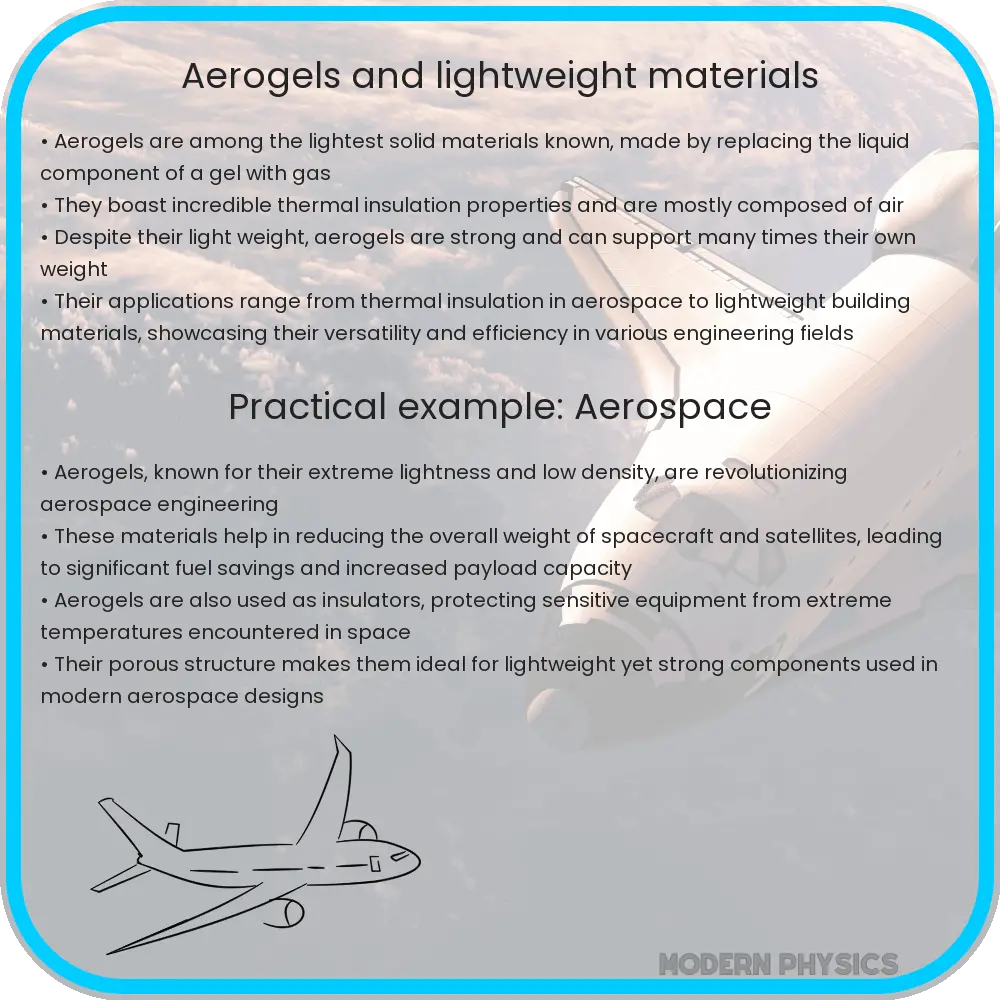
Aerogels stand at the forefront of material science innovation, offering an unparalleled combination of low density and superior thermal insulation. Developed from materials like silica, carbon, or metal oxides, aerogels are synthesized through a process that replaces the liquid component of a gel with gas, resulting in a structure that is more than 90% air. This unique composition not only makes aerogels among the lightest materials on Earth but also provides them with exceptional thermal, electrical, and acoustic properties.
The sustainability aspect of aerogels cannot be overstated. Their lightweight nature contributes significantly to energy conservation, especially in building and construction applications. By integrating aerogel-based insulation, buildings can achieve better thermal efficiency, reducing the need for heating and cooling, and consequently, lowering greenhouse gas emissions. Moreover, the use of aerogels in transportation – from automobiles to aerospace – substantially decreases vehicle weight, leading to enhanced fuel efficiency and reduced environmental impact.
Innovative Applications and Environmental Impact
Aerogels’ versatility extends beyond thermal insulation. In the field of environmental cleanup, silica aerogels, with their porous structure, have shown promise in absorbing harmful substances like oil spills in aquatic environments. Similarly, their application in the storage and transportation of volatile chemicals showcases their ability to safely contain and insulate materials that would otherwise pose significant hazards.
In renewable energy systems, aerogels are making strides as well. Their insulative properties and light weight make them ideal components in solar energy collectors, improving efficiency and durability. Additionally, aerogels are being explored as substrates for the next generation of lithium-ion batteries, potentially enhancing energy density and battery life, crucial for the expansion of electric vehicles and renewable energy storage solutions.
The production process of aerogels has also seen advancements aimed at reducing environmental impact. Traditional methods involved critical point drying, which is energy-intensive and utilizes harmful chemicals. Recent innovations, however, have led to more eco-friendly techniques, including ambient pressure drying, significantly reducing the carbon footprint associated with aerogel manufacturing.
Challenges and Future Prospects
Despite their impressive attributes, aerogels face challenges in terms of cost and scalability. The high expense associated with production, primarily due to the sophisticated drying processes required, limits their widespread adoption. Additionally, the brittle nature of silica-based aerogels calls for further research and development to enhance their mechanical strength for broader applications. Nevertheless, ongoing research is focused on overcoming these hurdles, with advancements in manufacturing processes and the development of composite materials that combine aerogels with other substances to improve durability and reduce costs.
Furthermore, the integration of aerogels into consumer products and industrial applications is gaining momentum. Innovations in aerogel textiles are leading to the creation of ultra-lightweight, insulating clothing for extreme weather conditions, while advancements in construction materials are enabling the development of more energy-efficient buildings. The automotive and aerospace industries continue to explore aerogels for thermal insulation and weight reduction, signaling a shift towards more sustainable transportation methods.
Conclusion
Aerogels represent a significant leap forward in the field of materials science, offering solutions that are both innovative and sustainable. Their unique properties, including low density, high porosity, and exceptional thermal insulation, make them a valuable asset in addressing global challenges such as energy efficiency, environmental protection, and resource conservation. While challenges such as cost and mechanical strength remain, the potential applications of aerogels continue to expand, driven by ongoing research and technological advancements. As society moves towards a more sustainable future, aerogels stand poised to play a pivotal role in shaping the next generation of lightweight, efficient, and environmentally friendly materials.