
Zinc oxide (ZnO) is a versatile, sustainable compound used broadly in sunscreens, electronics, and enhancing concrete durability.
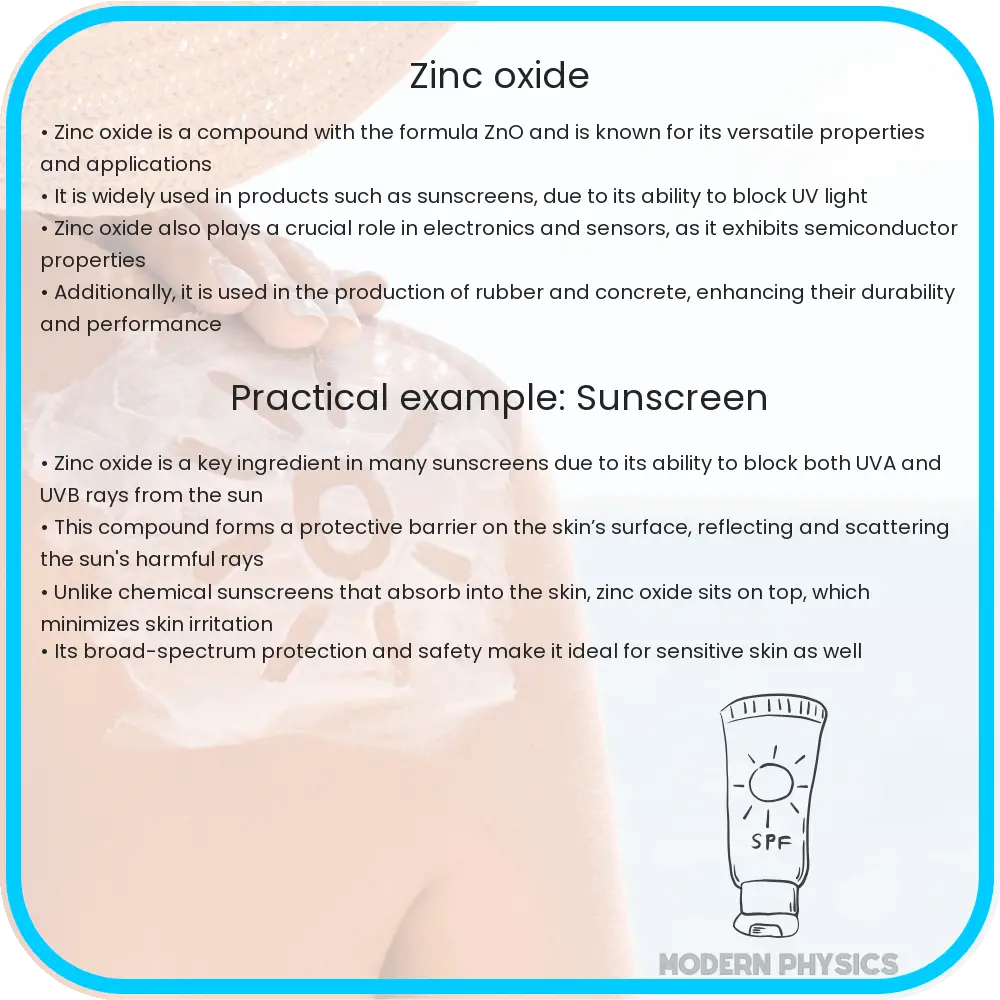
Zinc Oxide: A Versatile, Sustainable, and High-Performance Material
Zinc oxide is a compound that may not often make headlines, but its role in modern technology and industrial applications is vast and varied. Known chemically as ZnO, this simple compound has properties that make it incredibly useful across different fields, from electronics to personal care products. This article explores the unique characteristics of zinc oxide, shedding light on why it is considered versatile, sustainable, and high-performing.
Chemical and Physical Properties of Zinc Oxide
Zinc oxide typically appears as a white powder that is nearly insoluble in water but soluble in acids and alkalis. It is an amphoteric oxide, meaning it can act as both a base and an acid. The chemical formula for zinc oxide is ZnO, representing one zinc atom bonded to one oxygen atom.
At room temperature, zinc oxide is a semiconductor in the II-VI semiconductor group, which means it has a band gap of about 3.3 electron volts at 300 Kelvin. This wide band gap makes ZnO transparent to visible light but absorbent in the UV spectrum, one of its key features leveraged in various applications.
Applications in Sunscreens and Skincare
One of the most well-known uses of zinc oxide is in sunscreens. Due to its ability to block both UVA and UVB rays, ZnO is considered a broad-spectrum sunscreen. It provides skin protection by reflecting, scattering, and absorbing UV rays without the risk of skin irritation, making it suitable for sensitive skin. Unlike some chemical sunscreen ingredients that can degrade under sunlight, ZnO remains stable, thus providing durable sun protection.
Role in Electronics and Optoelectronics
Zinc oxide’s electronic properties are exploited in a range of device applications. Its ability to transmit visible light while reflecting UV rays makes it perfect for use as a transparent conducting oxide (TCO) in things like liquid crystal displays (LCDs) and solar cells. In the field of optoelectronics, ZnO is used to fabricate LEDs, laser diodes, and photodetectors. Moreover, its piezoelectric properties—its capacity to generate electric charge in response to mechanical stress—are utilized in sensors and energy harvesting devices.
Enhancing Concrete Durability
Zinc oxide has also found important uses in the construction industry, particularly in the manufacturing of concrete. ZnO influences the hydration of cement, helping to control the setting time and improving the durability of concrete products. This enhanced durability is crucial for structures subjected to harsh environmental conditions, reducing maintenance costs and extending the lifespan of the infrastructure.
In addition to its direct applications, the sustainable aspects of zinc oxide are noteworthy. ZnO is nontoxic and biodegradable, minimizing environmental impacts compared to other materials that perform similar functions. Its production methods are also evolving to enhance environmental friendliness, including methods to recycle zinc from various sources. This aspect of zinc oxide not only makes it a high-performance material but also aligns it with the goals of sustainability and environmental conservation.
Advancements in Zinc Oxide Production Technologies
Recent technological advancements have significantly improved the methods for producing zinc oxide, enhancing its quality and efficiency. One notable development is the direct method, which involves vaporizing metallic zinc and then oxidizing it to produce purer and finer ZnO particles. This method results in better control over the particle size distribution, which is critical for specific applications like cosmetics and pharmaceuticals. Furthermore, researchers are exploring the use of nanotechnology in zinc oxide production, which has the potential to revolutionize its applications by creating nanoparticles with superior properties such as increased surface area and reactivity.
Zinc Oxide in Environmental Cleanup
Beyond its traditional uses, zinc oxide also plays a pivotal role in environmental protection. Its photocatalytic properties make it effective in breaking down organic pollutants and toxins in water and air. When exposed to UV light, ZnO can degrade harmful substances into less dangerous components, thus enhancing air and water quality. This application is proving to be invaluable in industrial settings where emissions and effluents need to be treated before release into the environment.
Conclusion
Zinc oxide is a remarkable material that epitomizes versatility, sustainability, and high performance. Its unique chemical and physical properties enable a wide range of applications, from providing sun protection in skincare products to enhancing the efficiency of electronic devices and even aiding in environmental cleanup. With ongoing advancements in zinc oxide production and nanotechnology, its role across various industries is set to expand even further. By utilizing ZnO, industries not only improve the performance of their products but also contribute to a more sustainable future, demonstrating how materials can be both highly effective and environmentally responsible. Ultimately, the widespread use and continuous development of zinc oxide highlight its indispensable role in advancing modern technology and improving our quality of life.