
Learn about the Yellow Dust phenomenon, a meteorological event where dust from Asian deserts impacts air quality and health in several regions.
Understanding the Yellow Dust Phenomenon
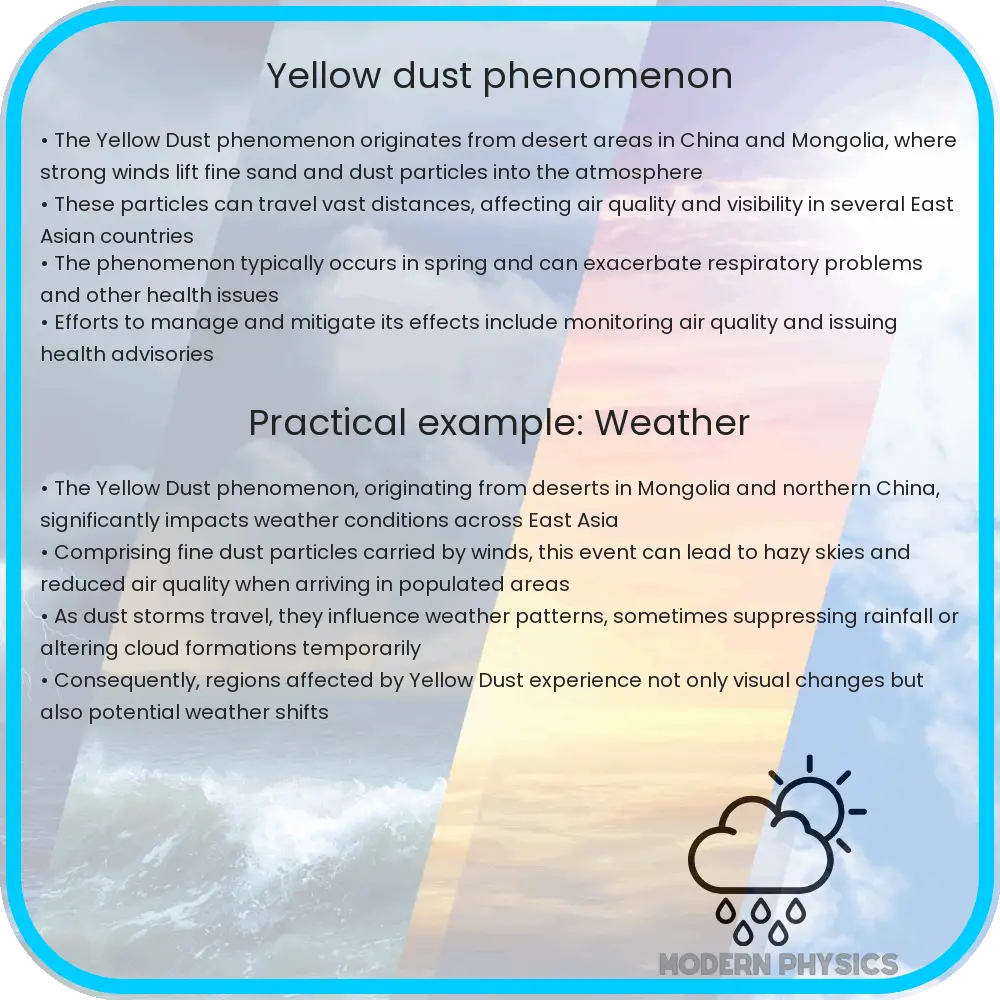
The Yellow Dust phenomenon, also known as Asian Dust, refers to a meteorological event common in East Asia, where dust particles from the deserts of Mongolia, Northern China, and Kazakhstan are carried by strong winds across regions, including South Korea, Japan, and sometimes as far as the United States. These dust storms occur primarily during spring but can appear throughout the year, impacting air quality and visibility significantly.
Impact of Yellow Dust
While the Yellow Dust phenomenon is a natural event, its impact on health, environment, and daily life can be profound:
- Health Impact: The dust particles are often fine enough to penetrate deep into the human lungs and can exacerbate conditions like asthma, bronchitis, and other respiratory issues. More concerning is that these particles frequently carry industrial pollutants and bacteria, increasing the risk of more severe health problems.
- Environmental Impact: When Yellow Dust settles, it can harm plant life by burying seedlings and affecting the photosynthesis process. Additionally, it contributes to the degradation of soil quality and can carry pollutants that contaminate water sources.
- Visibility and Transportation: During severe dust storms, visibility can be dramatically reduced, which disrupts air and ground transportation. This can lead to significant delays and economic loss, as well as increase the risk of accidents.
Protective Measures Against Yellow Dust
To mitigate the adverse effects of Yellow Dust, several protective measures can be taken:
- Personal Protection: Individuals are advised to wear masks designed to filter out fine particles, often rated N95 or higher. It’s also recommended to limit outdoor activities during severe dust conditions.
- Home and Building Management: Sealing windows and using air purifiers can help reduce the infiltration of dust into indoor environments, preserving air quality within homes and workplaces.
- Health Monitoring and Awareness: Staying informed through weather forecasts and alerts about upcoming dust storms allows individuals and communities to take preventative actions timely. People with pre-existing respiratory or cardiovascular conditions should be particularly cautious and consult healthcare providers for specific advice during dust periods.
Forecasting and Monitoring Yellow Dust
The ability to predict and monitor Yellow Dust storms has improved significantly with advances in meteorology and satellite technology. Regional meteorological organizations collaborate to track dust movement using satellite imagery and ground monitoring stations. Forecast models have become more sophisticated, allowing for better preparation and timely dissemination of information to the public.
Data from these models is used to issue warnings and advisories, helping to mitigate the impact on health and daily activities. The public can access this information through various media channels, including environmental agencies’ websites, news outlets, and mobile alert services, ensuring wide coverage and preparedness.
Technological Innovations to Combat Yellow Dust
Innovative technologies are being deployed to combat the effects and spread of Yellow Dust. For instance, large-scale air purifiers and advanced filtration systems are being developed to clean outdoor air in heavily affected areas. Furthermore, research is ongoing into creating vegetation barriers using specific plant species known for their dust-blocking capabilities. These green belts can trap dust particles and reduce the amount of dust carried into urban areas.
Another promising area is the development of more accurate and localized prediction tools that utilize artificial intelligence (AI) and machine learning. These tools help to better understand dust formation and transport patterns, leading to more accurate forecasts and personalized alert systems.
International Cooperation and Policy
Since Yellow Dust is a cross-border environmental issue, it requires international collaboration to effectively manage and mitigate its impact. Countries affected by Yellow Dust are increasing their efforts to share data and strategies through bilateral and multilateral agreements. International forums and research initiatives are also focusing on sustainable practices to prevent the conditions that lead to dust storms, such as desertification.
National governments and international bodies are implementing stricter regulations on industrial emissions and land use to curb the deteriorating conditions in dust-producing regions. These policies aim not only to reduce the occurrence of dust storms but also to tackle the root environmental issues contributing to this phenomenon.
Conclusion
The Yellow Dust phenomenon presents significant challenges to public health, environmental sustainability, and daily living in several countries. By understanding its origins, impacts, and the measures available to mitigate these effects, communities can better prepare and protect themselves. Technological advancements and international cooperation play key roles in addressing the challenges posed by Yellow Dust. Staying informed, embracing innovation, and participating in community response efforts are essential in adapting to and overcoming this environmental challenge.
As we continue to face these types of global environmental issues, it becomes increasingly important to support research and policies that focus on long-term sustainability and health. With collective effort, improved technology, and international collaboration, we can hope to see a significant reduction in the problems caused by Yellow Dust in the future.