
Weather forecasting software utilizes complex algorithms and massive data inputs from multiple sources to predict and analyze weather patterns with high precision.
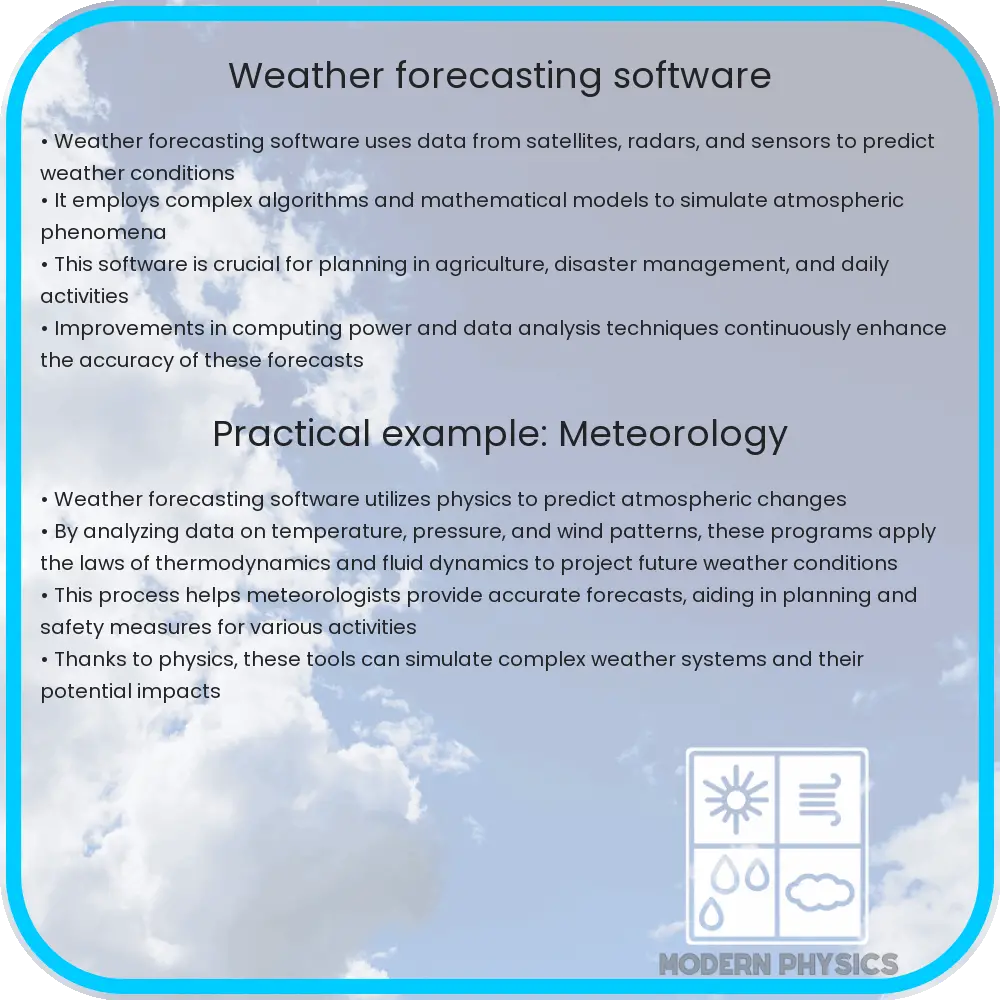
Understanding Weather Forecasting Software
Weather forecasting software has revolutionized how we predict weather, boasting incredible advancements in precision, analytics, and trend observation. By leveraging complex algorithms and vast amounts of data, these tools offer us a glimpse into future climatic conditions. This article explores the core components and functionalities of weather forecasting software, emphasizing its importance in daily decision-making and long-term planning.
The Role of Data in Weather Prediction
At the heart of every weather forecasting software is data—massive amounts of it. Observational data comes from various sources including satellites, radar, weather stations, and ocean buoys. This data includes parameters such as temperature, humidity, wind speed, and atmospheric pressure. The software processes this information to model and predict weather patterns. Precision in weather prediction hinges on both the quantity and quality of the input data.
Models and Algorithms
Weather forecasting relies heavily on numerical models that simulate the Earth’s atmosphere. Common models include the Global Forecast System (GFS) and the European Centre for Medium-Range Weather Forecasts (ECMWF) model. These models use mathematical equations that describe the physics of the atmosphere, inputting real-time data to predict conditions. Algorithms then process these simulations to generate weather forecasts, utilizing methods from simple linear regressions to complex machine learning techniques to enhance accuracy and detail.
Advancements in Machine Learning
Machine learning has become a pivotal technology in improving the accuracy of weather forecasts. By training on historical weather data, machine learning algorithms can identify patterns and anomalies that traditional methods might miss. These algorithms optimize themselves continually, adapting to new data to refine their predictions. This capability is crucial for improving forecasts for severe weather events, such as hurricanes and tornadoes, thereby enhancing preparedness and response strategies.
Real-Time Analytics and Visualization
Beyond generating predictions, weather forecasting software excels in presenting this data in an accessible and actionable manner. Through real-time analytics, meteorologists and users receive up-to-the-minute updates that help in making informed decisions. Visualization tools like dynamic maps and interactive graphs present complex meteorological data simply, making it easier for users to interpret weather patterns and trends.
Trend Analysis and Long-Term Forecasting
Long-term forecasting and climate modeling are other critical aspects supported by advanced software tools. By analyzing trends over decades, these models can provide insights into climate change and its potential impacts. This information is invaluable for policy-making, urban planning, and in sectors such as agriculture and water management, where long-term planning is crucial.
Challenges and Future Directions
Despite significant strides in the field, weather forecasting software still faces challenges, particularly regarding the accuracy of long-range forecasts and sudden meteorological changes. Data inaccuracies, model resolution limits, and the inherent unpredictability of weather systems can complicate predictions. Future enhancements will likely focus on integrating more comprehensive data sources, improving model algorithms, and employing more advanced machine learning techniques to tackle these challenges.
Impact of Weather Forecasting on Society
The impact of accurate weather forecasting on society is profound. It ensures public safety by informing citizens about impending severe weather events, thus allowing for timely evacuations and preparations. It supports the economy by aiding industries such as aviation, farming, and shipping, which depend heavily on weather conditions. Furthermore, it plays a crucial role in energy management, particularly in optimizing operations for renewable energy sources like wind and solar power.
User Accessibility and Customization
Modern weather forecasting software is designed with user experience in mind. Many platforms now offer customization options that allow users to select specific data points relevant to their personal or professional needs. Interfaces are becoming more user-friendly, enabling people without meteorological training to understand and utilize sophisticated forecast data effectively. This democratization of data not only broadens accessibility but also empowers individuals and businesses to make precise, informed decisions based on weather predictions.
Conclusion
Weather forecasting software captures an intricate blend of science, technology, and data, which has monumental implications for daily life and long-term strategic planning across various sectors. With ongoing advancements in computational power, data collection capabilities, and artificial intelligence, these tools are set to become even more reliable and integral to our everyday decision-making processes. As we continue to refine these systems, the horizon looks promising for even more precise and accessible weather predictions, ultimately helping to safeguard our communities and enhance our ability to prepare for and respond to weather-related challenges.