
Ultrasonic embossing is an innovative manufacturing technique using high-frequency sound waves for precise, energy-efficient embossing on various materials.
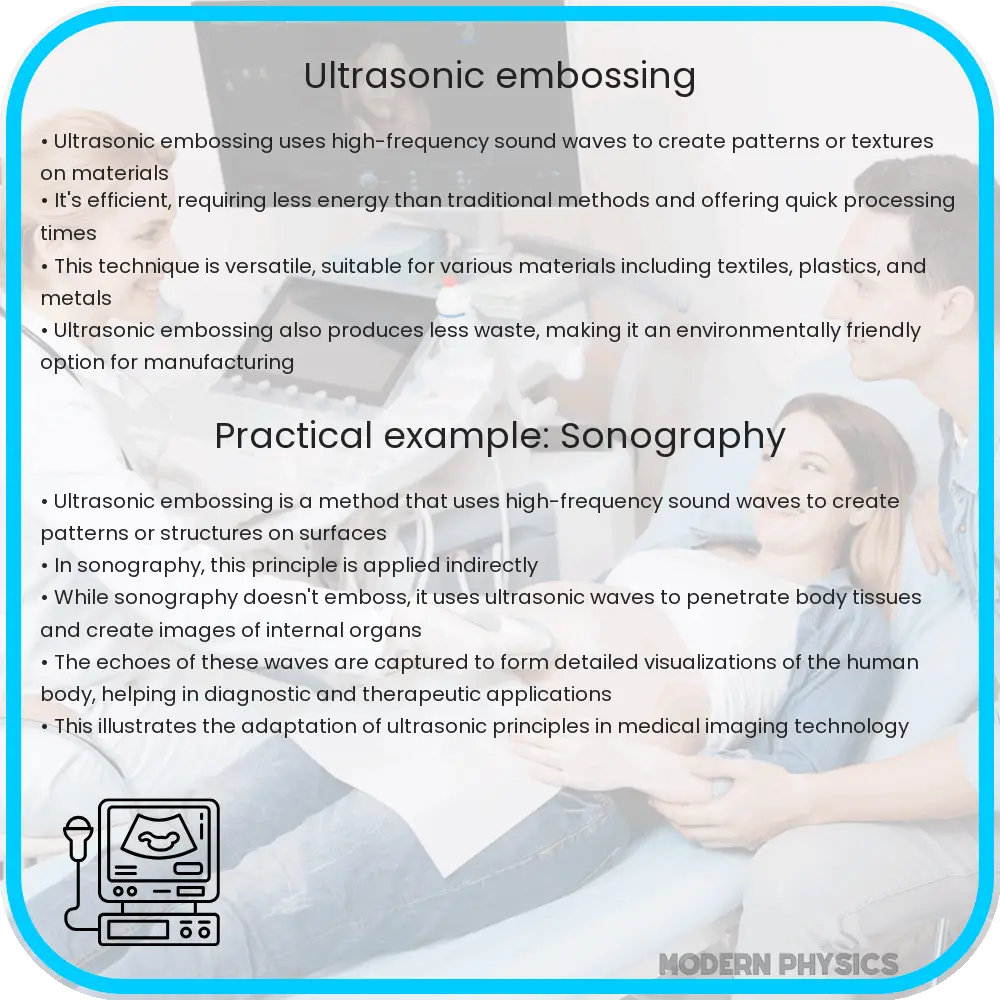
Ultrasonic Embossing: Efficient, Precise & Innovative Acoustics
In the expansive field of manufacturing technologies, a fascinating innovation known as ultrasonic embossing is emerging as a game-changer. This method harnesses the power of high-frequency ultrasonic waves to emboss intricate patterns and textures onto various materials. The technology offers numerous advantages over traditional embossing techniques, including greater precision, enhanced speed, and significant energy efficiency.
The Fundamentals of Ultrasonic Embossing
Ultrasonic embossing operates on a simple but powerful principle: the use of ultrasonic waves. These are sound waves that have frequencies higher than 20 kHz, which is beyond the upper audible limit of human hearing. In ultrasonic embossing, these waves are utilized to generate localized, high-frequency vibrations. The process typically involves an embossing tool or horn, which is vibrated at ultrasonic frequencies by a transducer. The material to be embossed is placed against a patterned anvil or die, and the ultrasonic horn applies precise vibrational force to the material, creating a pattern as per the die’s design.
One of the key components in ultrasonic embossing is the transducer, which converts electrical energy into mechanical vibrations. These vibrations then travel through a booster, which modifies the amplitude of these vibrations. The booster’s output is transferred to the horn, which directly contacts the material and embosses it by transferring high-frequency vibrations under pressure.
Applications and Materials
Ultrasonic embossing is versatile and can be used with a wide array of materials, including plastics, metals, and textiles. Each material interacts differently under ultrasonic interventions, allowing for a broad range of applications from automotive to textile industries. In textiles, for example, ultrasonic embossing can be used to create unique patterns without the need for heat, thus preserving the fabric’s integrity and color.
- Textiles: Creating detailed patterns and textures on fabrics.
- Leather: Forming high-quality embossing on leather goods without damaging the material.
- Paper: Producing decorative and detailed designs on paper products.
- Metal sheets: Embossing thin metal sheets for various industrial applications.
Advantages of Ultrasonic Embossing
The incorporation of ultrasonic technology in embossing presents numerous benefits over conventional methods:
- Increased Precision: The control offered by ultrasonic vibrations allows for extremely fine and precise embossing, which is ideal for complex and detailed designs.
- Energy Efficiency: Ultrasonic embossing uses less energy compared to traditional heat-based embossing systems, thereby reducing the carbon footprint associated with manufacturing.
- Speed: The process is significantly faster due to the efficiency of energy transmission and the speed of ultrasonic vibrations.
- No Heat Damage: Since the process does not rely on heat, there is no risk of damaging the material through scorching or melting.
The advancement of ultrasonic embossing is a perfect example of how innovative acoustics can be applied to enhance traditional manufacturing processes. Its implications for precision, speed, and eco-friendliness make it an appealing option for industries looking to improve their production techniques.
The Environmental Impact and Sustainability
One considerable advantage of ultrasonic embossing is its environmental impact. The process’s energy efficiency not only cuts down on utility costs but also aligns with the global push towards sustainable manufacturing practices. By utilizing ultrasonic waves instead of heat, the technique reduces the emissions associated with conventional energy sources. This aspect is particularly appealing to industries aiming to lower their environmental footprint without compromising on quality or efficiency.
Future Outlook and Technological Advancements
The future of ultrasonic embossing looks promising with continuous improvements and innovations. Advancements in transducer technology and materials science could further enhance the capabilities and applications of ultrasonic embossing. Researchers are exploring ways to integrate artificial intelligence and machine learning to automate and optimize the embossing process, potentially opening doors to new patterns and materials that were previously challenging to emboss.
Additionally, as industries continue to seek cost-effective and environmentally friendly solutions, the demand for ultrasonic embossing technology is likely to grow. This growth could lead to its integration into more sectors including consumer electronics, where precision and miniaturization are key.
Conclusion
Ultrasonic embossing represents a significant leap forward in the field of manufacturing technology. By combining the principles of acoustics with modern engineering, this method offers a smarter, leaner, and greener alternative to traditional embossing processes. The precise control and versatility of the ultrasonic waves enable manufacturers to not only enhance product quality but also to innovate in design and functionality. With ongoing advancements and increasing integration into various industries, ultrasonic embossing is set to redefine manufacturing standards worldwide. It epitomizes how inventive engineering solutions can lead to more sustainable and efficient production methodologies, proving indispensable in the modern industrial landscape.