
Explore the properties, applications, and innovations of ultralight materials used in multiple industries such as aerospace and automotive.
Introduction to Ultralight Materials
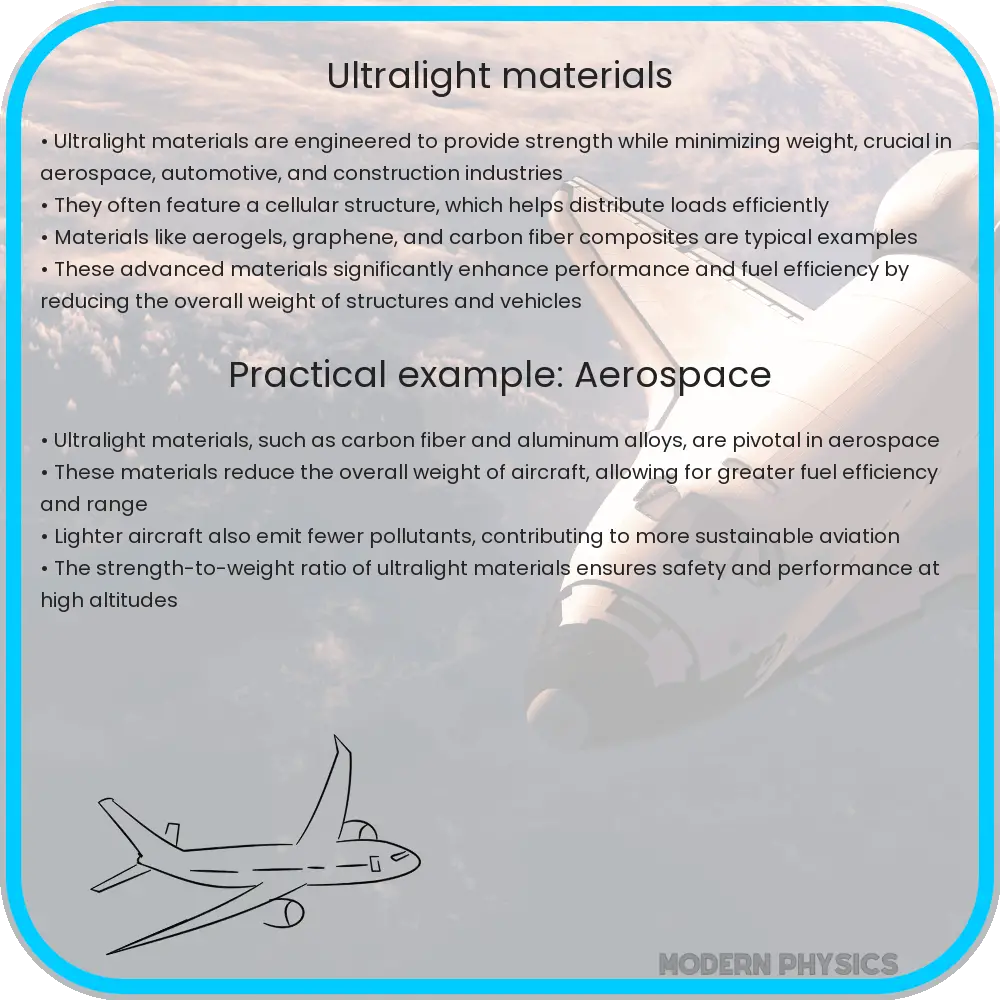
Ultralight materials, as the name suggests, have an extraordinarily low mass-to-volume ratio, making them appealing options in many modern engineering applications. These materials are not just lightweight but also strong and durable. They are key to advancements in areas such as aerospace, automotive, sports, and even in everyday consumer products.
Characteristics of Ultralight Materials
Three primary characteristics define ultralight materials: low density, high strength, and long-term durability. Low density helps reduce the overall weight of structures, which is crucial in industries like aerospace where weight reduction translates directly into cost savings on fuel and improvements in payload capacity. Meanwhile, high strength ensures that despite their light weight, these materials can withstand considerable forces and stresses. Durability, on the other hand, ensures that these materials can resist wear and tear over time, making them cost-effective for long-term applications.
Examples of Innovations in Ultralight Materials
- Aerospace-Grade Aluminum: This type of aluminum, such as Al 7075, is recognized for its low density combined with high strength comparable to some steels. It is extensively utilized in aircraft and spacecraft structures.
- Titanium Alloys: Known for their exceptional strength-to-density ratio, titanium alloys are crucial in aerospace, medical devices, and high-performance automotive applications. Their corrosion resistance adds to their allure in challenging environments.
- Carbon Fiber Composites: These materials consist of carbon fiber reinforcement in a polymer matrix and are famed for their stiffness, strength, low density, and high fatigue resistance. They are popular in the manufacture of modern bicycles, racing cars, and even commercial aircraft.
- Graphene: Often cited as a revolutionary material, graphene is a two-dimensional form of carbon that is incredibly strong and almost transparent. It is currently being researched for potential uses in electronics, solar cells, and various composite materials.
Engineering Applications of Ultralight Materials
The unique properties of ultralight materials have led to their widespread application in several fields of engineering. In aerospace engineering, these materials facilitate the construction of lighter aircraft that are more fuel-efficient. In automotive engineering, reducing the weight of a vehicle with ultralight materials can lead to enhanced performance and reduced emissions. Moreover, in civil engineering, these materials allow the design of longer span bridges and structures that were not possible with traditional construction materials.
The Science Behind Ultralight Materials
At the molecular level, the efficacy of ultralight materials is often a result of their unique micro-structures. For instance, the lattices within carbon fiber composites or the grain structure in aerospace-grade aluminum play a crucial role in their properties. Advances in nanotechnology and materials science continue to push the boundaries of what is possible with these materials, leading to even lighter and stronger formulations.
In the next section, we will delve deeper into the practical implications and future perspectives of these innovative materials, highlighting their potential to revolutionize industries and contribute to sustainable engineering solutions.
Practical Implications and Future Perspectives
The evolution of ultralight materials is not just a technical achievement; it’s a catalyst for economic and environmental change. In transportation, for instance, lighter vehicles mean less energy consumption, which can significantly reduce CO2 emissions and other harmful pollutants. This shift plays a critical role in tackling global climate change. Furthermore, ultralight materials also enhance the safety and performance of vehicles and aircraft, which benefits everyone from everyday commuters to professional athletes.
Looking ahead, the potential for ultralight materials extends into new realms like space travel and habitat construction on other planets. These materials could be essential in building spacecraft that are efficient not only in terms of fuel consumption but also in the ability to withstand the harsh environments of space. Lightweight materials that offer protection against extreme conditions could revolutionize the construction of habitats on the Moon or Mars, significantly reducing the logistical challenges of transporting materials from Earth.
Innovative Research and Developments
Continuous research and development are essential for the advancement of ultralight materials. Scientists and engineers are exploring various approaches, such as improving the synthesis of graphene, enhancing the properties of carbon fiber composites, and inventing new materials that could once be considered impossible. Such innovations could open the door to newer functionalities and applications, widening the scope of ultralight materials in technology and daily life.
Universities, research institutions, and companies around the globe are investing heavily in this field to identify and leverage the next generation of ultralight materials. These efforts are not only geared toward enhancing existing capabilities but also toward discovering new properties that can address the unmet needs of various industries.
Conclusion
Ultralight materials represent a fascinating frontier in modern engineering and science. Their unique characteristics of low density, high strength, and durability offer a plethora of benefits across industries—ranging from aerospace to everyday consumer products. As we continue to explore and understand these materials better, their potential to foster sustainability, enhance performance, and transform industries will only increase. The journey of ultralight materials is an embodiment of innovation’s role in driving the future, underscoring the importance of continued research and development in this dynamic field.