
Explore thermodynamic cycle efficiency optimization, analysis methods, and their impact on energy conservation and environmental sustainability.
Understanding Thermodynamic Cycle Efficiency: Concepts and Importance
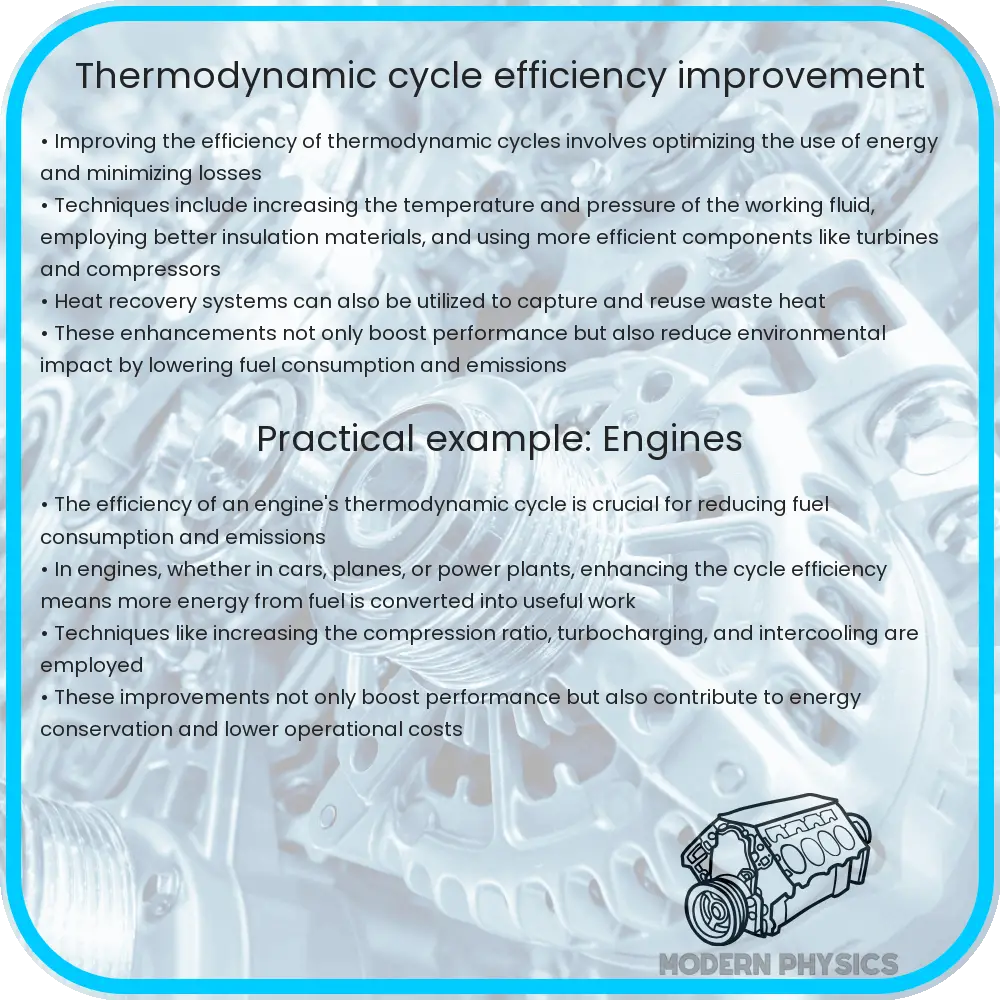
Thermodynamic cycle efficiency is a fundamental concept in engineering, playing a crucial role in optimizing the performance of various systems, from power plants to automotive engines. This measure of efficiency indicates how effectively a system converts heat energy into work or output. Understanding and improving thermodynamic cycle efficiency is key to enhancing energy conservation and reducing environmental impact.
Analysis and Optimization Methods
To analyze and optimize thermodynamic cycle efficiency, several methods and techniques are employed. These include:
- Energy Balance Analysis: This involves calculating the energy input and output at each stage of the thermodynamic cycle. It helps in identifying areas where energy losses occur and potential improvements can be made.
- Exergy Analysis: Exergy or ‘available energy’ analysis goes beyond energy conservation, considering the quality of energy. It helps in pinpointing inefficiencies and the potential for more useful work.
- Simulation and Modeling: Advanced computer models simulate various conditions and modifications in a thermodynamic cycle, providing insights into how changes can impact efficiency.
These methods are instrumental in optimizing processes such as the Rankine cycle in power plants, the refrigeration cycle in cooling systems, and the Otto and Diesel cycles in internal combustion engines.
Key Factors Influencing Efficiency
Several factors influence the efficiency of a thermodynamic cycle. These include:
- Temperature and Pressure: Higher temperatures and pressures generally lead to higher efficiencies, as seen in the Carnot cycle.
- Heat Source and Sink Temperatures: The greater the temperature difference between the heat source and sink, the higher the potential efficiency, as per the Second Law of Thermodynamics.
- Component Design: The design and materials of components like turbines, compressors, and heat exchangers significantly affect efficiency.
By understanding and manipulating these factors, engineers can significantly enhance the efficiency of thermodynamic cycles, leading to more sustainable and economical operations.
Conclusion
Optimizing thermodynamic cycle efficiency is vital for energy conservation and reducing environmental impact. Through various analysis and optimization methods, significant advancements can be made in the performance of energy systems. This not only benefits the environment but also improves economic viability, marking a step forward in sustainable engineering practices.
Advanced Techniques in Thermodynamic Cycle Optimization
In the pursuit of optimizing thermodynamic cycle efficiency, several advanced techniques have been developed. These include:
- Co-generation and Tri-generation: These systems utilize waste heat from electricity generation for heating and cooling, significantly improving overall energy efficiency.
- Use of Alternative Fuels: Biofuels and hydrogen are being explored as alternatives to fossil fuels, aiming to reduce emissions and enhance cycle efficiency.
- Implementation of Renewable Energy Sources: Integrating renewable energy sources like solar and wind with traditional cycles can decrease reliance on non-renewable resources and increase efficiency.
Challenges and Future Prospects
Despite the advancements, several challenges remain in optimizing thermodynamic cycle efficiency. These include technological limitations, high costs of advanced materials and systems, and environmental constraints. However, ongoing research and development in areas like nanotechnology, material science, and renewable energy integration hold promise for future breakthroughs in thermodynamic cycle efficiency.
Real-World Applications and Impact
Improvements in thermodynamic cycle efficiency have wide-reaching implications. In the industrial sector, more efficient processes mean reduced operational costs and lower emissions. In transportation, efficient engines lead to reduced fuel consumption and pollution. For consumers, this translates into cost savings and a smaller carbon footprint.
Conclusion
Thermodynamic cycle efficiency optimization is a dynamic field that blends engineering, environmental science, and economics. The continuous evolution of this area is crucial for achieving sustainable energy goals. By embracing advanced techniques and overcoming existing challenges, the future of thermodynamic cycles looks promising, with potential for significant contributions to a more efficient, sustainable, and economically viable world. This endeavor not only propels technological advancements but also aligns closely with global efforts to combat climate change and promote sustainable development.