
Could not parse your authentication token. Please try signing in again.
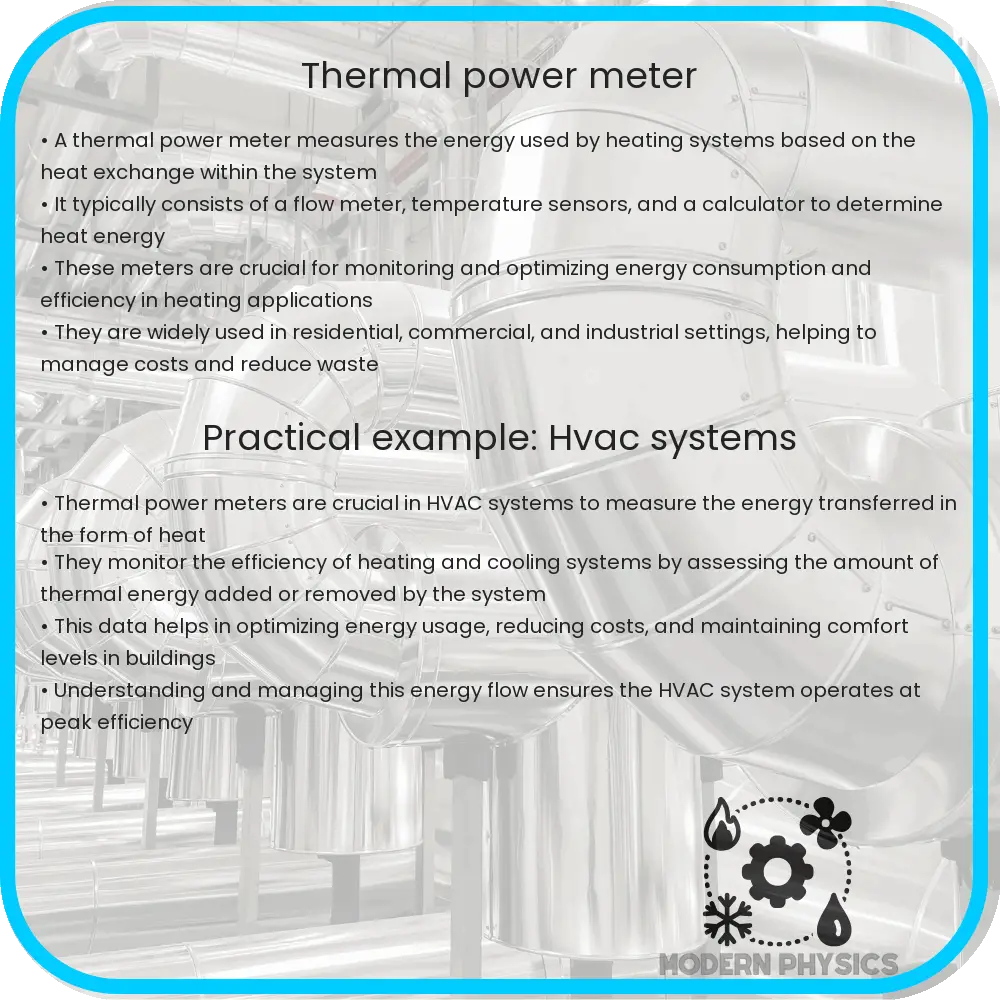
Understanding Thermal Power Meters: Key Aspects of Efficiency, Control, and Dynamics
Thermal power meters play a pivotal role in energy management and optimization in various industrial sectors. These devices measure the amount of heat energy produced by a system, which is crucial in evaluating the efficiency of thermal power plants. By understanding the key components of thermal power meters, including efficiency, control, and dynamics, industries can significantly improve their energy consumption patterns and reduce environmental impact.
Efficiency Metrics in Thermal Power Systems
Efficiency in thermal power plants is often gauged by the ratio of the electrical power output to the total heat energy input. This is typically expressed as a percentage. The formula for calculating thermal efficiency (\( \eta \)) is:
\[ \eta = \left( \frac{Power_{\text{output}}}{Heat_{\text{input}}} \right) \times 100\% \]
However, real-world factors such as heat losses, fuel quality, and operational practices can impact this efficiency. Advanced thermal power meters help in identifying these losses by providing real-time data on heat generation and energy conversion rates.
Control Systems in Thermal Power Plants
Control systems in thermal power plants are designed to maintain operational stability and optimize performance. They monitor parameters like temperature, pressure, and flow rate, adjusting the operational settings of boilers, turbines, and other equipment accordingly. Smart control systems, integrated with thermal power meters, allow for automated adjustments that enhance efficiency and reduce wastage.
Dynamics of Thermal Power Generation
The dynamic aspect of thermal power generation focuses on the responsiveness of the system to changes in demand and operational conditions. This includes ramp-up and ramp-down times, flexibility in fuel usage, and the ability to maintain efficiency under varying loads. Modern thermal power meters, equipped with sensors and predictive analytics, assist in understanding and improving these dynamic characteristics.
Furthermore, the integration of thermal power meters with IoT (Internet of Things) technologies enables remote monitoring and data analysis. This advancement not only provides insights into the plant’s performance but also aids in predictive maintenance, reducing downtime and prolonging the lifespan of the equipment.
In conclusion, thermal power meters are essential tools in measuring and enhancing the efficiency, control, and dynamics of thermal power plants. Their accurate and real-time data collection capabilities are indispensable for optimizing energy production and minimizing environmental impact.
Advanced Applications and Environmental Impact of Thermal Power Meters
Building on the fundamental aspects of efficiency, control, and dynamics in thermal power systems, advanced applications of thermal power meters significantly contribute to sustainable energy practices. The integration of these meters with renewable energy sources and the assessment of their environmental impact are key areas of focus in modern energy management.
Integration with Renewable Energy Sources
As the world shifts towards renewable energy, thermal power meters play a critical role in hybrid systems that combine traditional thermal power generation with renewable sources like solar and wind. In such systems, thermal power meters help balance the load between renewable sources and conventional thermal power, ensuring a steady supply of energy while maximizing the use of clean energy sources.
Environmental Impact Assessment
The use of thermal power meters is instrumental in assessing the environmental impact of power plants. By monitoring emissions and efficiency, these meters provide valuable data that can be used to improve combustion processes, reduce greenhouse gas emissions, and comply with environmental regulations. This is especially crucial in the context of global efforts to combat climate change and reduce carbon footprints.
Future Trends and Technological Innovations
The future of thermal power meters lies in technological innovations such as AI-driven predictive analytics and advanced sensor technology. These developments promise even greater accuracy in efficiency measurements and operational control, leading to more sustainable and environmentally friendly power generation. The integration of AI with thermal power meters will enable more precise predictive maintenance, further reducing downtime and operational costs.
Conclusion
In the realm of energy production, thermal power meters are indispensable tools that drive efficiency, ensure optimal control, and adapt to dynamic operational needs. Their advanced applications in integrating with renewable energy sources and assessing environmental impact highlight their significance in the energy sector. As technology advances, thermal power meters will continue to evolve, playing a crucial role in the transition towards more sustainable and environmentally responsible energy systems. The ongoing innovations in this field are not only beneficial for industrial efficiency but are also pivotal in addressing the global challenges of energy sustainability and environmental conservation.