
Explore the crucial role of thermal barriers in fusion energy, enhancing efficiency, stability, and control in achieving sustainable, clean power generation.
Understanding the Role of Thermal Barriers in Fusion Energy
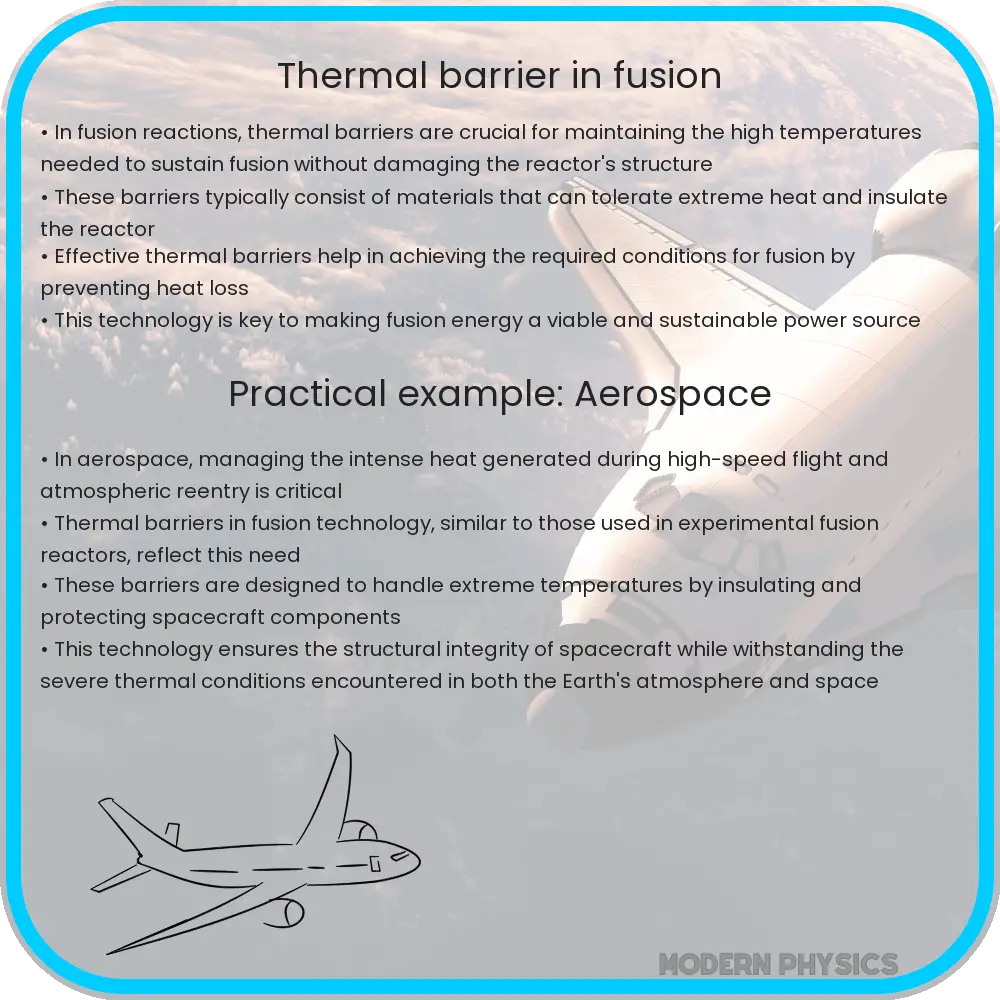
Fusion energy, often touted as the clean, virtually unlimited power source of the future, depends on achieving and maintaining extremely high temperatures and pressures to force nuclei to fuse. This process, however, faces significant challenges, among which the management of extreme heat within the reactor stands out. Thermal barriers are crucial in this context, as they serve to contain and control the immense heat generated during fusion reactions, ensuring the efficiency, stability, and safety of the process.
Efficiency of Fusion Reactors and Thermal Barriers
The efficiency of a fusion reactor is significantly influenced by its ability to confine heat within the plasma – the hot, charged state of matter composed of fusion fuel. Thermal barriers enhance this confinement by minimizing heat losses, allowing the plasma to reach the temperatures necessary for fusion to occur (typically over 100 million degrees Celsius). These barriers are designed to reflect and absorb heat, reducing thermal conduction and radiation to the reactor walls and thus improving overall energy output.
Stability and Control in Fusion Processes
Stability in fusion reactors is paramount, as any fluctuation in temperature or pressure can lead to instabilities that might disrupt the fusion process. Thermal barriers contribute to stability by providing a controlled environment where the plasma can be maintained at optimal conditions for fusion. Advanced materials and magnetic confinement techniques are employed to create effective thermal barriers, which help in damping fluctuations and maintaining the necessary conditions for sustained fusion reactions.
The Challenge of Thermal Barrier Implementation
Implementing effective thermal barriers in fusion reactors presents a myriad of challenges. Materials used in these barriers must withstand the extreme temperatures and neutron flux generated during fusion, without degrading or becoming a source of contamination for the plasma. Researchers are exploring various materials and designs, such as liquid metal walls and ceramic coatings, to find solutions that offer both durability and performance.
In summary, thermal barriers play a critical role in the pursuit of practical fusion energy, influencing the efficiency, stability, and control of the fusion process. The ongoing research and development in this area are essential for overcoming the formidable challenges that fusion energy presents.
Advancements in Thermal Barrier Technology for Fusion
As the field of fusion energy advances, so does the technology surrounding thermal barriers. Innovations in material science and engineering have led to the development of more effective and resilient thermal barrier systems. These advancements include the use of high-temperature superconductors for magnetic confinement, which reduces energy losses and enhances plasma stability. Additionally, breakthroughs in nanotechnology offer the potential for creating materials that can better withstand the harsh conditions inside a fusion reactor, promising longer lifespans and reduced maintenance requirements.
Future Directions in Fusion Energy
The future of fusion energy is intrinsically linked to the progression of thermal barrier technology. With the global push towards sustainable energy sources, the demand for advancements in fusion technology is higher than ever. The next generation of fusion reactors will likely feature more sophisticated thermal barriers that leverage cutting-edge materials and designs to achieve higher efficiencies and greater control over the fusion process. Collaborative international projects, such as the ITER (International Thermonuclear Experimental Reactor), are at the forefront of these efforts, aiming to demonstrate the feasibility of fusion power on a commercial scale.
Conclusion
The quest for fusion energy is a journey towards a cleaner, sustainable power source that could revolutionize how we generate electricity. At the heart of this endeavor are the thermal barriers that make the containment and control of the fusion process possible. As we develop better materials and technologies for these barriers, we move closer to making fusion energy a practical reality. The challenges are significant, but the potential rewards in terms of energy security, environmental protection, and economic growth are immense. Continued research and innovation in thermal barrier technology are critical to overcoming the remaining hurdles and unlocking the vast potential of fusion energy for future generations.