
Explore how environmental physics applies physical principles to solve sustainability issues, analyzing impacts like climate change and pollution.
Understanding Sustainability Science and Environmental Physics
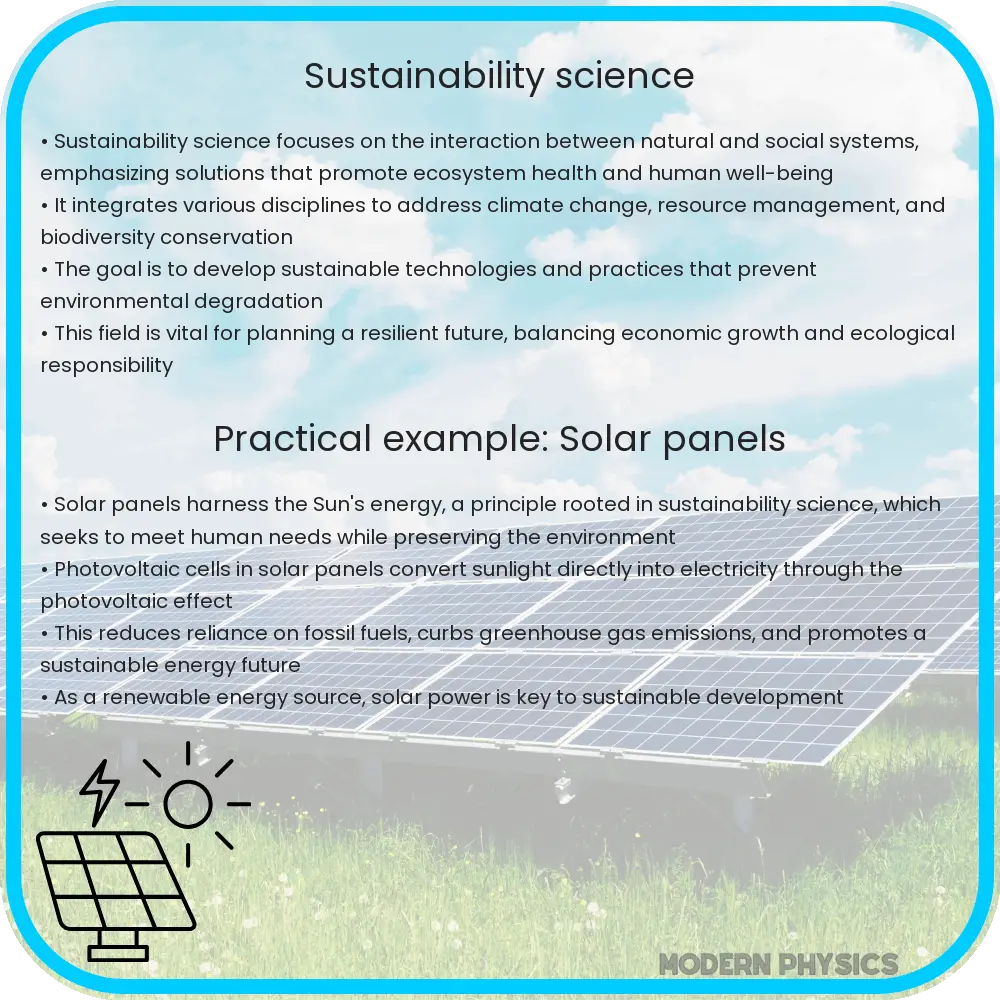
Sustainability Science is an interdisciplinary field that addresses the complex interactions between human and environmental systems with the aim of fostering long-lasting, sustainable ways of living. As part of this field, environmental physics plays a crucial role by applying physical principles to understand and solve issues related to the environment and sustainability.
The Impact of Environmental Challenges
Our planet faces significant environmental challenges that impact ecosystems, human health, and the economy. These challenges include climate change, air and water pollution, depletion of natural resources, and loss of biodiversity. Environmental physics helps to quantify the extent of these impacts by modeling and analyzing the fundamental processes driving them.
- Climate Change: Environmental physicists study the energy balance of the earth to understand how human activities influence global temperature and climate patterns.
- Pollution: The study of fluid mechanics and chemical reactions in the atmosphere helps in tracing and mitigating pollutants both in air and water bodies.
- Resource Depletion: Analysis of the rate of consumption of natural resources versus their rate of regeneration provides insights needed for sustainable management.
Scientific Solutions to Environmental Problems
Through the application of physics, scientists are developing innovative solutions to tackle environmental challenges. Below are a few areas where environmental physics is making a significant difference:
- Renewable Energy Technologies: Physics is at the heart of designing and optimizing technologies such as solar panels, wind turbines, and hydroelectric power systems that reduce dependency on fossil fuels.
- Waste Management: Thermodynamics and material science contribute to better recycling techniques and waste-to-energy processes, thus reducing landfill use and recovering valuable materials.
- Weather Prediction and Climate Modeling: By applying principles of fluid dynamics and thermodynamics, physicists improve weather forecasting and climate models, which are vital for planning and responding to climate-related disasters.
These scientific approaches not only mitigate environmental issues but also support economic development by introducing more efficient and cost-effective technologies. Engaging in such sustainable practices aligns with the broader goals of environmental conservation and human welfare enhancement.
Role of Physics in Understanding and Solving Environmental Issues
Physics provides a set of tools and principles that are essential for understanding the natural world and the impact of human activities on it. By applying these tools, environmental physicists can dissect complex environmental problems into more manageable segments. For instance:
- Energy Flow: The laws of thermodynamics are used to study how energy transfers and transforms within ecosystems and how these processes are affected by human activities.
- Material Cycles: Physics helps in understanding biogeochemical cycles, such as the carbon cycle, and their alterations due to anthropogenic factors, which is crucial for predicting and mitigating changes in the environment.
- Remote Sensing: Techniques based on electromagnetic theory are employed to observe and monitor environmental changes over large areas and inaccessible regions using satellites.
By leveraging the principles of physics, we can devise more efficient solutions to environmental problems, ensuring a more sustainable future for all. In the next section, we will dive deeper into specific case studies where environmental physics has facilitated significant advancements in sustainability.
Case Studies in Environmental Physics
Examining real-world applications demonstrates how environmental physics contributes to sustainability. Here are selected case studies that highlight significant advancements:
- Solar Energy Optimization: Scientists have used principles of optics and thermodynamics to enhance the efficiency of solar panels. Innovations such as bifacial solar modules, which capture sunlight from both sides, significantly increase energy output.
- Improved Air Quality Monitoring: By utilizing advanced fluid dynamics models combined with real-time data analysis, environmental physicists have developed more accurate forecasting systems for air quality, which allow for timely public health advisories and regulatory actions.
- Resource Conservation Techniques: Physics has driven the development of precision agriculture techniques that minimize water and fertilizer use while maximizing crop yield, thereby supporting sustainable farming practices.
These examples show how targeted scientific knowledge can play a pivotal role in solving specific environmental issues while promoting sustainability.
Education and Public Engagement
Enhancing public understanding and involvement is crucial for the success of sustainability initiatives. Educational programs in environmental physics can empower individuals and communities by providing:
- Courses and Workshops: These are aimed at educating students and the public on the basic principles of physics and their applications in environmental management and sustainability.
- Community Science Projects: Participatory projects like neighborhood air quality monitoring or community-based renewable energy installations foster local engagement and raise awareness about environmental issues.
This educational push helps bridge the gap between complex scientific concepts and practical everyday applications, encouraging more people to get involved and take action toward sustainability.
Conclusion
Environmental physics serves as a cornerstone in the endeavor to understand and confront the environmental challenges facing our world. Through its unique perspective on energy dynamics, material cycles, and technological applications, this field equips us with the tools necessary for crafting viable solutions to pressing environmental issues. The combination of advanced research, practical case study applications, and comprehensive educational outreach empowers societies to not only mitigate the impacts of these challenges but also to drive forward towards a resilient and sustainable future. Ultimately, our collective acknowledgment and application of principles derived from environmental physics will determine the efficacy of our strategies in maintaining ecological and human health in harmony.